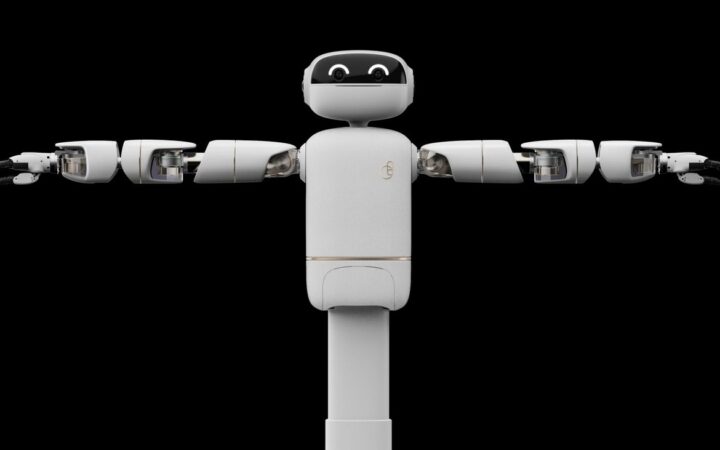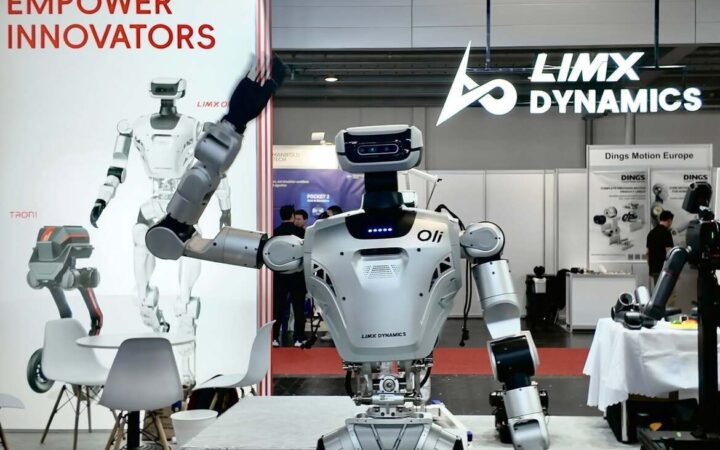
BMW will deploy two Hexagon Robotics Aeon humanoid robots on its production line at the Leipzig factory this summer, making it the first carmaker to use humanoid robots in automotive manufacturing in Europe. The robots are currently in a test deployment at the site and are expected to begin production work feeding parts to manufacturing tools and performing pick-and-place tasks in battery assembly. A full production deployment is planned for summer 2026.
“This will be the future of automotive production,” said Michael Nikolaides, head of process management and digitalisation at BMW.
Why Humanoid Form Factor Now
The shift toward humanoid robots in automotive manufacturing reflects a change in the cost calculus that has historically favored specialized fixed automation. “When a robot costs 17 million, you’d re-organise your factory around the robot, but it doesn’t anymore,” said Bill Ray, distinguished VP analyst at Gartner. “So now you want to fit it into your existing way of working.”
The humanoid form factor fits existing human-scale workstations without requiring factory redesign. “If you have a humanoid form, you can pretty much set it to any workplace where a human is working today because it has the same size and the same capabilities,” said Nikolaides. BMW also cited labor shortage as a structural driver. “We know that staff will be short in a matter of years, and humanised robots help,” he said.
Aeon’s Specifications and Training
The Aeon robot stands 1.65 meters tall, weighs 60 kilograms, and moves on wheels rather than legs – a deliberate design choice for shop floor practicality. It reaches a top speed of 2.4 meters per second and can carry 15 kilograms for short periods or 8 kilograms continuously. The robot is equipped with 21 sensors including cameras, radar, a microphone, and force and torque sensors for manipulation.
Training combined teleoperation – using sensors on human workers to capture physical task execution – with reinforcement learning in a digital twin of the Leipzig factory built on Nvidia software. Aeon has a battery life of three hours against an eight-hour shift, and is designed to swap its own battery autonomously in approximately three minutes including travel time to and from the charging station.
Arnaud Robert, president of robotics at Hexagon, highlighted imitation learning as the most significant development in robot training. By learning from video or motion sensor data of human task performance, training times can be reduced from months to days. “The best translation from the human to the robot is when the teacher and the student have the same form factor,” Robert said. Asked whether a robot could simply watch someone pack boxes and then join in, he responded: “That’s the ultimate scenario. You’re describing probably something that’s a year or two out.”
What BMW Has Learned from the U.S.
BMW has previous experience with humanoid robots. At its Spartanburg facility in the United States, Figure O2 robots helped build 30,000 Model X3 vehicles, working at the same pace as human workers. A key observation from that deployment was AI-based robots’ superior tolerance for variance. “If you changed the position of the sheet metal a little bit or you shift it, or you tilt it, with a standardised industry robot, you would have a failure,” said Nikolaides. “These humanoid robots can analyse that and they will just keep on working.”
The Leipzig deployment also includes a Boston Dynamics Spot quadruped used for maintenance inspection – including navigating stairs to basement machinery – and illustrates BMW’s mixed-fleet approach: wheeled humanoids for production floor tasks, legged quadrupeds for multi-level inspection.
Managing Expectations
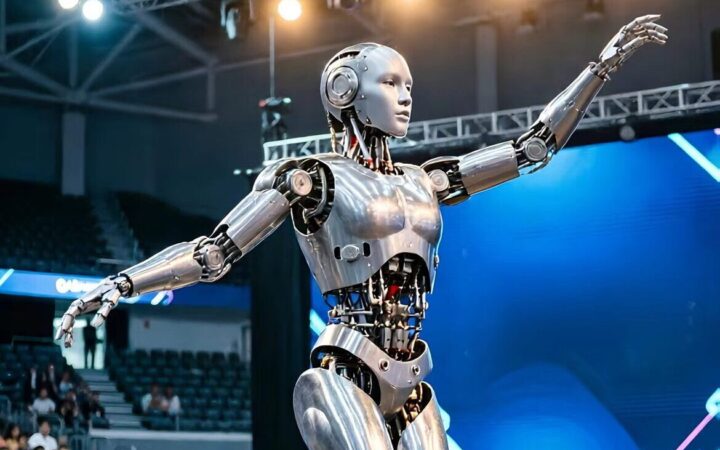
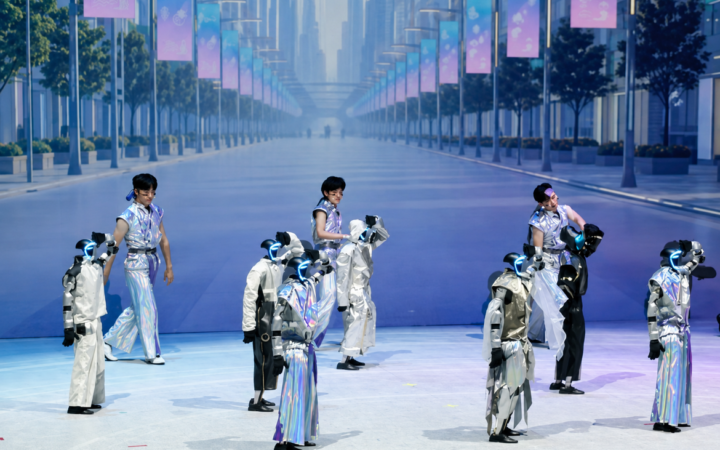
Gartner’s Ray offered a grounding note on the broader industry. “The primary use case for a humanoid robot today is to walk on stage and artificially inflate your share price,” he said. “Robots dancing or whatever: That’s not that difficult to do.” Ray estimated that within three to five years a robot will be able to take simple voice instructions to carry out a task effectively – a more conservative timeline than most manufacturer claims.
Ray also flagged a cognitive bias risk with humanoid form factors. “When you see a humanoid robot walking, you assume it can run, it can climb, it can jump. It can’t do any of those things, but your brain fills in those gaps. We’re having unrealistic expectations when people deploy these robots.”
Disclaimer: RobotsBeat is an independent media brand owned and operated by NuvexMedia LLC, publishing news, research, and insights on artificial intelligence, emerging technologies, automation, and related industries. NuvexMedia LLC invests in and collaborates with companies across the AI, Robotics, technology, software, and digital innovation sectors. These relationships do not influence RobotsBeat's editorial coverage, and the publication maintains full editorial independence to provide accurate, timely, and objective information. © 2026 NuvexMedia LLC. All rights reserved. This content is for informational purposes only and should not be considered legal, tax, investment, financial, or other professional advice.