
BMW has completed a €650 million transformation of its Munich factory, embedding artificial intelligence and robotics at the core of production as it prepares to manufacture its next generation of electric vehicles. The overhaul signals a broader shift in automotive manufacturing, where software systems are beginning to orchestrate not only design and engineering, but the physical assembly process itself.
At the center of the upgrade is what BMW describes as an “AI brain” – a centralized system that coordinates production lines, logistics, and quality control across the plant. The system is being deployed as part of the company’s broader iFactory strategy, which aims to standardize digitalized manufacturing across its global operations.
The Munich site, which will begin producing the Neue Klasse i3 sedan in August 2026, is expected to scale to around 1,000 vehicles per day, placing it among the highest-output EV facilities in Europe.
A Software Layer for Physical Production
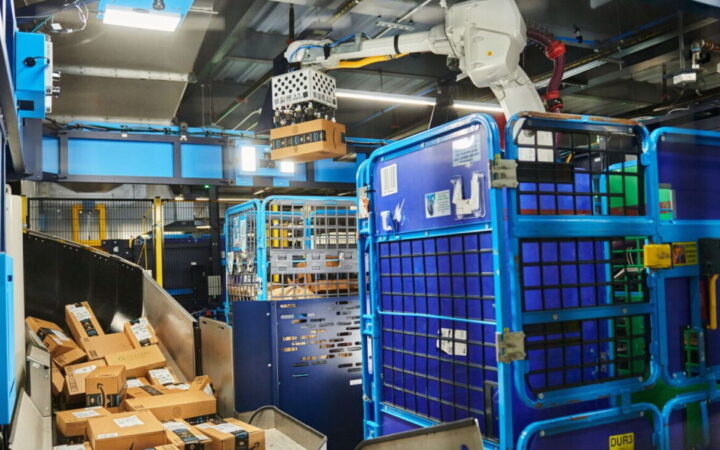
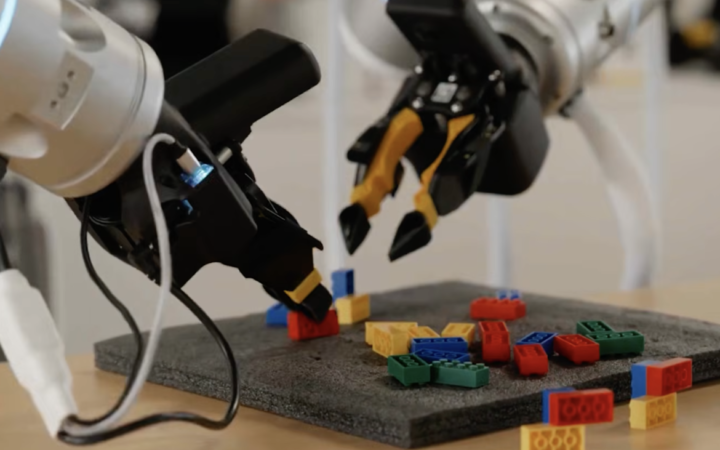
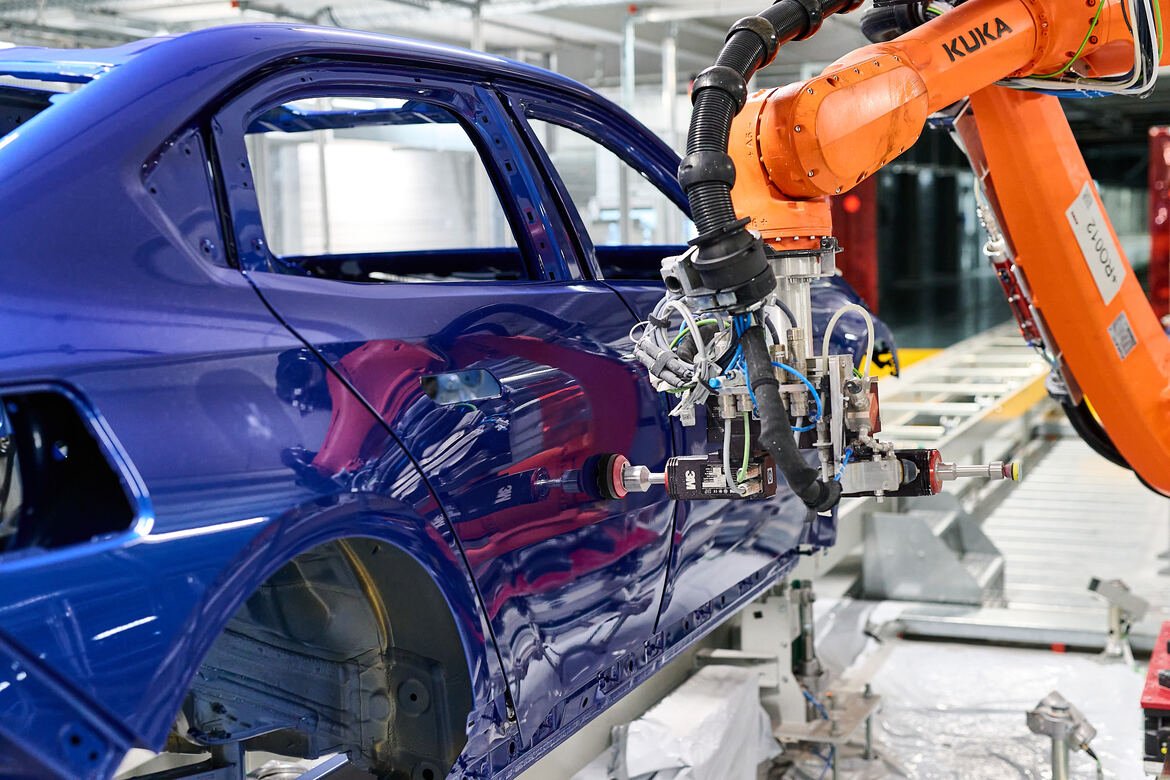
BMW’s approach reflects a growing convergence between industrial automation and AI-driven orchestration. Rather than treating robotics as isolated systems, the company has integrated approximately 2,000 robotic arms and a fleet of autonomous logistics machines into a unified control architecture.
The AI system manages workflows in real time, from coordinating robotic assembly tasks to directing material movement across the factory floor. Around 200 mobile robots handle internal logistics, transporting components from incoming shipments to production lines. These machines are expected to perform up to 17,000 transport operations per day by 2027, effectively taking over what BMW describes as the “last mile” of factory logistics.
A key feature of the system is its use of digital twins, allowing the factory to simulate and test production scenarios before they are executed. This enables rapid adjustments to workflows, reducing downtime and allowing the plant to respond more quickly to changes in demand or product configuration.
While similar concepts have been tested elsewhere, including at facilities developed by Hyundai, BMW’s implementation stands out for its scale and integration into a high-volume production environment.
Flexibility Becomes a Competitive Requirement
The redesigned Munich plant is built to accommodate a wide range of vehicle variants on a single production line, reflecting the increasing variability of the EV market. According to BMW, production sequences can be reconfigured in as little as six days, compared to weeks or months in conventional factories.
This level of flexibility is intended to allow production to “follow the market”, adapting to shifts in demand, regulatory requirements, or supply chain constraints. It also reduces the need for dedicated production lines for individual models, a structure that has historically limited responsiveness in automotive manufacturing.
The shift aligns with a broader industry move toward modular platforms and software-defined vehicles, where differentiation occurs more through software and configuration than through fundamentally different hardware architectures.
Human Workers Remain in the Loop
Despite the scale of automation, BMW maintains that human workers will continue to play a central role in the factory. Tasks such as installing interiors, wiring, and final assembly will still be carried out by people, supported by robotic systems designed to reduce physical strain and improve precision.
AI is also being applied to quality control. Robotic inspection systems capture and analyze large volumes of visual data to identify defects early in the production process. In some cases, robots can autonomously correct issues, reducing the need for rework at later stages and improving overall throughput.
The company has emphasized that the introduction of AI and robotics is intended to augment, rather than replace, human labor, positioning workers as operators and supervisors within increasingly automated environments.
BMW’s Munich transformation highlights a broader shift in industrial strategy, where competitiveness is increasingly defined by the ability to integrate software, robotics, and data into a cohesive production system. As automakers transition to electric vehicles and face greater market volatility, factories are becoming less like static assembly lines and more like adaptive, software-controlled systems.
The success of this approach will depend not only on technological execution but on whether such highly automated systems can deliver consistent gains in efficiency and quality at scale. For now, BMW’s investment offers one of the clearest examples of how physical AI is beginning to reshape large-scale manufacturing.
Disclaimer: RobotsBeat is an independent media brand owned and operated by NuvexMedia LLC, publishing news, research, and insights on artificial intelligence, emerging technologies, automation, and related industries. NuvexMedia LLC invests in and collaborates with companies across the AI, Robotics, technology, software, and digital innovation sectors. These relationships do not influence RobotsBeat's editorial coverage, and the publication maintains full editorial independence to provide accurate, timely, and objective information. © 2026 NuvexMedia LLC. All rights reserved. This content is for informational purposes only and should not be considered legal, tax, investment, financial, or other professional advice.