Introduction to Robotics: A Comprehensive Guide for Beginners
| Updatedby Daniel Krauss · 5 mins read
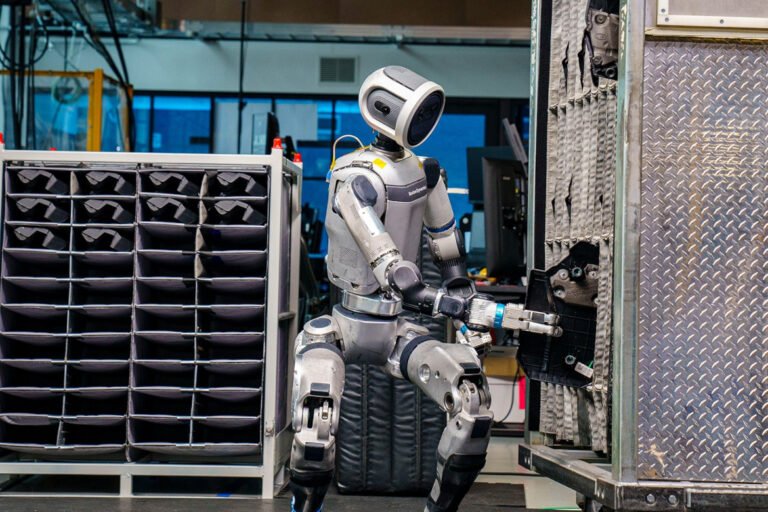
A comprehensive introduction to robotics for beginners, explaining core components, robot types, AI integration, real-world applications, and the technologies shaping intelligent machines.
Robotics sits at the intersection of engineering, computer science, and artificial intelligence. It is the discipline focused on designing machines capable of interacting with the physical world in intelligent and useful ways. Once confined to factory floors and research laboratories, robotics now influences industries ranging from healthcare and logistics to agriculture, defense, and space exploration.
For beginners, robotics can appear overwhelming. It involves mechanics, electronics, programming, sensing systems, and increasingly, machine learning. Yet at its core, robotics is built around a simple idea: creating machines that can perceive, decide, and act. This guide explains the foundational concepts behind robotics and outlines how the field is evolving.
What Is Robotics?
Robotics is the science and engineering of designing, building, programming, and operating robots. It combines multiple disciplines, including:
- Mechanical engineering for physical structure and movement
- Electrical engineering for circuits and power systems
- Computer science for control algorithms and decision-making
- Artificial intelligence for perception and learning
Unlike traditional machines, robots are designed to interact dynamically with their environment. They do not simply execute repetitive mechanical motions; they respond to changes, adapt to inputs, and operate with varying degrees of autonomy.
Core Components of a Robot
Every robot, regardless of complexity, relies on a combination of fundamental components. These elements work together in a continuous control loop.
Sensors
Sensors allow robots to gather information about their surroundings. Depending on the application, robots may use:
- Cameras for visual input
- LiDAR or radar for distance measurement
- Touch sensors for force detection
- Gyroscopes and accelerometers for balance and motion
Without sensors, a robot would operate blindly.
Control Systems
The control system acts as the robot’s brain. It processes incoming sensor data and determines appropriate actions. This may involve simple programmed rules or complex AI-driven models capable of learning and adaptation.
Modern robots often rely on embedded processors or high-performance computing platforms to manage real-time decision-making.
Actuators convert electrical signals into physical motion. These include:
- Electric motors
- Hydraulic systems
- Pneumatic systems
- Servo mechanisms
Actuators determine how precisely and efficiently a robot can move or manipulate objects.
Power Systems
Robots require reliable energy sources. Depending on design, they may use batteries, external power supplies, or fuel-based systems. Power efficiency remains one of the key engineering challenges in robotics.
How Robots Operate: The Feedback Loop
Robots function through a continuous sensing-computing-acting cycle known as a feedback loop.
The process typically follows these steps:
- Sensors collect environmental data
- The controller processes the information
- Actuators execute commands
- New sensor data updates the system
This loop repeats many times per second, allowing robots to adapt to changing conditions. Feedback control is what enables robots to maintain balance, avoid obstacles, and complete tasks with precision.
Types of Robots
Robotics encompasses a wide range of machine categories, each tailored to specific environments and objectives.
Industrial Robots
Common in manufacturing, these robots perform tasks such as welding, painting, assembly, and material handling. They are known for precision, repeatability, and high productivity.
Mobile Robots
Mobile robots move through environments using wheels, tracks, or legs. Examples include warehouse robots, autonomous delivery units, and planetary rovers.
Service Robots
Service robots assist humans in non-industrial environments such as hospitals, hotels, offices, and homes. They prioritize safety and human interaction.
Humanoid Robots
Humanoid robots replicate aspects of human form and movement. They are often used for research, human-robot interaction studies, and increasingly, real-world tasks requiring human-like mobility.
The Role of Artificial Intelligence in Robotics
Modern robotics is increasingly driven by artificial intelligence. AI enhances a robot’s ability to:
- Recognize objects and people
- Navigate complex environments
- Learn from data and experience
- Adapt to unpredictable scenarios
Machine learning algorithms allow robots to improve performance over time rather than relying solely on predefined instructions. Advances in computer vision and reinforcement learning are expanding what robots can accomplish in real-world settings.
Challenges in Robotics
Despite rapid progress, robotics faces significant technical and economic challenges.
Key limitations include:
- High hardware and integration costs
- Mechanical complexity and reliability issues
- Difficulty operating in unstructured environments
- Safety and regulatory considerations
Building a robot that performs reliably outside controlled environments remains one of the most demanding engineering problems.
The Future of Robotics
Robotics is entering a period of accelerated development. Improvements in sensors, processors, and AI models are making robots more capable and affordable. Standardized software platforms and open development ecosystems are reducing barriers to innovation.
Future advancements are expected in:
- Collaborative robots working safely with humans
- Autonomous systems operating in complex public spaces
- Advanced robotic manipulation
- Humanoid robotics for industrial and service applications
As robots become more integrated into daily life, the field will increasingly focus on usability, ethics, and long-term societal impact.
Why Robotics Matters
Robotics is not just about machines; it is about expanding human capability. Robots handle tasks that are dangerous, repetitive, or physically demanding. They improve productivity, increase safety, and enable exploration in environments inaccessible to humans.
For beginners, understanding robotics begins with recognizing that it is a systems discipline. It requires thinking across hardware, software, and intelligence. As technology continues to mature, robotics will shape industries and redefine how humans interact with machines.
The age of robotics is not approaching – it is already unfolding.