
The humanoid robotics industry may be approaching its first meaningful commercial inflection point, driven not by a single breakthrough but by a rapid decline in prices. New data from manufacturers indicates that average system costs have fallen dramatically over the past two years, reshaping expectations around adoption and market structure.
Reported pricing for some platforms has dropped from roughly $85,000 in 2023 to about $25,000 in 2025, reflecting a broader trend across the sector. While high-end systems still command significantly higher prices, the overall range has expanded, with entry-level humanoids now approaching levels previously associated with industrial equipment rather than research prototypes.
The shift suggests that humanoid robots are beginning to follow the economic trajectory seen in other hardware-driven industries, where scaling production and standardizing components lead to rapid cost compression.
From Experimental Platforms to Manufactured Products
For much of the past decade, humanoid robots existed primarily as research systems, built in small volumes and priced accordingly. Their role was to demonstrate capability rather than deliver consistent operational value.
That dynamic is changing as companies move into early production runs. Standardized components, improved supply chains, and iterative design cycles are reducing costs while increasing reliability. Even companies still developing their platforms are publicly targeting price points in the $20,000 to $30,000 range once manufacturing reaches scale.
This transition marks a critical shift. As humanoids become manufactured products rather than bespoke systems, they enter a different set of economic constraints. Pricing, margins, and return on investment begin to matter as much as technical capability.
A Three-Tier Market Begins to Form
As prices fall, the market is starting to segment into distinct tiers, each defined by a different strategy.
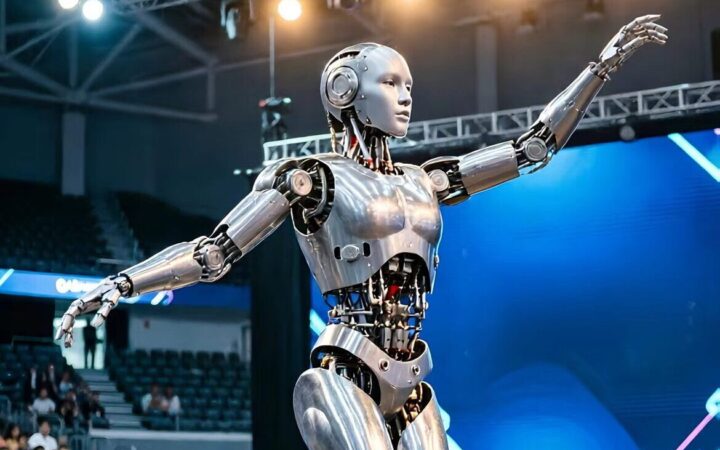
At the high end, premium systems focus on maximum performance, targeting industrial and enterprise environments where reliability and capability justify higher costs. These platforms often exceed $150,000 and emphasize advanced manipulation, safety, and integration.
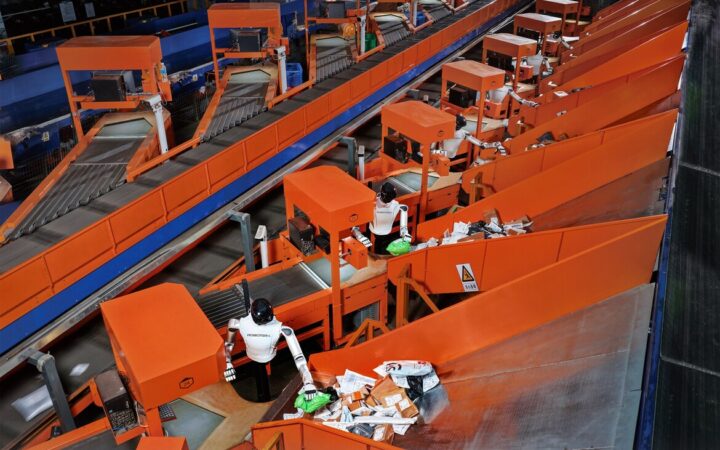
In the middle, a growing category of “good enough” humanoids is emerging. These systems aim to balance performance with affordability, making them viable for applications such as logistics, warehousing, and light manufacturing. With projected pricing around $20,000 to $30,000, this segment is widely expected to drive the majority of unit volume.
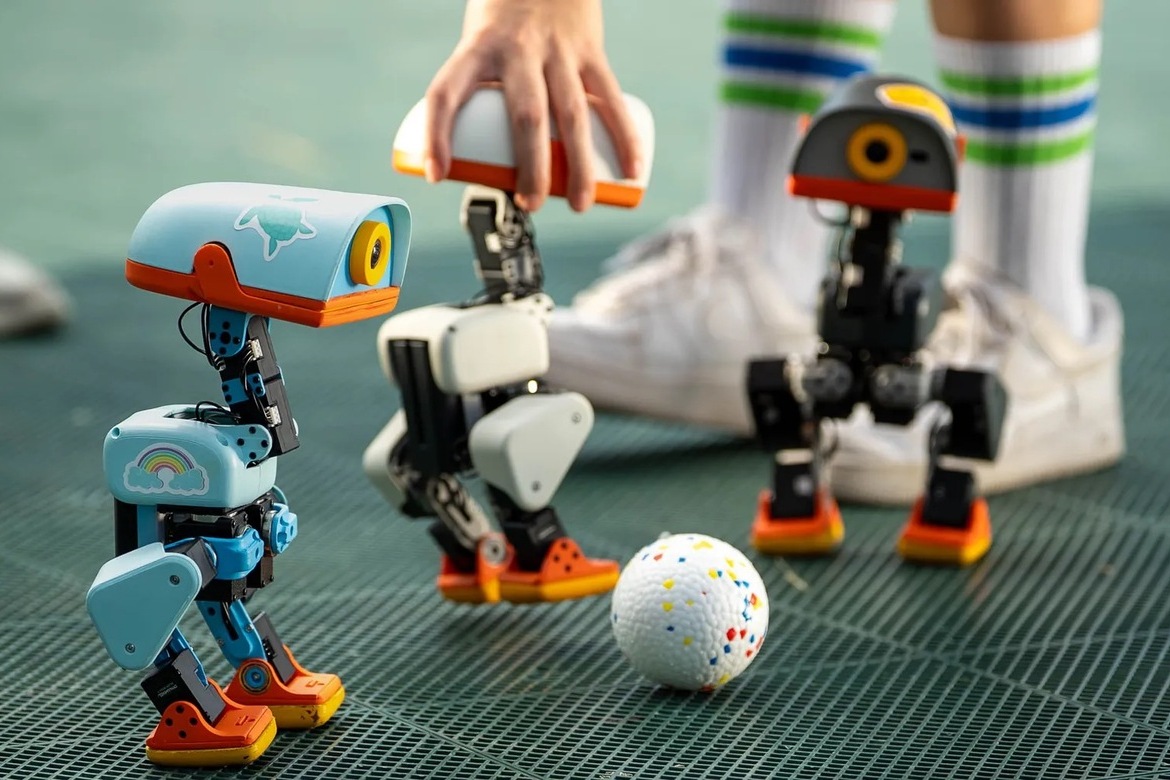
At the lower end, a volume-driven approach is taking shape. Some manufacturers are aggressively reducing costs to accelerate adoption, offering simplified systems at significantly lower price points. This strategy prioritizes scale and rapid iteration, echoing patterns seen in industries such as electric vehicles and solar energy.
Price Compression Creates Strategic Pressure
The rapid decline in prices introduces both opportunity and risk. Lower costs could accelerate adoption in sectors facing labor shortages, where even modest improvements in productivity can justify investment.
At the same time, price compression is likely to strain margins and intensify competition. For companies in the United States and Europe, competing on cost alone may prove difficult, potentially pushing them toward premium positioning strategies that emphasize performance, safety, and integration.
This dynamic mirrors developments in other manufacturing sectors, where different regions specialize in either high-end engineering or cost-efficient production. Whether humanoid robotics follows a similar path remains uncertain, given that large-scale demand has yet to fully materialize.
The emergence of tiered pricing signals that humanoid robotics is entering a more mature phase. The industry is moving beyond demonstrations toward real economic constraints, where success depends not only on what robots can do, but on whether they can do it at a cost that makes sense.
Falling prices are a necessary step toward widespread deployment, but they do not guarantee it. The next phase will test whether humanoid robots can deliver consistent performance in real-world environments and generate measurable returns.
If they can, the current decline in prices could unlock large-scale adoption across industries. If not, it may instead mark a transition from early optimism to a more selective and competitive market.
Disclaimer: RobotsBeat is an independent media brand owned and operated by NuvexMedia LLC, publishing news, research, and insights on artificial intelligence, emerging technologies, automation, and related industries. NuvexMedia LLC invests in and collaborates with companies across the AI, Robotics, technology, software, and digital innovation sectors. These relationships do not influence RobotsBeat's editorial coverage, and the publication maintains full editorial independence to provide accurate, timely, and objective information. © 2026 NuvexMedia LLC. All rights reserved. This content is for informational purposes only and should not be considered legal, tax, investment, financial, or other professional advice.