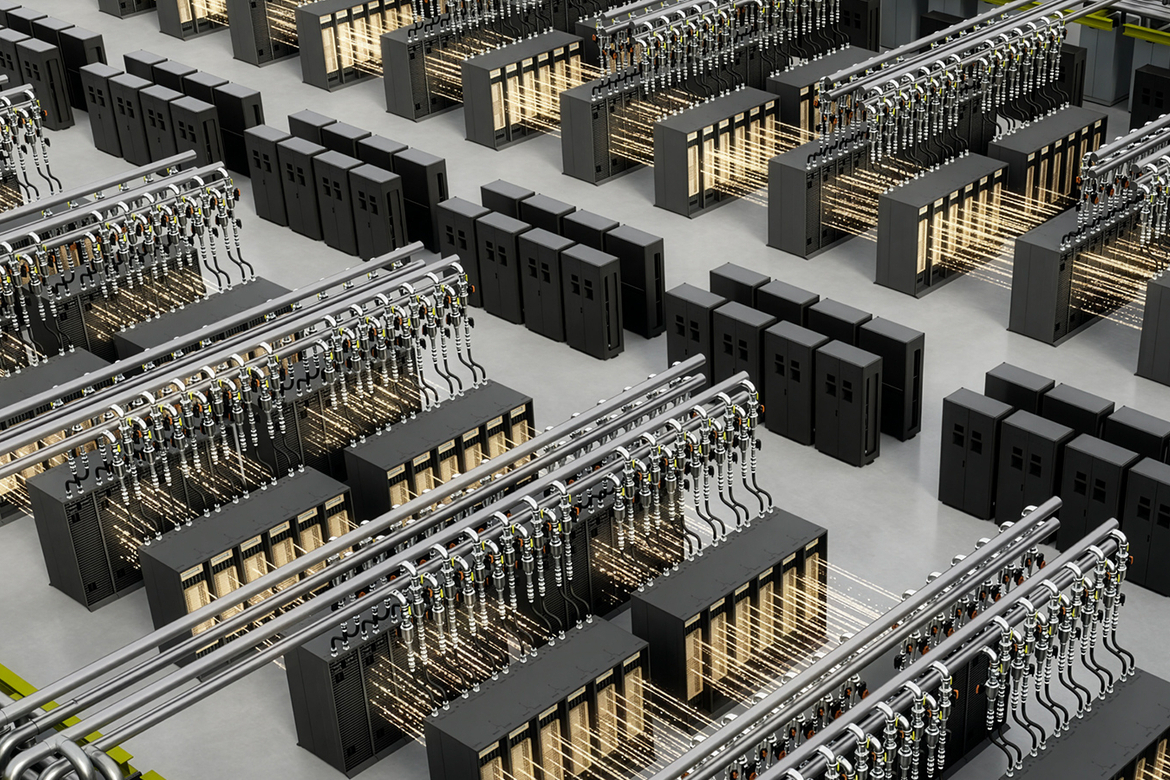

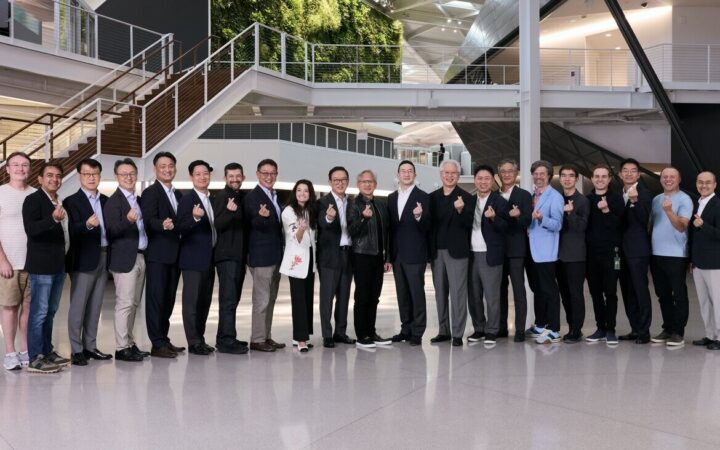
Japan’s Ministry of Economy, Trade and Industry and NVIDIA have announced the world’s first national AI infrastructure dedicated to physical AI, built by newly established company Noetra Corp. using NVIDIA’s Vera Rubin platform. The AI factory will house 13,750 NVIDIA Vera CPUs and 27,500 NVIDIA Rubin GPUs, delivering 140 megawatts of data center capacity built on the NVIDIA DSX platform with Spectrum-X Ethernet networking.
The infrastructure will serve as the computing foundation for Japan’s FRONTia Project – formally titled “Development of Multimodal Foundation Models with a View to AI Robotics and Physical AI” – which brings together Japan’s manufacturing expertise, real-world industrial data, and global technology partners to develop highly reliable multimodal foundation models for physical AI applications.
What the Infrastructure Will Build
The Vera Rubin AI factory will support training of trillion-parameter-scale AI models and the development of open multimodal foundation models that power AI agents, digital twins, robotics, and physical AI applications across manufacturing, logistics, healthcare, and telecommunications. Pretrained model weights will be made broadly available to domestic developers and enterprises alongside NVIDIA software including Nemotron, Cosmos, Isaac GR00T open models, and NeMo libraries – accelerating agentic AI and physical AI development across Japan’s industrial base.
“Japan invented modern manufacturing. Now, it is building the AI factories that will power the next industrial revolution,” said Jensen Huang, founder and CEO of NVIDIA.
Japan’s Strategic Ambition
The FRONTia Project sits within Japan’s broader AI Robotics Strategy, released in March, which sets a national target of capturing more than 30% of the global AI robotics market by 2040 – an estimated $133 billion opportunity. The infrastructure investment is a direct policy instrument for reaching that target, giving Japanese manufacturers, robotics developers, and research institutions access to frontier AI compute that would otherwise require individual enterprise investment at a scale most organizations cannot justify alone.
“Japan has launched the FRONTia Project, which will serve as the core of the country’s physical AI ecosystem,” said Ryosei Akazawa, Japan’s Minister of Economy, Trade and Industry. “By leveraging Japan’s strengths – its onsite expertise and manufacturing technology infrastructure – we will build highly reliable multimodal foundation models and contribute to solving global social challenges.”
Noetra and the Open Ecosystem Model
Noetra Corp. was established to operate the AI factory and manage the foundation model development program. Its model weights will be distributed broadly rather than kept proprietary – a design choice that positions Japan’s national physical AI infrastructure as a shared platform for the country’s industrial ecosystem rather than a competitive advantage held by a single entity.
“Bringing physical AI into the real world requires enormous computing, data and foundational technologies – challenges no single company can solve alone,” said Hironobu Tamba, CEO of Noetra. “Together with partners across Japan and around the world, Noetra will advance Japan-developed multimodal foundation models and accelerate the deployment of physical AI across Japanese industries.”
The announcement follows Japan’s government investment of 700 billion won-equivalent in its national manufacturing alliance and the Goldman Sachs projection that Korean companies – benefiting from similar industrial manufacturing expertise – could capture 30% of global humanoid production by 2035. Japan’s FRONTia infrastructure positions it to compete for a comparable share through a different entry point: not component manufacturing, but the AI foundation models that determine what robots can do.
Disclaimer: RobotsBeat is an independent media brand owned and operated by NuvexMedia LLC, publishing news, research, and insights on artificial intelligence, emerging technologies, automation, and related industries. NuvexMedia LLC invests in and collaborates with companies across the AI, Robotics, technology, software, and digital innovation sectors. These relationships do not influence RobotsBeat's editorial coverage, and the publication maintains full editorial independence to provide accurate, timely, and objective information. © 2026 NuvexMedia LLC. All rights reserved. This content is for informational purposes only and should not be considered legal, tax, investment, financial, or other professional advice.