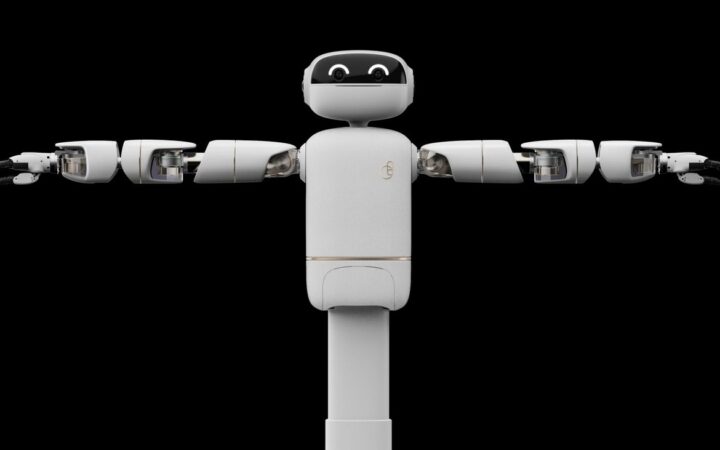

Robbyant, an embodied AI company within China’s Ant Group, has unveiled LingBot-VA 2.0, which it describes as the industry’s first embodied-native video-action world model for robotics – built from scratch for physical-world tasks rather than adapted from video generation models originally designed for digital content creation. The model uses an autoregressive architecture to predict how robot actions change the environment and determine the next action based on those causal relationships.
The distinction matters because the field has largely relied on fine-tuning video generation models for robot control. Those models prioritize image quality and creative generation over physical accuracy and execution speed – properties that create systematic limitations when applied to real-time robotic manipulation in unstructured environments.
🤖Robots that think ahead and act in real time.
LingBot-VA 2.0 — the first embodied-native foundation model. Not fine-tuned from a video generator. Built from scratch for the physical world.
✅ 93.6% success on bimanual tasks
⚡ 150 Hz single-GPU inference
🎯 20 demos to… pic.twitter.com/kV8ENPngL8— Robbyant (@robbyant_brain) July 9, 2026
Four Architectural Innovations
LingBot-VA 2.0 is built around four design choices that collectively address the limitations of adapted video models.
A semantic visual-action tokenizer jointly compresses visual and action information, enabling the model to translate instructions into robot movements more effectively than approaches that treat visual understanding and action planning as separate problems. A strict causal pre-training strategy ensures predictions follow the correct temporal sequence – physically necessary for a model whose predictions must drive real-world actions. A Mixture of Experts architecture increases model capacity without proportional increases in inference cost. An enhanced asynchronous inference mechanism allows the robot to predict future states while simultaneously executing current actions, continuously updating decisions using real-world observations rather than waiting for each prediction to complete before acting.
Together these innovations enable real-time closed-loop control at 150 Hz on a single GPU – a performance level that makes the model viable for deployment on edge hardware in robotic systems rather than requiring cloud inference.
Task Adaptation and Long-Term Memory
LingBot-VA 2.0 adapts to new manipulation tasks through in-context learning using as few as 20 demonstrations, without requiring parameter updates. The capability addresses a persistent challenge in commercial robot deployment: the cost and time required to retrain or fine-tune models for each new task has been a major barrier to expanding what deployed robots can do.
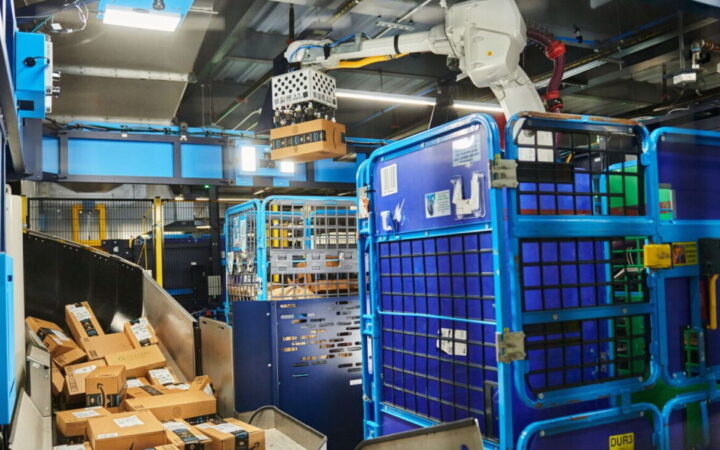
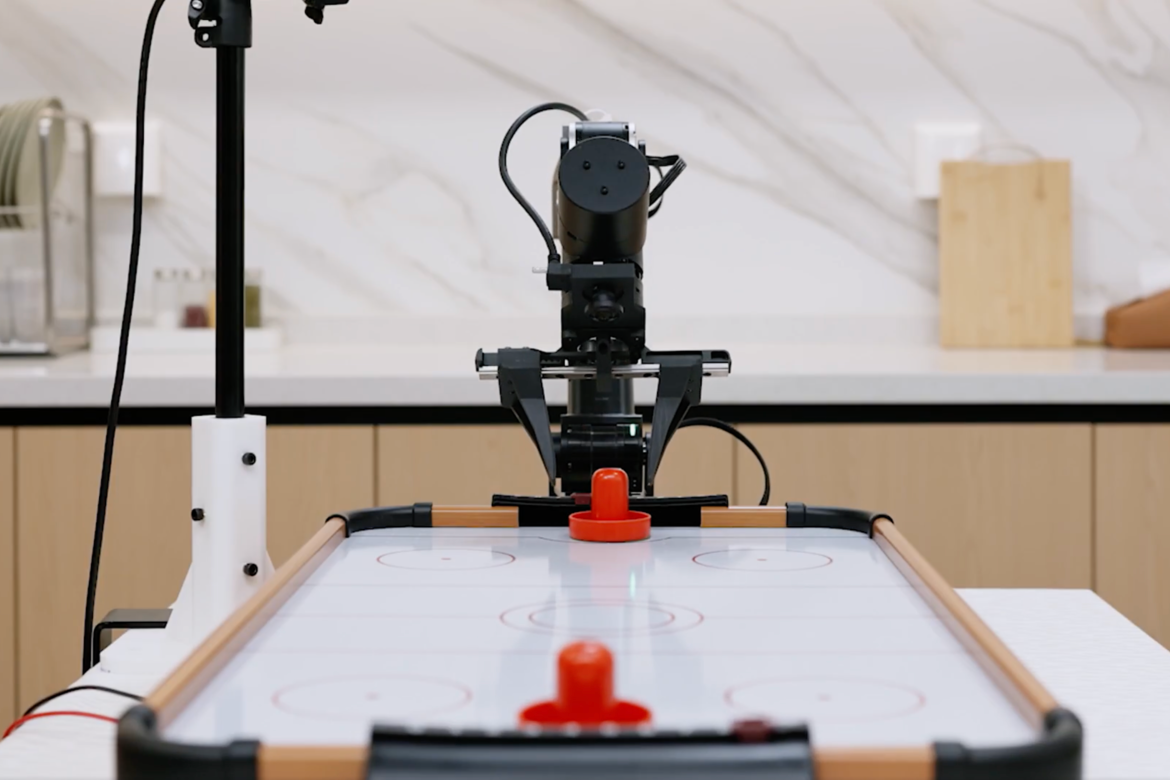
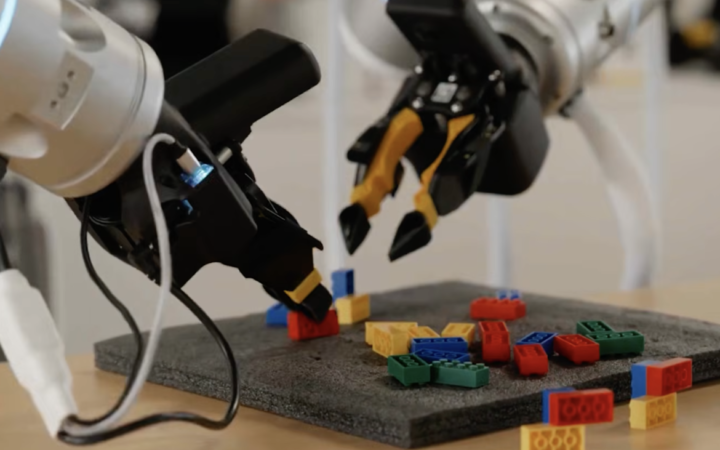
The model also retains long-term memory across multi-step tasks, enabling robots to distinguish visually identical but contextually different situations and accurately execute sequences that require counting, ordering, and repeated actions. Robbyant demonstrated the system across tasks including preparing breakfast, unpacking deliveries, inserting tubes, picking up screws, folding clothes, and opening drawers.
Benchmark results on RoboTwin 2.0 and LIBERO simulation evaluations show LingBot-VA 2.0 outperforming existing methods across multiple task settings, though independent replication of those results has not yet been published.
The Operational Loop
In deployment, the system first predicts future visual states from current observations and language instructions. An inverse dynamics model converts those predictions into executable robot actions. Real-world observations then continuously replace predicted states, keeping the control loop grounded in what the robot actually sees rather than allowing prediction drift to compound across a long-horizon task.
“Robbyant will continue to explore new limits in embodied intelligence while accelerating the development of an open technology and application ecosystem to expedite robot deployment in industrial and real-world scenarios,” said Zhu Xing, CEO of Robbyant.
Disclaimer: RobotsBeat is an independent media brand owned and operated by NuvexMedia LLC, publishing news, research, and insights on artificial intelligence, emerging technologies, automation, and related industries. NuvexMedia LLC invests in and collaborates with companies across the AI, Robotics, technology, software, and digital innovation sectors. These relationships do not influence RobotsBeat's editorial coverage, and the publication maintains full editorial independence to provide accurate, timely, and objective information. © 2026 NuvexMedia LLC. All rights reserved. This content is for informational purposes only and should not be considered legal, tax, investment, financial, or other professional advice.