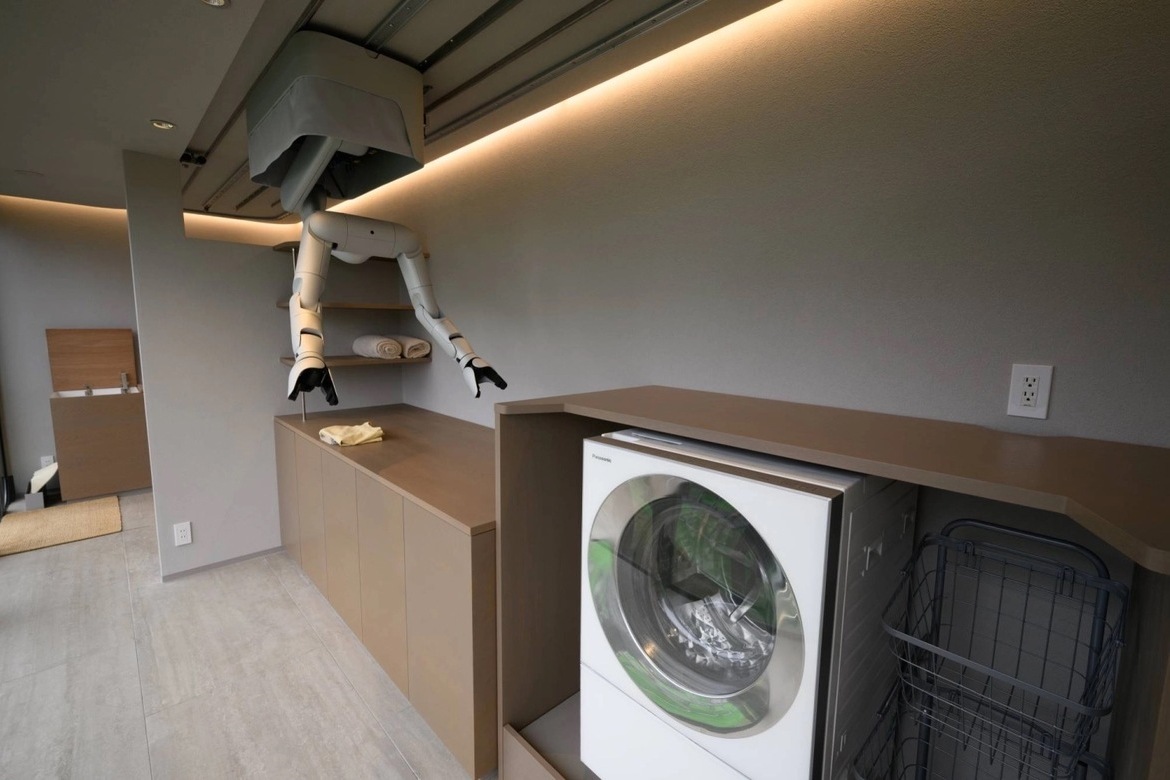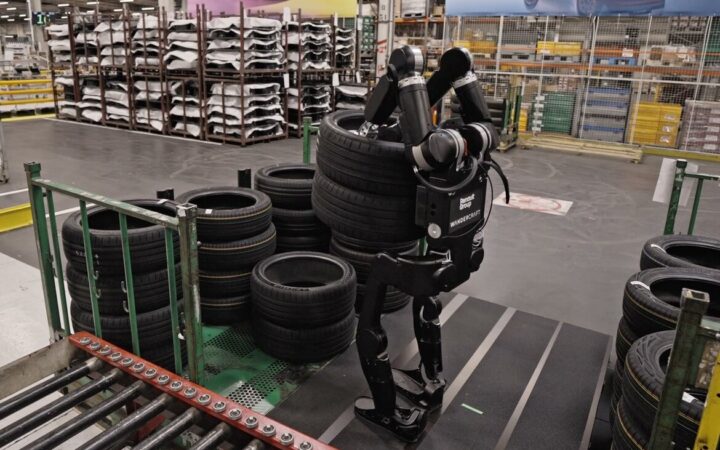
European semiconductor manufacturer STMicroelectronics is preparing to introduce humanoid robots into its production facilities while retraining employees for new roles, as the company attempts to modernize aging chip factories without shutting them down.
The plan was outlined by company executives during a semiconductor industry conference in Sopot, Poland, where STMicroelectronics’ manufacturing leadership demonstrated early robotics deployments designed to automate repetitive production tasks.
The initiative reflects the growing role of robotics in semiconductor manufacturing as companies attempt to maintain competitiveness against newer, highly automated facilities in Asia.
Automating Repetitive Tasks in Older Fabs
According to STMicroelectronics, robots are being introduced to handle physically demanding or repetitive work inside fabrication plants.
One demonstration showed a robotic system loading silicon wafer carriers into production equipment, a task that requires precision and repetition across continuous shifts.
Executives indicated that the company could deploy more than 100 humanoid robots across its facilities over the next few years.
The machines are expected to work alongside existing automation systems already used in semiconductor manufacturing.
While fabs are already among the most automated industrial environments, certain tasks still require human operators, particularly in older plants that were built before current automation technologies became standard.
Humanoid robots are being explored as a way to bridge that gap without requiring complete redesigns of existing factories.
Modernizing Aging Semiconductor Facilities
The strategy comes as European semiconductor companies face increasing competition from highly automated production lines in countries such as China.
Many of Europe’s chip fabrication plants were built decades ago and require substantial investment to remain competitive.
However, rebuilding or replacing existing fabs can be prohibitively expensive, particularly in regions where regulatory processes and labor negotiations add complexity to large industrial projects.
By introducing robotics and improving workforce skills, STMicroelectronics hopes to extend the lifespan of its older facilities while improving productivity.
The company has stated that maintaining manufacturing capacity in Europe remains a priority.
Workforce Transition and Skills Development
Alongside robotics deployment, the company plans to retrain workers for higher-skilled roles in semiconductor manufacturing.
The shift reflects a broader transformation taking place across industrial sectors where automation is increasingly changing the nature of factory work.
Instead of eliminating jobs entirely, the company aims to move employees into positions that require technical expertise in operating and maintaining advanced manufacturing systems.
Industry executives say these skills are already in short supply.
Humanoid robots are expected to cover certain repetitive roles across multiple shifts. In factories that operate continuously, a single robot could potentially replace several shift positions performing the same task.
However, company leaders emphasize that the goal of the initiative is to improve efficiency rather than close facilities.
Robotics and Europe’s Semiconductor Strategy
The move also intersects with broader debates about Europe’s semiconductor strategy.
Government programs such as the European Chips Act are designed primarily to support new semiconductor projects rather than upgrades to older facilities.
Industry groups are now advocating for expanded support in a potential “Chips Act 2.0”, arguing that existing production infrastructure should also receive investment.
For companies like STMicroelectronics, robotics could become a key tool for keeping older manufacturing plants economically viable while avoiding costly closures.
As semiconductor manufacturing becomes more complex and globally competitive, automation may increasingly determine whether long-established facilities remain part of the industry’s future.
Disclaimer: RobotsBeat is an independent media brand owned and operated by NuvexMedia LLC, publishing news, research, and insights on artificial intelligence, emerging technologies, automation, and related industries. NuvexMedia LLC invests in and collaborates with companies across the AI, Robotics, technology, software, and digital innovation sectors. These relationships do not influence RobotsBeat's editorial coverage, and the publication maintains full editorial independence to provide accurate, timely, and objective information. © 2026 NuvexMedia LLC. All rights reserved. This content is for informational purposes only and should not be considered legal, tax, investment, financial, or other professional advice.