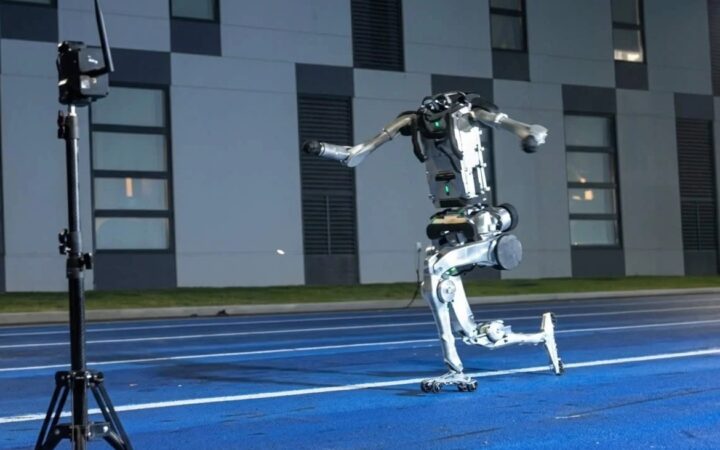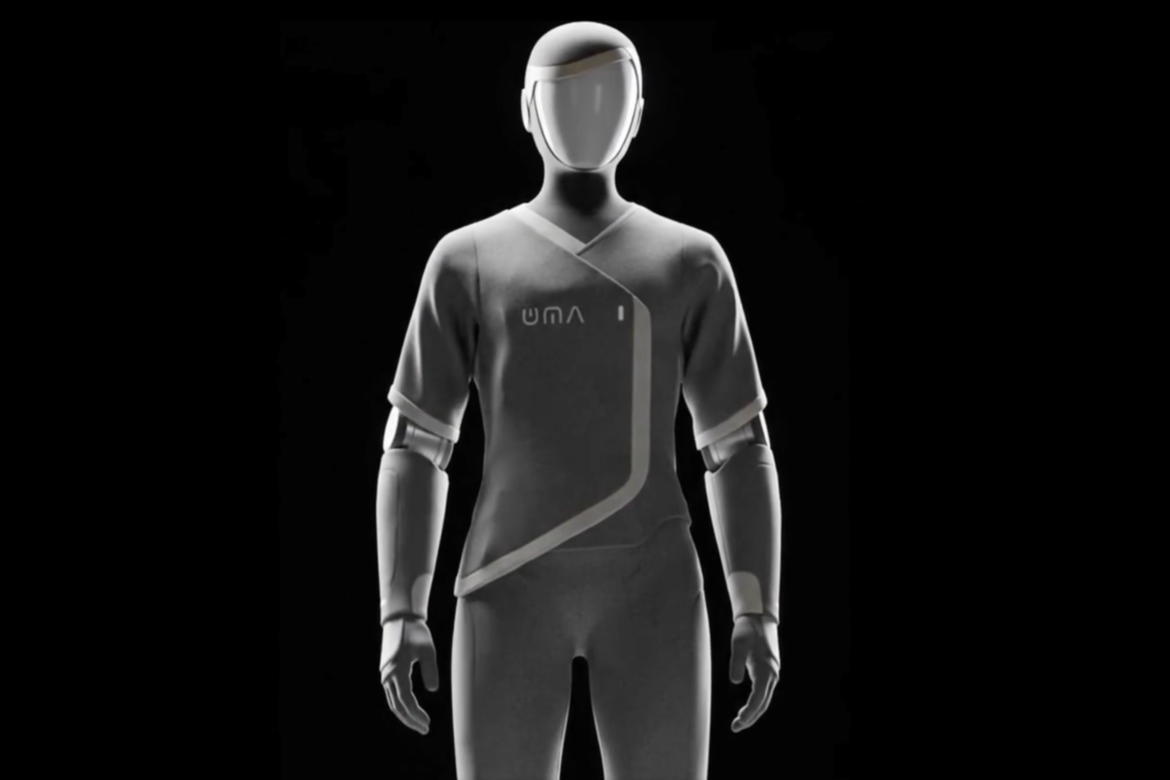

Rémi Cadene, the CEO and co-founder of Paris-based startup UMA, has unveiled an early prototype of Northstar, the company’s AI-powered humanoid robot, targeting European manufacturing plants, logistics warehouses, and eventually homes. Cadene showed the prototype to journalists at UMA’s headquarters on Monday and said the company is already in conversations with 50 potential customers about use cases. “Labor costs are very high and, given the demographic trends, there will be significant demand,” he said, referencing Europe’s aging workforce.
UMA – Universal Mechanical Assistant – emerged from stealth in December 2025 with a founding team drawn from some of the most significant institutions in AI and robotics.
The Founding Team
Cadene’s career makes UMA one of the most credentialed AI-in-robotics founding teams in Europe. He developed Tesla Autopilot at scale and built Tesla’s Optimus AI from scratch, before leading LeRobot at Hugging Face – the open-source robotics training toolkit that has become foundational infrastructure for academic and startup robotics development worldwide.
Co-founder Pierre Sermanet brings two decades of deep learning and robotics research from New York University and Google DeepMind, including contributions to Gemini. Co-founder Simon Alibert co-founded LeRobot alongside Cadene and brings expertise in scalable AI infrastructure. Robert Knight, the fourth co-founder, has more than 25 years of humanoid robot hardware design experience and open-sourced the widely used SO-100 robot design.
The combination of AI model expertise – Cadene and Sermanet – with hardware experience and open-source infrastructure knowledge represents a full-stack founding team rather than an AI-first or hardware-first company.
The European Market Thesis
UMA is making a deliberate bet that Europe, not the U.S. or China, is the right place to build a humanoid robotics company. The argument rests on the continent’s aging workforce combined with its dense industrial infrastructure. “We have a historic industrial network – a lot of companies in the industry, with very highly qualified people, but an aging society,” Cadene has said. The 50 potential customer conversations already underway reflect a market where labor cost pressure and demographic trends create genuine near-term demand, distinct from the speculative demand that characterizes some robotics market projections.
UMA is backed by Greycroft, Relentless, and Unity Growth, alongside AI researchers including Yann LeCun, Olivier Pomel, and Thomas Wolf. The company is launching pilot programs in logistics and manufacturing in 2026.
What Northstar Is
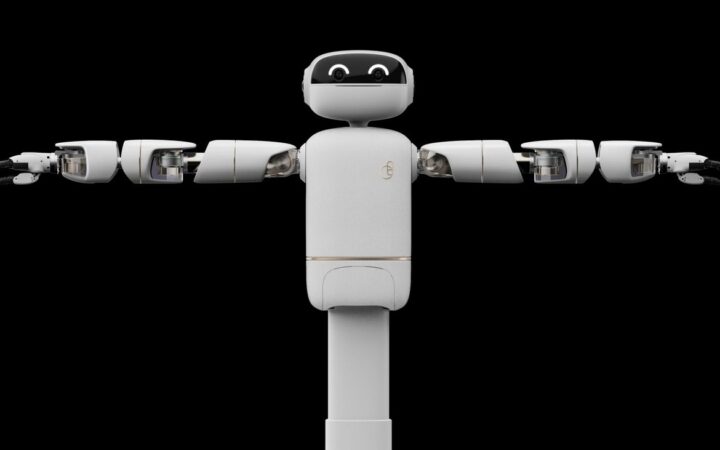
UMA’s robot lineup includes a mobile industrial platform with dual arms for warehouses and assembly lines, and a compact humanoid designed for human-oriented spaces including hospitals, laboratories, and homes. The Northstar prototype shown to journalists on Monday is at an early stage, and the company has not disclosed pricing, weight specifications, or a commercial delivery timeline. Pilot programs in 2026 will provide the first operational performance data.
The European humanoid robot market is developing on a different timeline from the U.S. and China. Germany’s VDMA study earlier this year identified capital availability as Europe’s primary structural disadvantage against Chinese government-backed and U.S. venture-funded competitors. UMA’s AI-first founding team and European industrial customer focus represent one model for how a European humanoid company can differentiate – by combining frontier AI capability with proximity to the manufacturing customers it is targeting.
Disclaimer: RobotsBeat is an independent media brand owned and operated by NuvexMedia LLC, publishing news, research, and insights on artificial intelligence, emerging technologies, automation, and related industries. NuvexMedia LLC invests in and collaborates with companies across the AI, Robotics, technology, software, and digital innovation sectors. These relationships do not influence RobotsBeat's editorial coverage, and the publication maintains full editorial independence to provide accurate, timely, and objective information. © 2026 NuvexMedia LLC. All rights reserved. This content is for informational purposes only and should not be considered legal, tax, investment, financial, or other professional advice.