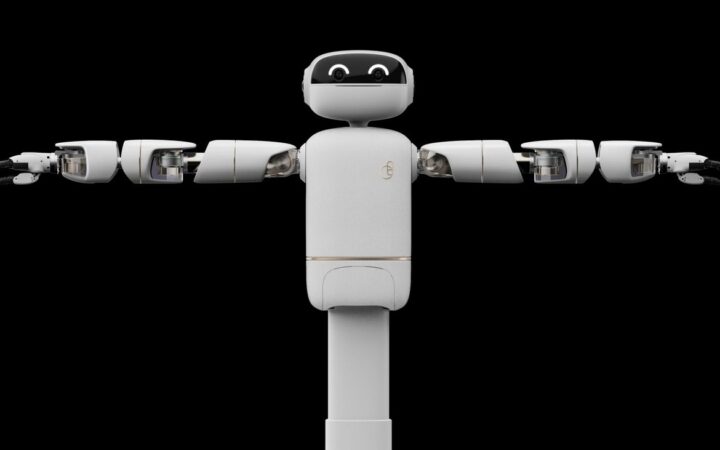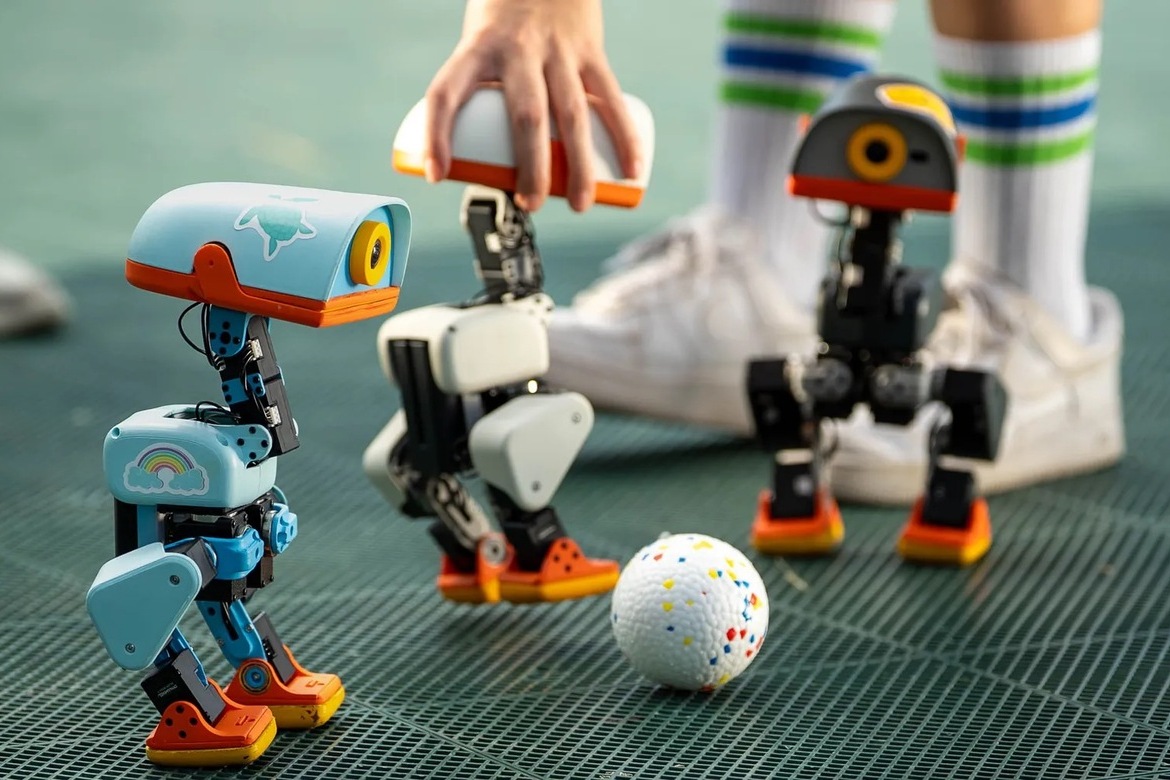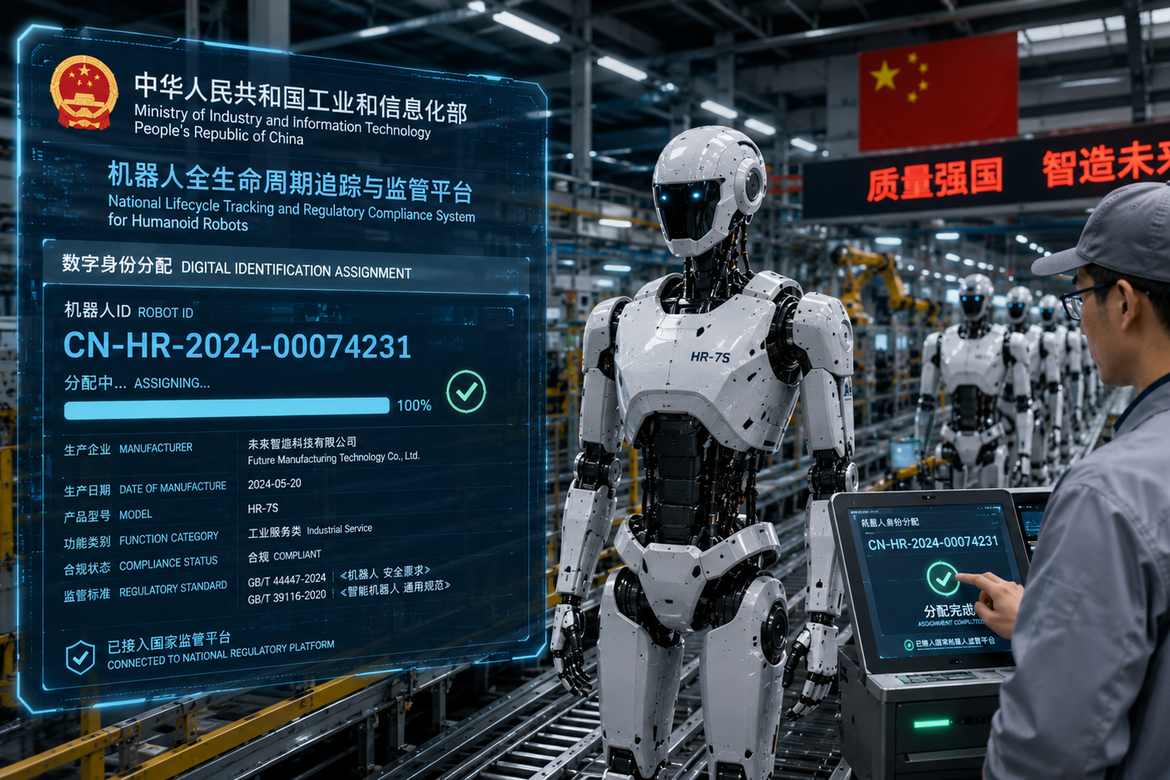


China has launched the Humanoid Full Lifecycle Management Service Platform, a national initiative that assigns every humanoid robot manufactured in the country a unique digital identification code, enabling end-to-end tracking from production through recycling. The platform was announced on Friday by the Humanoid Robotics and Embodied Intelligence Standardization committee under the Ministry of Industry and Information Technology. More than 100 Chinese humanoid manufacturers are already participating, with over 28,000 robots across 200 models assigned digital IDs at launch.
The initiative is the first national-level lifecycle management platform for humanoid robots in the world, and represents China’s most significant regulatory infrastructure move in the sector to date.
How the ID System Works
Each humanoid robot ID code consists of four components. A two-digit national code enables tracking of cross-border shipments and sales. A four-digit manufacturer code identifies the Chinese firm responsible for producing the robot. A six-digit product model code identifies the robot type. A 17-digit serial code distinguishes individual units within a model line.
The system covers every stage of a robot’s commercial life: research and development, manufacturing, market access, sales, operation, and end-of-life recycling. It applies to all stakeholders across the supply chain – manufacturers, service providers, sellers, users, and recycling facilities.
Yu Xiuming, deputy head at the China Electronics Standardization Institute, said the system is designed to address core issues in the humanoid robot industry related to safety, oversight, and governance, while accelerating deployment by providing a standardized accountability framework.
The Regulatory Logic
The platform addresses a practical challenge that emerges as humanoid robot deployments scale from dozens to thousands of units: traceability. When a robot causes an incident – a safety failure, a property damage event, or a malfunction in a public environment – knowing exactly which unit, from which manufacturer, running which software version, is essential for both regulatory accountability and product improvement. Without a standardized identification system, that traceability is difficult to establish across a fragmented supply chain with over 150 manufacturers.
China also released accompanying guidelines for lifecycle management and ID usage as part of the same initiative, creating a regulatory framework that stakeholders across the industry can comply with uniformly.
Market Context
The global humanoid robot market expanded 508% last year to approximately 18,000 units of total shipments, according to International Data Corporation, with Chinese manufacturers taking a leading position supported by a comprehensive industrial supply chain. The scale and pace of that growth makes the absence of a standardized tracking system an increasingly significant governance gap – one the MIIT platform is designed to close before deployment volumes grow further.
The launch follows a series of public humanoid robot deployments in China spanning factory floors, traffic intersections, airport ground operations, and public events. As humanoid robots move from controlled industrial environments into more varied public settings, the regulatory infrastructure for monitoring their performance, safety record, and end-of-life management becomes commensurately more important.
Disclaimer: RobotsBeat is an independent media brand owned and operated by NuvexMedia LLC, publishing news, research, and insights on artificial intelligence, emerging technologies, automation, and related industries. NuvexMedia LLC invests in and collaborates with companies across the AI, Robotics, technology, software, and digital innovation sectors. These relationships do not influence RobotsBeat's editorial coverage, and the publication maintains full editorial independence to provide accurate, timely, and objective information. © 2026 NuvexMedia LLC. All rights reserved. This content is for informational purposes only and should not be considered legal, tax, investment, financial, or other professional advice.