

Genesis AI has unveiled GENE-26.5, a robotics foundation model designed to give robots human-level dexterous manipulation capability, alongside a proprietary robotic hand and data-collection glove system built to generate training data at scale. The San Carlos, California-based company, which emerged from stealth with $105 million in funding last year, simultaneously announced that a first general-purpose robot built on the technology will be revealed soon.
The announcement addresses what Genesis AI frames as the central bottleneck in physical AI development: the shortage of high-quality manipulation data, and the gap between human hand capability and what robotic end effectors can reliably execute.
What GENE-26.5 Can Do
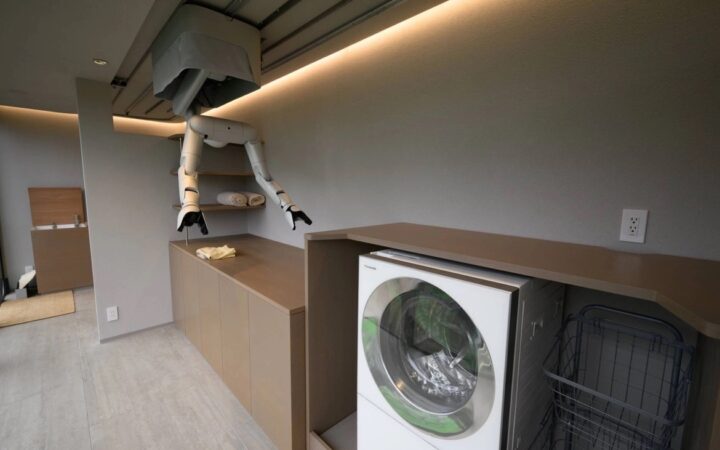
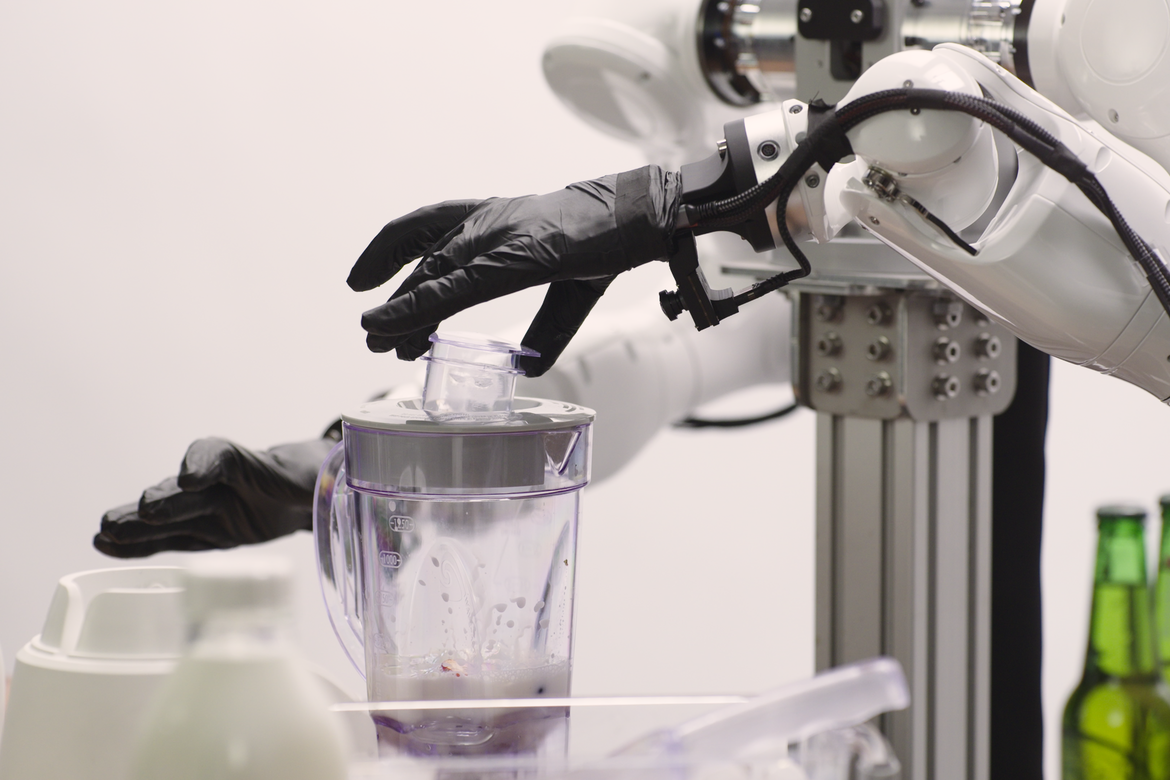
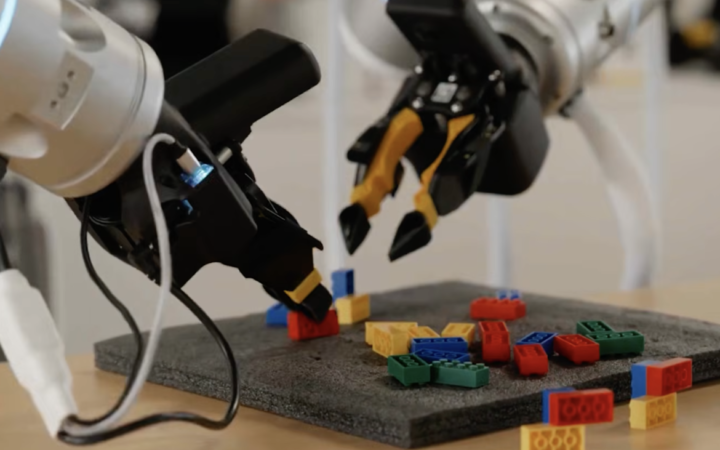
Genesis AI released a demonstration video showing GENE-26.5 performing a range of complex, multi-step manipulation tasks. These include cooking a 20-step meal involving chopping, one-handed egg cracking, and two-hand coordination; preparing a smoothie with mid-air serving; conducting laboratory experiments requiring pipetting and liquid transfer with delicate instrumentation; wire harnessing described by the company as one of the most difficult tasks in electronics manufacturing; solving a Rubik’s Cube through continuous in-air manipulation; simultaneously grasping four objects of varying sizes with one hand and sorting them into bins; and playing piano at human performance level.
The task range spans from domestic service to precision industrial applications – a deliberate demonstration that the model generalizes across contexts rather than being optimized for a single domain.
The Hardware System
The robotic hand mirrors the human hand in form and function, designed to close the embodiment gap that has historically limited robots’ ability to learn from human demonstration data. It pairs with a data-collection glove equipped with tactile-sensing electronic skin. When worn by a human operator, the glove creates a 1:1:1 mapping between the glove, the human hand, and the robotic hand – allowing human task execution to translate directly into robot training data without the lossy conversion that conventional teleoperation introduces.
Genesis AI says the glove costs 100 times less than typical data-collection hardware and achieves up to five times greater data collection efficiency than traditional teleoperation methods in internal testing. The company is engaging partners to deploy the glove in real-world work environments, where workers wearing the device during normal operations would continuously generate new categories of training data – building what Genesis AI describes as a potential global human skill library.
The data engine also draws on egocentric video from humans wearing cameras and large-scale internet video of human activity, giving the model exposure to the full range of how people interact with physical environments.
Simulation and the Sim-to-Real Gap
Genesis AI has developed a proprietary simulation system using hyper-realistic physics and rendering to narrow the gap between synthetic training environments and real-world conditions. The system allows teams to train and evaluate models significantly faster than physical testing, which is slow, expensive, and difficult to scale.
“General-purpose robotics stands to reshape the global economy while opening an entirely new chapter for AI,” said Eric Schmidt, former CEO of Google and an investor in Genesis AI. “This marks an important milestone for their team and the robotics industry more broadly.”
Genesis AI is backed by Eclipse, Bpifrance, and HSG, alongside Schmidt, Xavier Niel, and AI researchers Daniela Rus and Vladlen Koltun.
Disclaimer: RobotsBeat is an independent media brand owned and operated by NuvexMedia LLC, publishing news, research, and insights on artificial intelligence, emerging technologies, automation, and related industries. NuvexMedia LLC invests in and collaborates with companies across the AI, Robotics, technology, software, and digital innovation sectors. These relationships do not influence RobotsBeat's editorial coverage, and the publication maintains full editorial independence to provide accurate, timely, and objective information. © 2026 NuvexMedia LLC. All rights reserved. This content is for informational purposes only and should not be considered legal, tax, investment, financial, or other professional advice.