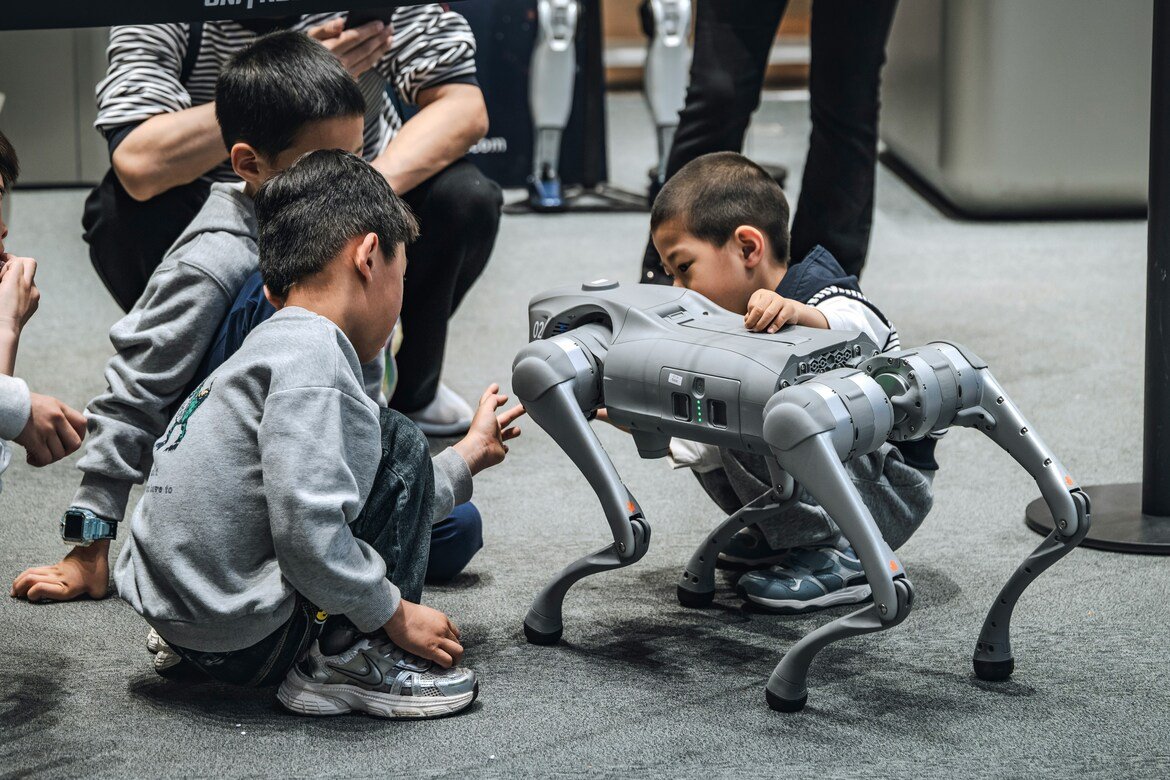


Taiwan’s Ministry of Economic Affairs is working with the Industrial Technology Research Institute and six industry partners to develop indigenous quadruped robot technology, targeting the global robot dog market projected to grow from below $1 billion in 2025 to more than $4 billion by 2035. The initiative is explicitly designed to leverage Taiwan’s strengths in semiconductors, ICT, and precision machinery to build a non-China supply chain for four-legged robot hardware and software.
ITRI developed the foundational platform in 18 months, establishing autonomous technologies spanning components, key modules, full-machine control, and AI software. The platform is designed to allow Taiwanese firms to build specialized capabilities on top of shared infrastructure rather than developing everything independently.
The Industry Consortium and Training Infrastructure
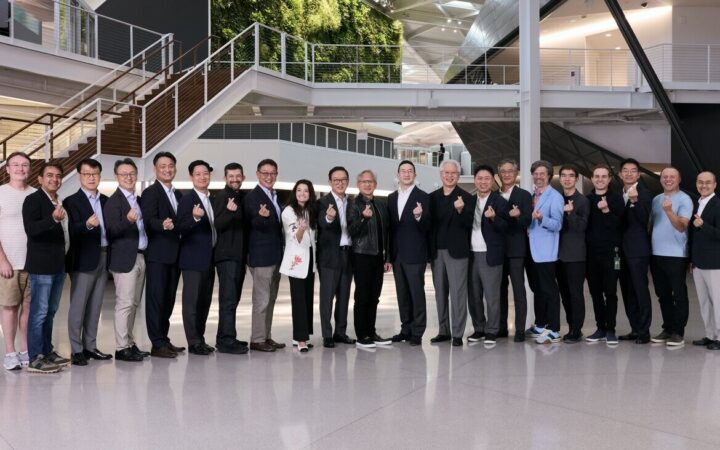
Six companies have jointly developed domestic modules and prototypes on the ITRI platform: Solomon Technology, Compal Electronics, Inventec, Teco Electric and Machinery, Compertum Microsystems, and NexCOBOT. Their combined expertise spans motors, LiDAR, controllers, inertial measurement units, AI computing platforms, and system integration – the full hardware stack for a competitive quadruped robot platform.
To accelerate AI training, the team used NVIDIA’s Taipei-1 supercomputer and the Omniverse digital twin platform to train more than 4,000 virtual robot dogs simultaneously before physical deployment. The simulation-first approach compresses the training timeline and reduces the real-world testing burden for behaviors that can be validated adequately in simulation.
Validated Applications
The platform has completed verification for four use cases. The firefighting and disaster response configuration has passed capability verification for detection and search-and-rescue operations in high-temperature, toxic, and flammable environments. Underground tunnel inspection, autonomous navigation, and swarm operations round out the validated application set. Target deployment sectors include energy facilities, petrochemical plants, smart logistics, and public safety.
The Military Dimension
In a parallel development, the National Chungshan Institute of Science and Technology has revealed a military robot dog system produced under U.S. technology licensing, with three configurations: LiDAR, reconnaissance, and combat. Mass production and military procurement are expected to begin in 2028. The NCSIST system is planned for base patrols, beach defense, urban warfare, and multi-domain uncrewed operations, with NCSIST president Lee Shih-chiang noting that applications extend beyond combat to routine base inspection and security patrol missions.
The Competitive Context
The global quadruped market is currently led by U.S. and European firms. Ghost Robotics of the United States focuses on military and defense applications. Switzerland’s ANYbotics specializes in industrial inspections for power and petrochemical sectors. Both have decades of accumulated development experience. Taiwan’s program is entering a market where the incumbents have significant technical and commercial head starts, but where Taiwan’s semiconductor and manufacturing capabilities represent a structural cost and integration advantage if the indigenous platform can reach competitive capability levels by the time the market reaches scale around 2030.
Disclaimer: RobotsBeat is an independent media brand owned and operated by NuvexMedia LLC, publishing news, research, and insights on artificial intelligence, emerging technologies, automation, and related industries. NuvexMedia LLC invests in and collaborates with companies across the AI, Robotics, technology, software, and digital innovation sectors. These relationships do not influence RobotsBeat's editorial coverage, and the publication maintains full editorial independence to provide accurate, timely, and objective information. © 2026 NuvexMedia LLC. All rights reserved. This content is for informational purposes only and should not be considered legal, tax, investment, financial, or other professional advice.