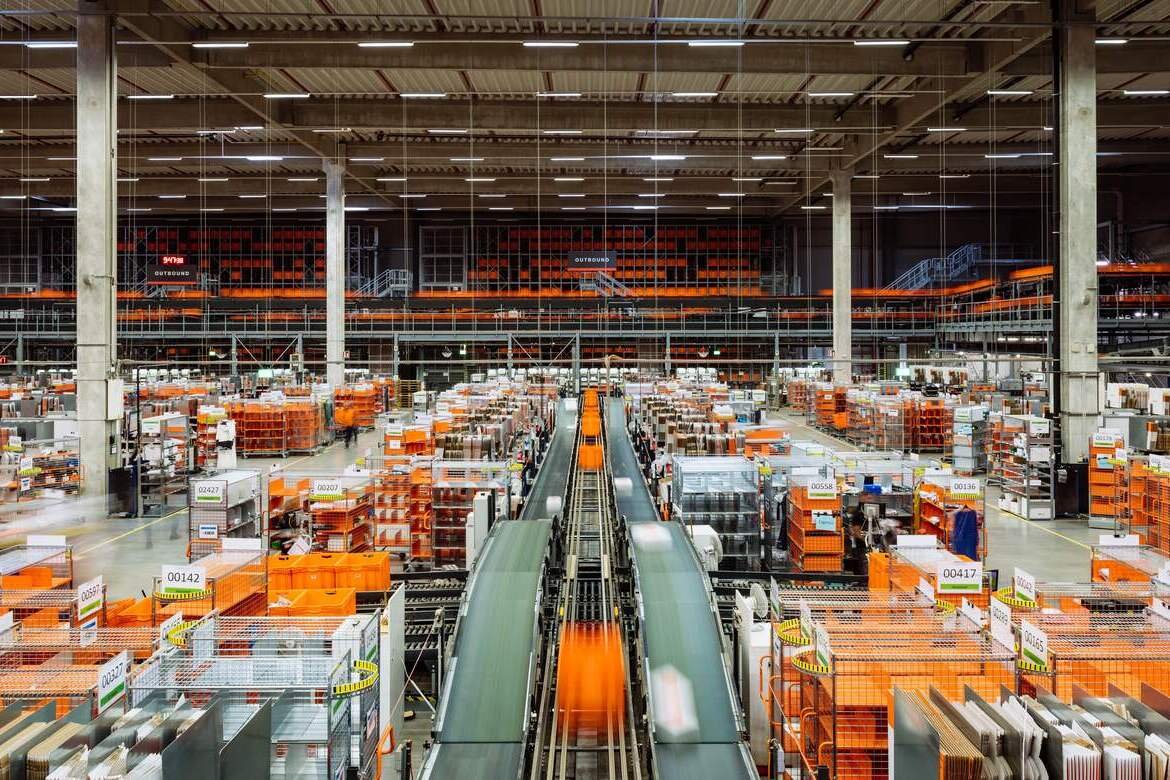


European fashion retailer Zalando is expanding its use of robotics as it seeks to automate some of the most complex processes inside its fulfilment centres.
The company announced plans to install up to 50 AI-powered robots developed by Polish robotics firm Nomagic across its logistics network in Europe. The deployment follows a pilot phase that demonstrated the robots’ ability to handle large volumes of item-level picking within the retailer’s highly dynamic inventory environment.
The rollout represents one of the largest robotics expansions in fashion logistics, an industry where automation has historically been more difficult than in sectors such as electronics or packaged goods.
Unlike uniform industrial items, fashion products vary widely in size, shape, and packaging. Zalando’s warehouses process thousands of different items daily, creating a complex environment for robotic manipulation.
Solving Fashion Logistics’ “Shoebox Problem”
A key focus of the deployment is the automated handling of shoeboxes, long considered a difficult challenge for warehouse robotics.
Shoeboxes are common items in fashion fulfilment centres, but their loose lids and varying orientations can cause issues for standard robotic grippers. When handled incorrectly, lids may detach, slowing automated workflows and requiring human intervention.
Nomagic’s system addresses this issue through a combination of AI-powered computer vision and specialized gripping hardware.
The robots analyze each item using vision algorithms that identify the product type and orientation before adjusting their grip strategy. Custom-designed grippers then secure the box from multiple sides, keeping the lid in place during movement through automated sorting systems.
This capability allows the robots to pick items, scan them, and place them directly into pocket sorting systems that route products toward packaging stations.
Scaling Robotics Across European Warehouses
The decision to expand the deployment follows a testing phase in which the robots achieved picking volumes of roughly 100,000 items per day.
Initial installations are already operating in fulfilment centres in Germany and Italy, with additional deployments planned for logistics hubs in the Netherlands, Sweden, and France. Zalando also plans to introduce the robots at its new fulfilment centre in Giessen, Germany, scheduled to ramp up operations later this year.
For Zalando, the goal is not to replace warehouse workers but to automate repetitive processes while allowing employees to focus on more complex tasks.
Marcus Daute, vice president of logistics network at Zalando, said the scale of the company’s operations requires automation systems that integrate closely with human workflows.
Robotics Moves Deeper into E-Commerce Logistics
The expansion highlights how robotics is becoming an increasingly central component of large-scale e-commerce infrastructure.
Online retailers face constant pressure to process orders faster while managing rising product variety and fluctuating demand. Automation systems capable of adapting to changing inventory conditions have become critical to maintaining operational efficiency.
Nomagic’s approach reflects a broader shift in warehouse robotics toward AI-driven systems that learn from real-world operations. As robots process more items, their models improve, allowing them to handle increasingly complex product assortments.
For the logistics industry, this shift marks a transition from rigid automation toward more adaptable robotic systems capable of operating in the highly variable environments typical of e-commerce warehouses.
If successful at scale, Zalando’s rollout could offer a model for how robotics and AI combine to tackle one of retail’s most difficult operational challenges: moving millions of unique products through fulfilment centres quickly and reliably.
Disclaimer: RobotsBeat is an independent media brand owned and operated by NuvexMedia LLC, publishing news, research, and insights on artificial intelligence, emerging technologies, automation, and related industries. NuvexMedia LLC invests in and collaborates with companies across the AI, Robotics, technology, software, and digital innovation sectors. These relationships do not influence RobotsBeat's editorial coverage, and the publication maintains full editorial independence to provide accurate, timely, and objective information. © 2026 NuvexMedia LLC. All rights reserved. This content is for informational purposes only and should not be considered legal, tax, investment, financial, or other professional advice.