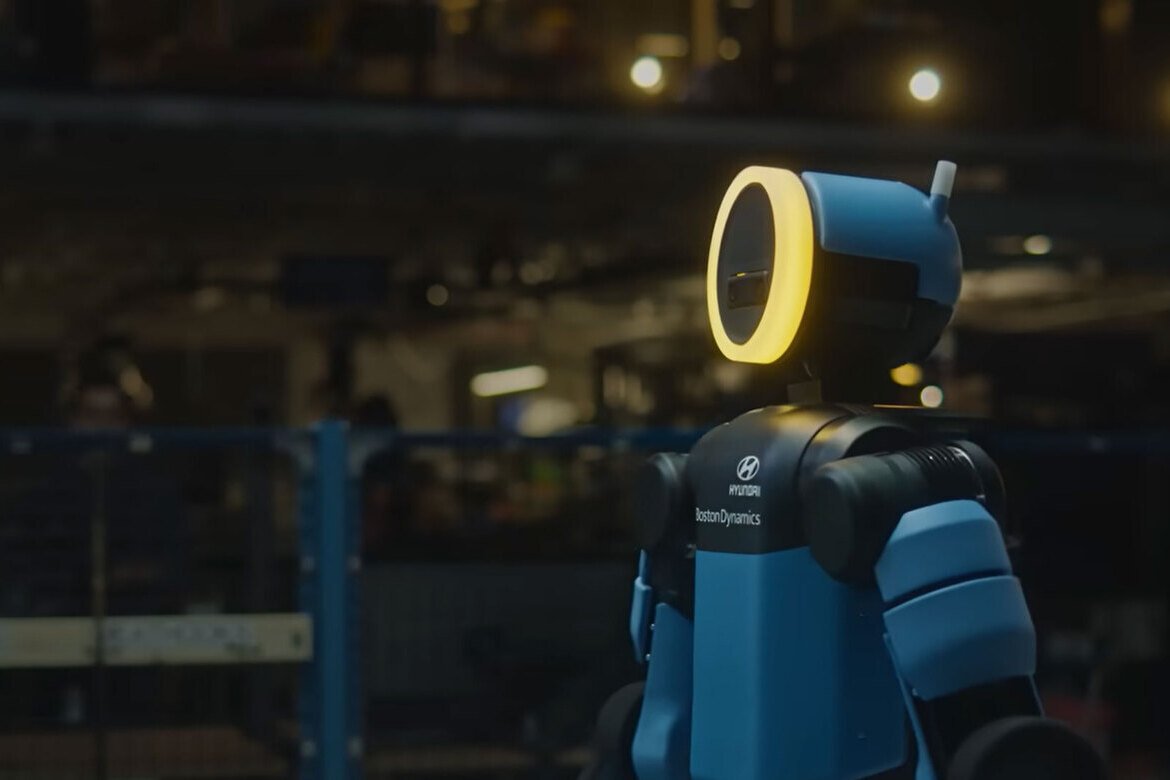


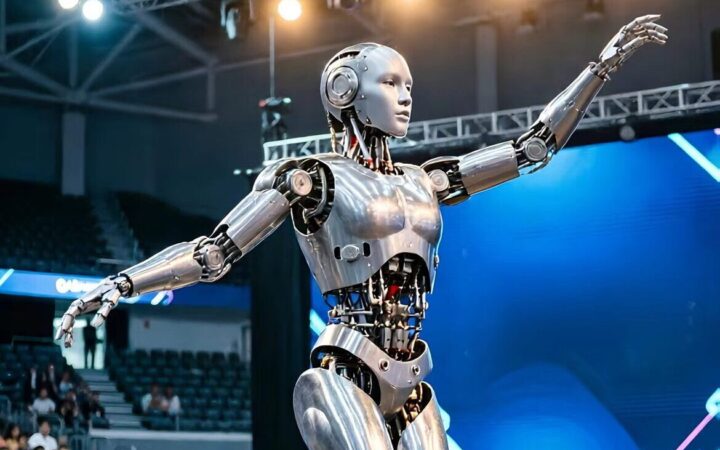
Hyundai Motor Group has released a video titled “School of Football – Can Robots Learn Movement Through Soccer?” showing Atlas, the humanoid robot from its Boston Dynamics subsidiary, learning soccer movements by analyzing past World Cup match footage before attempting to kick a ball. The release accompanies a broader campaign tied to the FIFA World Cup 2026, which will be held across the United States, Canada, and Mexico.
Hyundai has confirmed it plans to feature Atlas and its quadruped robot Spot at the tournament. Public speculation, fueled by the video’s framing and comment section responses, has focused on whether the company intends to stage a ceremonial kickoff featuring the robot.
The Training Approach
The video shows Atlas watching clips of human players and then replicating movement patterns – a visual demonstration of the imitation learning approach that several humanoid AI developers have been using to transfer human motor skills to robotic systems. The technique has parallels with Boston Dynamics’ simulation-based reinforcement learning methodology described in its recent technical blog on heavy lifting, where reference trajectories derived from human movement serve as the starting point for robot training.
Hyundai described the video as the beginning of Atlas’s soccer journey, signaling additional content to follow as the World Cup approaches. The campaign serves dual purposes: building public awareness of Atlas’s capability ahead of a global audience, and demonstrating the range of movement and adaptability the platform can display beyond its established industrial lifting and logistics demonstrations.
Commercial and Strategic Context
The World Cup activation follows a period of significant announcements from Hyundai Motor Group on its robotics program. The group has outlined plans to build 30,000-unit annual Atlas production capacity in the United States by 2028, deploy 25,000 robots across Hyundai Motor and Kia manufacturing plants, and manufacture more than 300,000 actuators annually at U.S. facilities. Earlier this month, Atlas demonstrated lifting and carrying a 45-kilogram mini refrigerator, establishing its industrial load-handling credentials for investors and potential customers.
The World Cup audience – estimated to reach billions of viewers globally across the tournament – represents the largest single public platform Hyundai has had to demonstrate Atlas’s capability to a non-specialist audience. A ceremonial kickoff, if it materializes, would place a production-ready humanoid robot at the center of one of the world’s most-watched sporting moments.
For a company asking investors and markets to support a valuation that increasingly rests on its robotics ambitions, the FIFA partnership provides something that factory floor demonstrations do not: cultural visibility at a scale that shapes public acceptance of humanoid robots in everyday contexts.
Disclaimer: RobotsBeat is an independent media brand owned and operated by NuvexMedia LLC, publishing news, research, and insights on artificial intelligence, emerging technologies, automation, and related industries. NuvexMedia LLC invests in and collaborates with companies across the AI, Robotics, technology, software, and digital innovation sectors. These relationships do not influence RobotsBeat's editorial coverage, and the publication maintains full editorial independence to provide accurate, timely, and objective information. © 2026 NuvexMedia LLC. All rights reserved. This content is for informational purposes only and should not be considered legal, tax, investment, financial, or other professional advice.