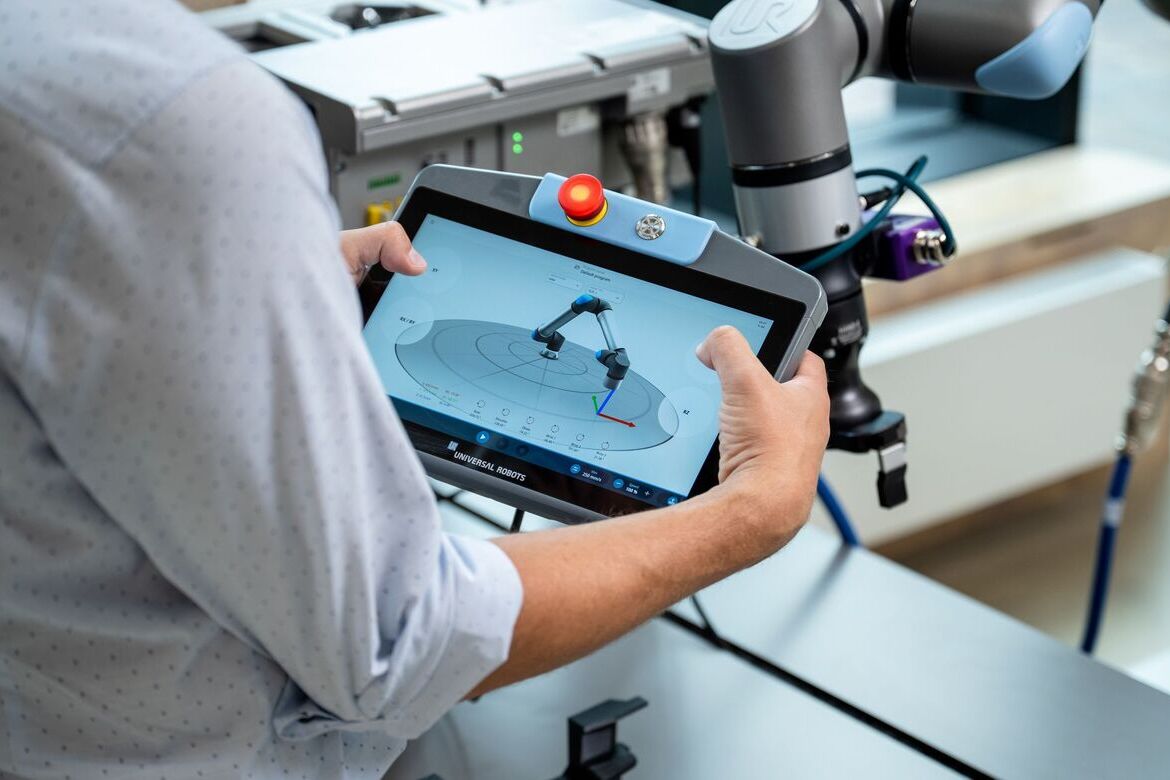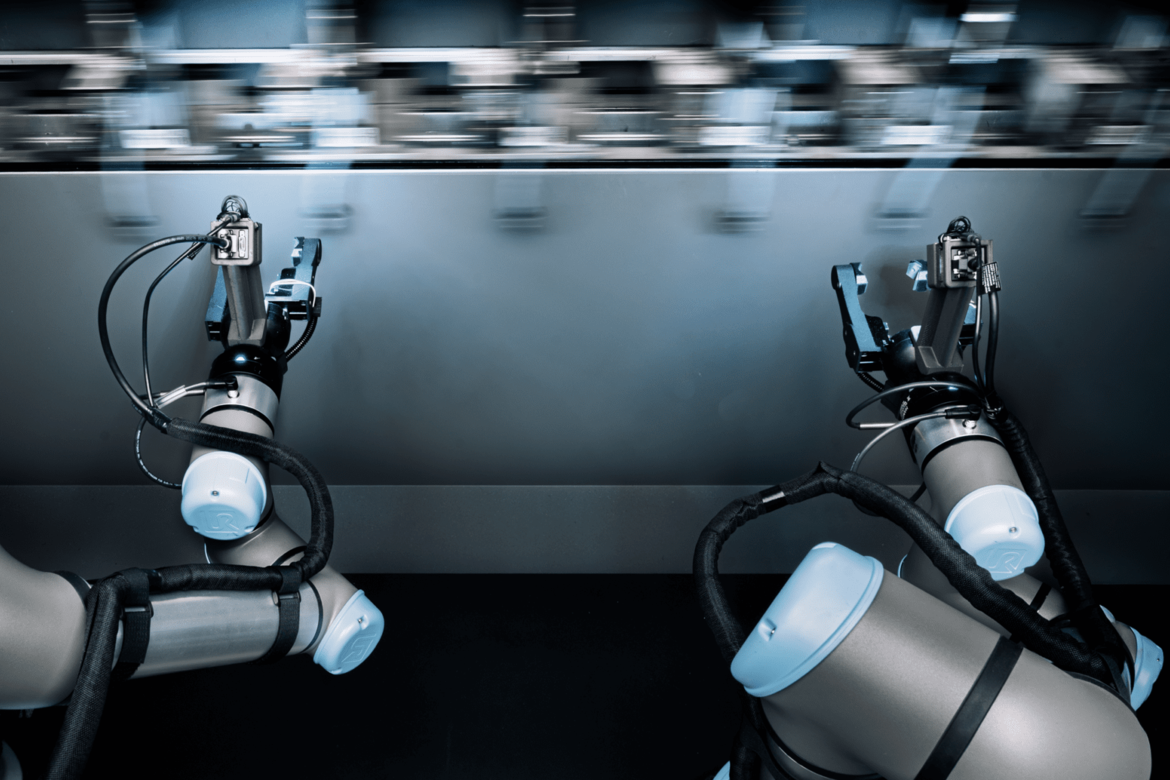


Sanctuary AI has validated a 99.5% task success rate and a 2.54-second cycle time on a complex wire-plugging task at a global Tier 1 automotive supplier, matched against the customer’s live production benchmarks. The proof of concept involved inserting a plug attached to a flexible wire into a moving target on a live conveyor – a contact-rich manipulation problem that requires real-time adaptation to dynamic material behavior that has historically placed such tasks out of reach for conventional automation.
The result represents one of the more rigorous public performance validations any physical AI company has published against actual production-line standards rather than laboratory benchmarks.
Why This Task Is Technically Significant
Wire manipulation on a moving conveyor combines several challenges that individually push the limits of current robotic systems. The flexible wire deforms unpredictably as the robot handles it, the target connector moves continuously, and the insertion requires millimeter-level precision under contact forces that vary with each cycle. Meeting a production-line cycle time of 2.54 seconds while maintaining a 99.5% success rate means the system fails less than once in 200 operations – a reliability threshold that industrial customers require before trusting automation with components that affect vehicle quality.
“Manipulating a flexible wire into a moving target on a live conveyor is exactly the kind of contact-rich dexterity problem that has kept tasks like this out of reach for traditional automation,” said Olivia Norton, co-founder and CTO of Sanctuary AI. “Solving it required models built around performance from Day 1 with reliability, cycle time, and safety measured against real production benchmarks.”
A Strategic Pivot Away from Humanoid-First
The milestone accompanies a deliberate strategic shift. Rather than pursuing humanoid robot commercialization as the primary path to market, Sanctuary AI has chosen to deploy its physical AI platform on existing and next-generation industrial robots. The company’s physical AI models run on current hardware – making its technology available to manufacturers now rather than requiring them to wait for humanoid platforms to reach commercial maturity.
“Physical AI adoption is gated by AI that meets both performance and cycle-time requirements,” said Norton. “By focusing on a performance-first approach to physical AI models, we’re delivering value to customers today on an AI platform that will also scale to the next generation of general-purpose systems.”
The hardware-agnostic approach mirrors the strategy being pursued by Sereact, whose vision-language-action models run across different robot hardware platforms, and Standard Bots, which positions its AI-native platform as an intelligence layer that runs on accessible hardware. The common thread is that the highest-value position in industrial robotics may be the AI and software layer rather than the robot body itself.
IP and Technology Foundation
Sanctuary AI noted that its proprietary hydraulic hands and advanced AI systems provide the technical foundation for its physical AI performance claims. In April 2026, the company demonstrated zero-shot learning for dexterous in-hand manipulation – the ability to handle objects it had not been explicitly trained on. That capability, combined with the automotive Tier 1 validation, positions Sanctuary AI as a company that has moved from research demonstration to production-grade performance.
The Vancouver-based company is building toward deployment across manufacturing, logistics, and other industries facing labor shortages, using its current industrial platform as both a revenue-generating business and a data collection environment that will inform its future humanoid systems.
Disclaimer: RobotsBeat is an independent media brand owned and operated by NuvexMedia LLC, publishing news, research, and insights on artificial intelligence, emerging technologies, automation, and related industries. NuvexMedia LLC invests in and collaborates with companies across the AI, Robotics, technology, software, and digital innovation sectors. These relationships do not influence RobotsBeat's editorial coverage, and the publication maintains full editorial independence to provide accurate, timely, and objective information. © 2026 NuvexMedia LLC. All rights reserved. This content is for informational purposes only and should not be considered legal, tax, investment, financial, or other professional advice.