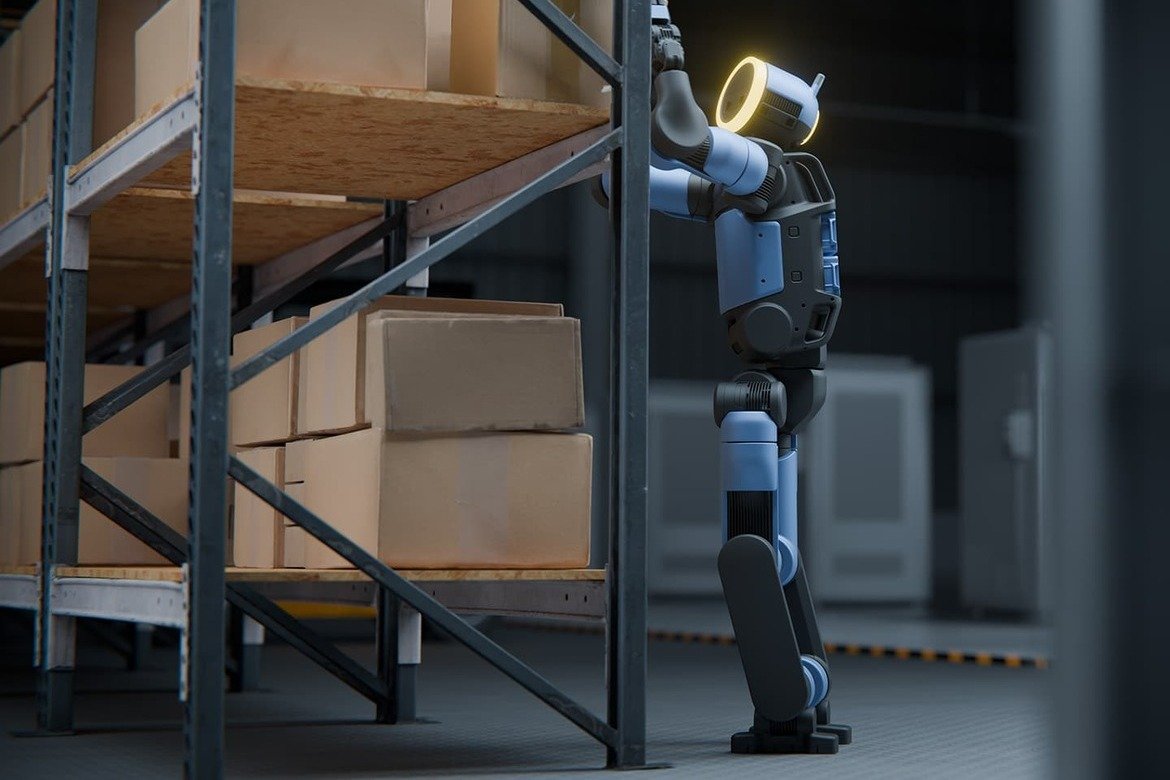

Artificial intelligence-powered robots could outnumber human workers within the next few decades, according to new forecasts from industry leaders and economists. The prediction reflects accelerating adoption of robotics and AI agents across industries as automation becomes increasingly cost-effective and scalable.
Rob Garlick, former head of innovation and future of work at Citi Global Insights, said the rapid decline in robotics costs and improving capabilities are creating powerful incentives for companies to automate tasks traditionally performed by humans.
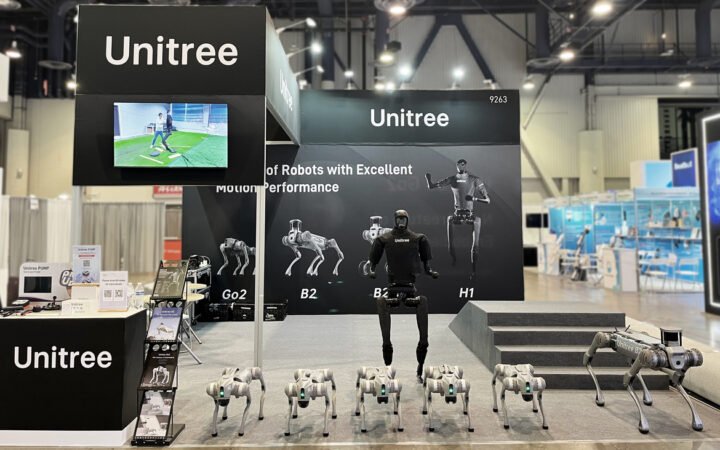
The trend reflects a broader shift toward physical AI systems that combine intelligent software with robotic hardware capable of performing real-world work.
Economics Driving Robotics Adoption
The key factor accelerating robotics adoption is economics. As robot prices fall and capabilities improve, the financial case for automation is strengthening rapidly.
Garlick noted that humanoid robots available today can recover their cost in less than 10 weeks in certain roles, based on labor savings. Earlier research indicated that robots costing around $15,000 could break even within weeks depending on wage levels, while more advanced systems could also achieve relatively short payback periods.
Such rapid return on investment makes automation attractive for companies facing rising labor costs and increasing pressure to improve efficiency.
As a result, businesses across sectors including logistics, manufacturing, and services are expanding their use of robotic systems.
The trend extends beyond physical robots to AI agents, software systems capable of performing tasks autonomously. These systems are already being integrated into business workflows to automate knowledge work.
Robots and AI Agents Scaling Rapidly
Forecasts suggest that both physical robots and AI agents will expand dramatically over the coming decades. Citi research projects that the global population of AI-powered robots could reach 1.3 billion by 2035 and exceed 4 billion by 2050.
At the same time, companies are rapidly increasing their use of AI agents. Management consulting firm McKinsey & Company, for example, has already deployed tens of thousands of AI agents internally, with expectations that the number will soon match its human workforce.
Technology leaders are also predicting massive expansion in robotics. Elon Musk, CEO of Tesla, has said that the number of robots could eventually exceed the global human population.
These projections reflect a convergence of advances in AI software, robotics hardware, and computing infrastructure.
Physical AI Reaches a Commercial Tipping Point
Recent advances in AI models, sensors, and computing hardware are enabling robots to perform increasingly complex tasks.
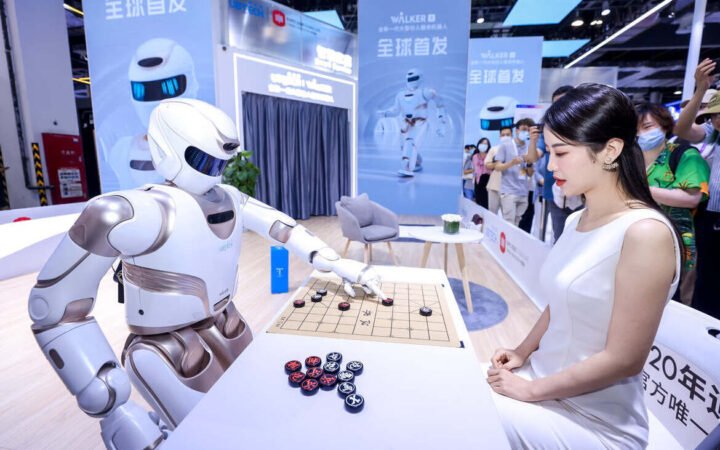
Unlike earlier industrial robots confined to repetitive factory operations, modern robots are designed to operate in human environments, performing logistics, service, and manufacturing tasks.
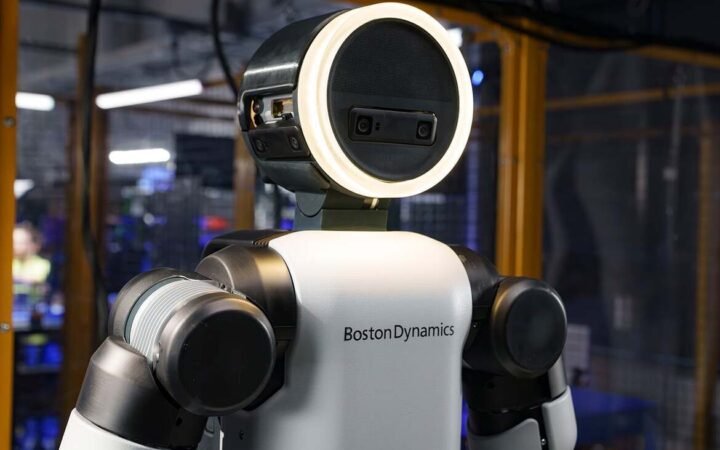
Humanoid robots, in particular, are attracting significant investment as companies seek automation solutions compatible with existing infrastructure designed for human workers.
The ability to deploy robots without redesigning entire facilities makes humanoid systems especially attractive for automation.
At the same time, AI agents are automating digital workflows, creating a parallel transformation in knowledge work.
Together, physical robots and AI agents represent a comprehensive shift toward automation across both physical and cognitive labor.
Workforce Impact and Economic Transformation
The rapid expansion of robotics is already influencing labor markets. Companies including Amazon, Salesforce, and Accenture have cited AI adoption as a factor in workforce reductions.
Consulting firm Challenger, Gray & Christmas reported that AI-related automation contributed to tens of thousands of job losses in the United States in 2025.
However, some technology leaders argue that AI will also create new jobs. Jensen Huang, CEO of NVIDIA, has said that AI-driven infrastructure development could generate high-paying roles in construction, engineering, and manufacturing.
This reflects a historical pattern in technological transitions, where automation eliminates certain jobs while creating new categories of work.
The Future of Human and Machine Labor
The projection that robots could outnumber human workers highlights the scale of the transformation underway.
Advances in embodied AI are enabling robots to perform tasks once considered uniquely human. At the same time, falling costs and improving reliability are making robots economically viable across a growing range of applications.
While widespread replacement of human workers remains uncertain, the trend toward increased automation appears irreversible.
The coming decades will likely see a hybrid workforce, where humans and robots collaborate across industries. The balance between human and machine labor will depend on technological progress, economic incentives, and policy decisions.
What is clear is that robotics and AI are rapidly moving from experimental technologies into core components of the global economy.
The rise of physical AI may ultimately reshape how work is performed, redefining productivity and the structure of labor itself.