Mobile World Congress 2026 highlighted a decisive shift as AI moved beyond apps and into physical devices, from humanoid robots and AI glasses to smartphones with mechanical motion systems.
At MWC 2026, TCL introduced Tbot, a concept desktop robot designed to pair with children’s smartwatches, extending AI support from outdoor tracking to home routines.
Beijing-based Noetix Robotics has raised nearly $140 million in a Series B round led by a CATL-backed investment fund as it develops humanoid and biomimetic consumer robots.
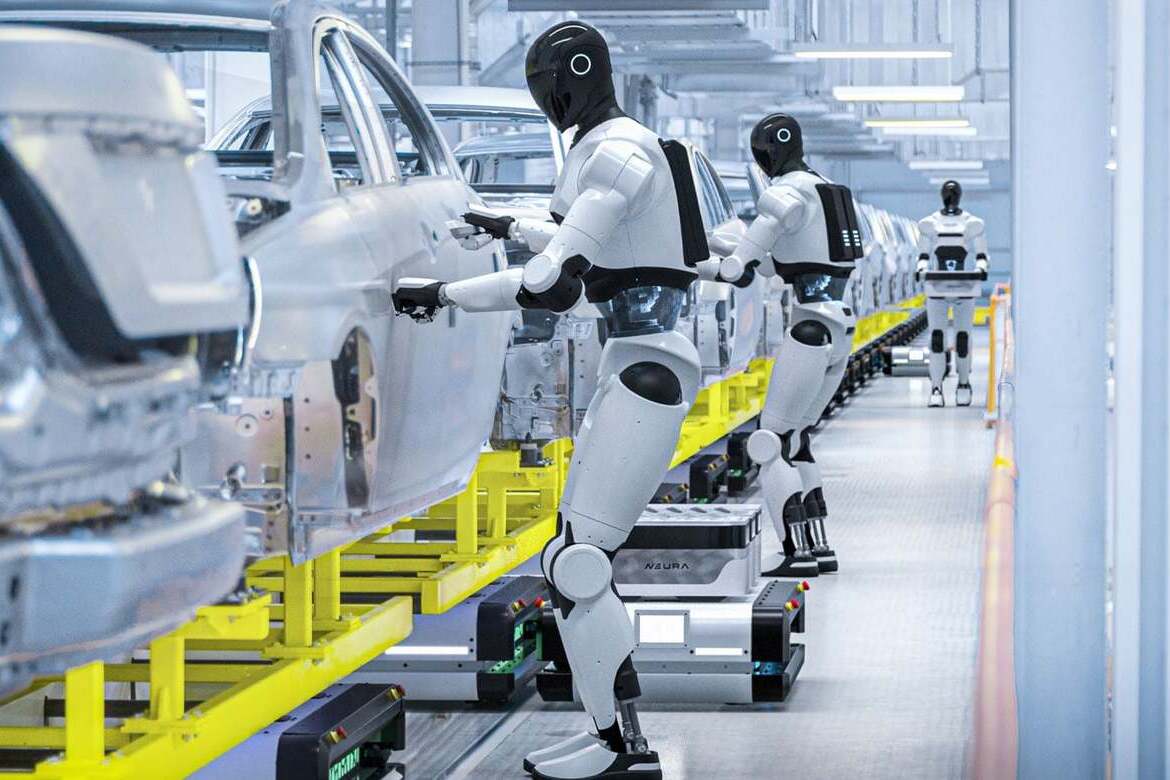
Xiaomi has deployed a humanoid robot on its EV assembly line, marking a step toward large-scale industrial use of embodied AI in automotive manufacturing.
Hefei’s metro system has deployed robot dogs, drones, and humanoid robots to automate inspections, improve safety, and modernize urban rail operations.
German Chancellor Friedrich Merz toured Unitree Robotics in Hangzhou, signaling Berlin’s interest in expanding cooperation with China’s fast-growing robotics and AI sector.
Tokyo Electric Power Company has introduced a 22 meter robotic arm designed to remove radioactive debris from the Fukushima nuclear plant, marking a key step in long-term decommissioning efforts.
Google has brought robotics software company Intrinsic fully in house, signaling a major push to integrate its AI models and cloud infrastructure into industrial robotics.
Germany’s robotics industry is projected to shrink again in 2026, raising concerns that Europe’s largest automation hub is losing ground to faster-growing competitors in Asia and North America.
U.K.-based Wayve has secured up to $1.5 billion in new funding to expand its AI-driven autonomous driving software, with robotaxi deployments planned in London and integration into consumer vehicles by 2027.
Hyundai Motor Group has deployed unmanned firefighting robots with South Korea’s National Fire Agency, signaling robotics’ growing role in safety-critical infrastructure.
China’s top humanoid robot companies will showcase their latest technologies and global expansion plans at AW 2026 in Seoul, highlighting intensifying competition in physical AI.
Hyundai Motor Group plans to invest $6.9 billion in an AI, hydrogen, and robotics hub in South Korea, accelerating its transition into physical AI and advanced manufacturing.
EngineAI has demonstrated its PM01 humanoid robot performing rapid recovery maneuvers, highlighting advances in balance control, dynamic locomotion, and embodied AI resilience.
NVIDIA has unveiled Cosmos Policy, a unified AI model for robot control and planning built on its world foundation models, improving manipulation performance and real-world task execution.