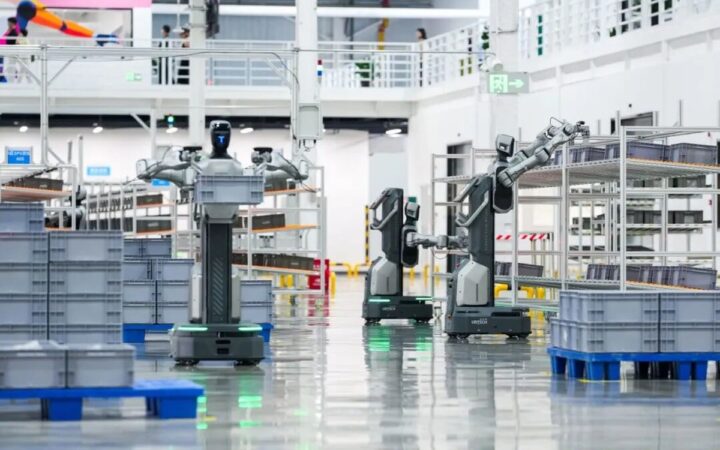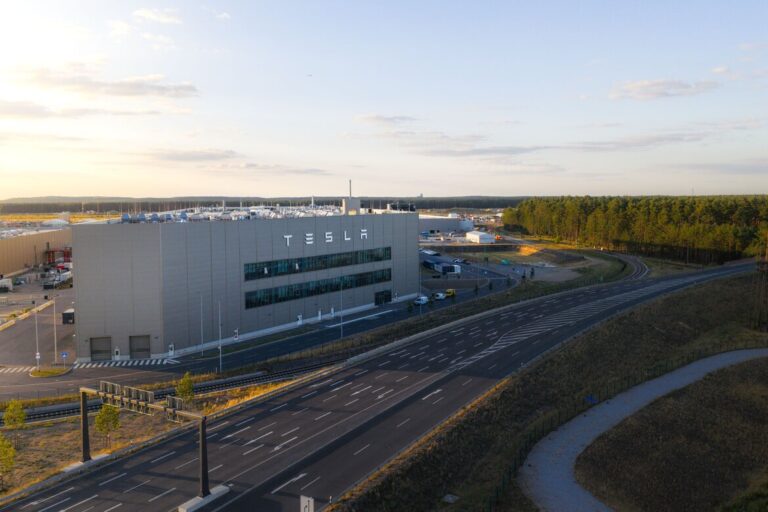
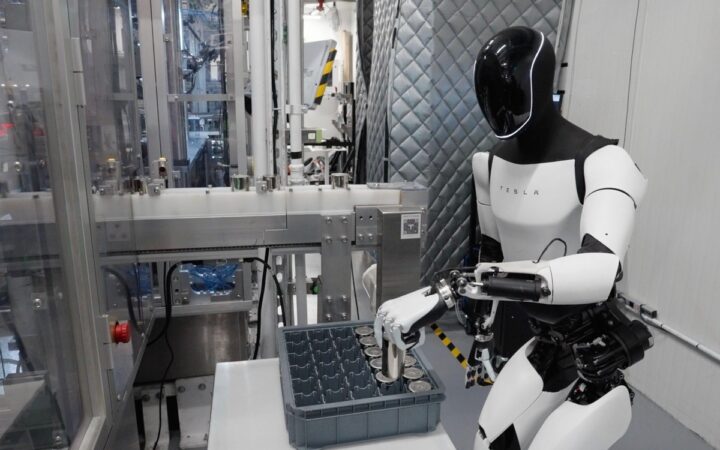
Tesla has released time-lapse footage showing the decommissioning of the original Model S and Model X assembly line at its Fremont factory, completed in 46 days. The space is being converted to produce the third generation of Tesla’s Optimus humanoid robot, with limited production expected to begin in late July or August 2026. The full conversion from Model S/X general assembly to Optimus production lines is expected to take approximately four months from start to finish.
The Model S entered production at Fremont in June 2012. The Model X joined in 2015. Both lines were formally wound down around May 10, 2026, following Elon Musk’s announcement of the phase-out on Tesla’s Q4 2025 earnings call in January. The 46-day teardown pace reflects how aggressively Tesla is prioritizing the transition.
End of an era: Decommissioning the original Model S & X assembly line in just 46 days pic.twitter.com/kGEdfhl62h
— Tesla Manufacturing (@gigafactories) July 10, 2026
What Is Being Built Instead
The converted Fremont space will produce Optimus Gen 3, Tesla’s third-generation humanoid robot. Musk has publicly targeted one million units per year of annual capacity once the line is fully ramped – a figure that would dwarf any humanoid robot production program currently operational or announced.
Each Gen 3 Optimus contains approximately 10,000 unique parts. Tesla is standing up entirely new production processes for actuators, hands, and structural components that have no direct analogue in its existing automotive manufacturing operations. Initial output will be limited. Musk has acknowledged the ramp will be “extremely slow” at the outset.
Pricing for early commercial units is expected to fall in the $50,000 to $80,000 range, with the long-term target of $20,000 to $30,000 per unit as volume scales. External commercial sales are planned for later in 2026, with broader volume availability in 2027.
The Internal Deployment Baseline
Tesla is not starting from zero. Over 1,000 Gen 3 Optimus units were already operational on Tesla’s own Fremont production floor as of early 2026, handling battery module assembly, EV pack loading, cable routing, and connector seating. That internal deployment gives Tesla a closed feedback loop: the robots being manufactured at Fremont will, in part, help build the next generation of themselves – generating operational performance data and surface failure modes in a controlled environment before commercial customers encounter them.
What Remains at Fremont
The factory is not exiting vehicle production. Model 3 and Model Y manufacturing continues at Fremont, representing the bulk of the plant’s volume output. The decommissioned space was specifically the legacy Model S/X general assembly line, which had been running at a fraction of its theoretical capacity as demand for the flagship models declined relative to the mass-market vehicles. Fremont’s total manufacturing footprint is being reallocated toward higher-volume and higher-strategic-priority products simultaneously.
The conversion represents the most concrete operational expression of Musk’s long-stated thesis that Optimus could eventually be worth more than Tesla’s entire automotive business. Whether the production ramp from late July’s limited start toward one million annual units can be achieved on a commercially relevant timeline will determine whether the thesis is validated – or remains the most expensive bet in Tesla’s history.
Disclaimer: RobotsBeat is an independent media brand owned and operated by NuvexMedia LLC, publishing news, research, and insights on artificial intelligence, emerging technologies, automation, and related industries. NuvexMedia LLC invests in and collaborates with companies across the AI, Robotics, technology, software, and digital innovation sectors. These relationships do not influence RobotsBeat's editorial coverage, and the publication maintains full editorial independence to provide accurate, timely, and objective information. © 2026 NuvexMedia LLC. All rights reserved. This content is for informational purposes only and should not be considered legal, tax, investment, financial, or other professional advice.