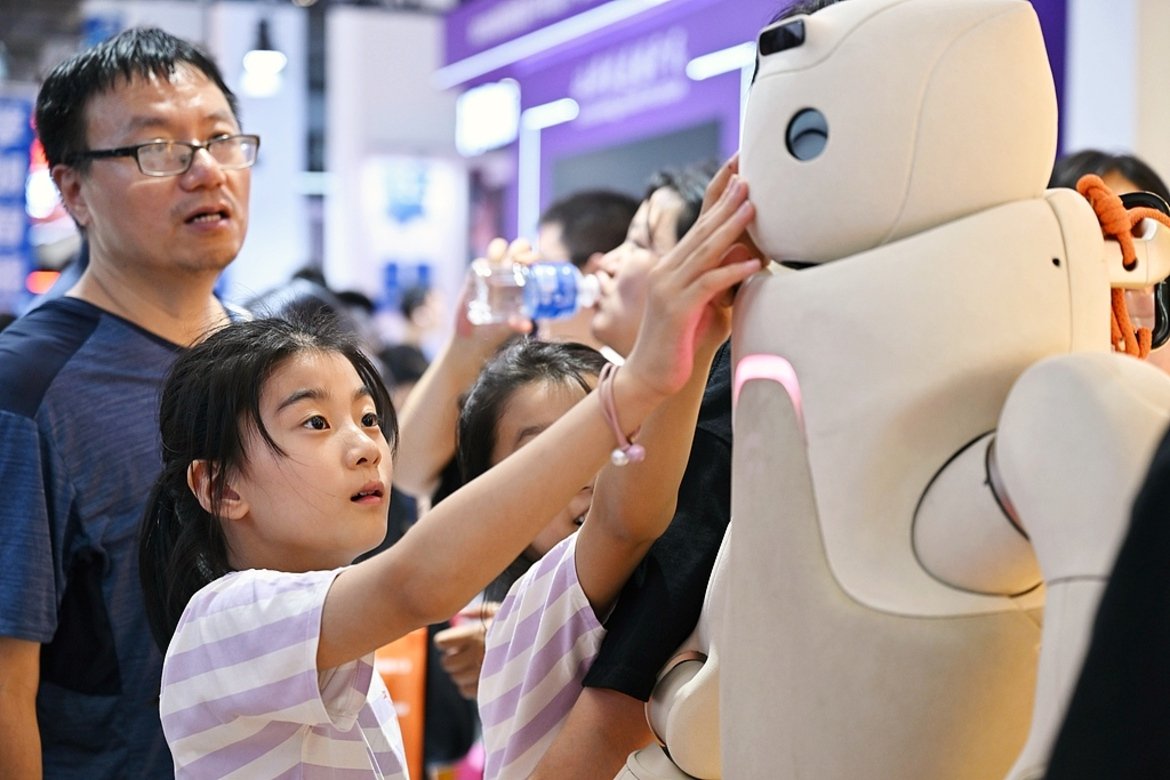
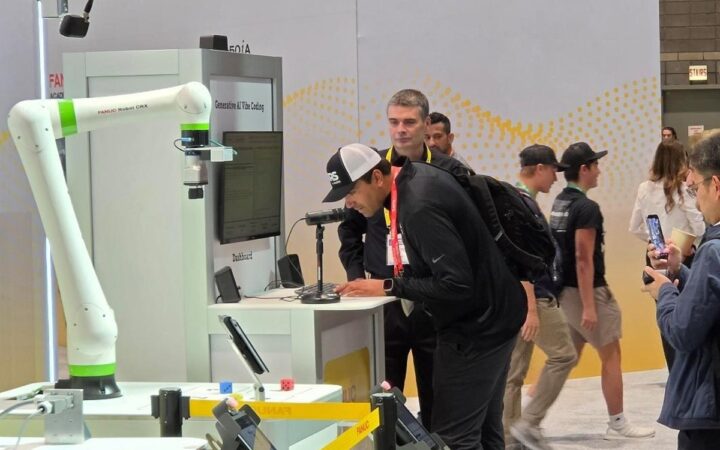
The 2026 World Robot Conference will open in Beijing on August 19 and run through August 23, featuring more than 300 exhibiting companies and over 2,000 exhibits, according to organizers. The number of exhibitors is up 36% from 2025, with exhibits and debut products expected to rise 27% and 21% respectively. More than 150 new products will make their premiere at the event. Nearly 30 international organizations have provided support, including the United Nations Industrial Development Organization, the International Federation of Robotics, and the IEEE Robotics and Automation Society, with international guests accounting for 30% of speakers at the main forum.
The conference’s scale mirrors the trajectory of China’s robotics industry, which organizers described as a “leapfrog” expansion that has reshaped the global competitive landscape over the past decade.
The Numbers Behind China’s Robotics Position
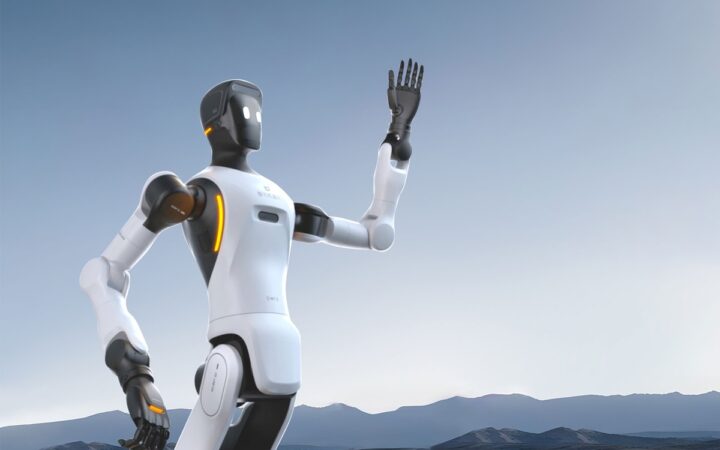
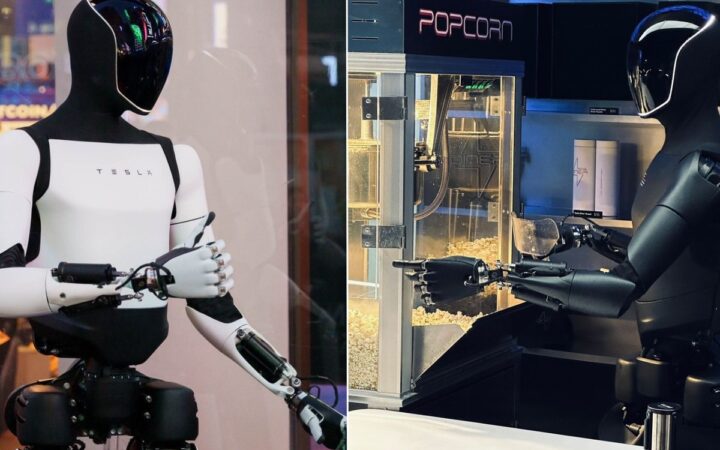
China has been the world’s largest industrial robot market for 13 consecutive years. Domestic brands’ share of the home market now exceeds 50%, and supply capacity for key components including reducers, servo systems, and controllers has been significantly enhanced. In the humanoid robot sector specifically, China accounted for 90% of global shipments in 2025 across more than 330 models. In the first quarter of 2026, humanoid robot exports surged 210% year-on-year.
Operating revenue across China’s major robot enterprises exceeded 90 billion yuan in the first five months of 2026, up 26.9% year-on-year. Average annual growth has topped 20% over the past five years, approximately 5 percentage points higher than during the previous five-year plan period. Some Chinese humanoid robot models now retail for as low as 98,000 yuan – a price level that analysts attributed to mature supply chain depth pushing manufacturing costs down significantly below overseas rivals.
WRC attendance itself reflects the sector’s growth: the conference’s first edition in 2015 drew 50,000 offline attendees when China had only a handful of robot makers and imported more than 90% of core components. The 2025 edition reached 271,000 offline attendees and 52 million online participants.
A New Format for a Maturing Industry
For the first time, the 2026 WRC will be structured around four themed days: a Release Day, a Procurement Day, a Developer Day, and Public Open Days. Analysts cited by the Global Times described the format shift as reflecting the industry’s transition from technology showcasing toward securing commercial orders and building open ecosystems – a pragmatic maturation from demonstration to deployment.
Key highlights to watch include mass-produced humanoid model announcements, industrial deployment case studies, progress in embodied AI models, supply chain cost-reduction solutions, and discussions between Chinese and foreign companies on standards and open-source ecosystem development.
Where Challenges Remain
Despite the scale of China’s lead, analysts identified structural challenges that have not yet been resolved. Fragmented application scenarios require robots to be trained separately for each operational setting. Embodied AI models’ autonomous decision-making in complex, unstructured environments requires further improvement. High-performance computing chips continue to rely on overseas suppliers. High-end harmonic reducers, torque sensors, and precision servo motors lag top international specifications in precision and durability, though domestic substitution is accelerating.
“China’s strengths in system integration and mass manufacturing are genuine,” said Chen Jing, vice president of the Technology and Strategy Research Institute. “Its mature supply chain is pushing prices down significantly – but challenges in embodied AI and high-end components remain on the path toward large-scale commercial use.”
Disclaimer: RobotsBeat is an independent media brand owned and operated by NuvexMedia LLC, publishing news, research, and insights on artificial intelligence, emerging technologies, automation, and related industries. NuvexMedia LLC invests in and collaborates with companies across the AI, Robotics, technology, software, and digital innovation sectors. These relationships do not influence RobotsBeat's editorial coverage, and the publication maintains full editorial independence to provide accurate, timely, and objective information. © 2026 NuvexMedia LLC. All rights reserved. This content is for informational purposes only and should not be considered legal, tax, investment, financial, or other professional advice.