Key Notes
- Chinese humanoid suppliers including UBTECH and Anyverse are pursuing Korean factory and service applications, with projects ranging from delivered venue robots to planned workplace trials.
- South Korea’s M.AX initiative targets 500 AI factories by 2030, a broader manufacturing transformation rather than a humanoid purchase commitment.
- Certification, local integration partners and evidence from repeatable work will determine whether early demonstrations develop into lasting commercial deployments.
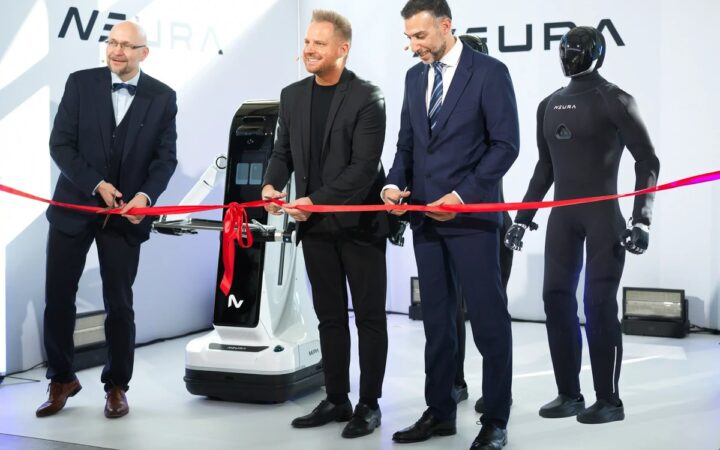
Chinese humanoid robot makers are seeking factory trials and commercial customers in South Korea as the country expands its physical AI ambitions. UBTECH, Anyverse Dynamics, AgiBot and Unitree are among the suppliers pursuing opportunities beyond entertainment demonstrations, according to a new report by The Korea Times published in partnership with the South China Morning Post.
The Korea Times reported on October 23 that UBTECH is testing models locally and has announced an automotive-parts trial with Duksan JM Robotics and AJIN Industrial. Its U1 humanoid also reached Seoul’s Galaxy Robot Park in September, according to a company executive.
From Visitor Attractions to Workplace Trials
Anyverse Dynamics plans fourth-quarter trials in Korean cafés and other service settings before moving into manufacturing, its founder told the newspaper. Its collaboration with Korean coffee chain Hollys has already involved robot testing at a Beijing café. That Chinese trial should not be confused with a Korean rollout already completed.
The distinction between a delivered attraction, a workplace test and a repeat commercial order matters. Each offers different evidence about demand. A venue can purchase a robot for visitor interaction, while a production line requires repeatable handling, predictable downtime and integration with existing equipment.
RobotsBeat previously covered Galaxy Robot Park and Seoul’s Smart Life Week. Those public showcases provide context for the effort to find more sustained work for humanoids.
Korea’s Manufacturing AI Push Creates an Opening
South Korea’s industry ministry has outlined a target of 500 AI factories by 2030 under its Manufacturing AI Transformation initiative, known as M.AX. The program supports manufacturing data collection, AI model development and demonstrations.
That target covers a broader manufacturing transformation than humanoid deployment alone. An AI factory can use software, conventional industrial arms, mobile systems and other equipment. It should not be read as a commitment to buy humanoids for every site or an order reserved for Chinese suppliers.
The ministry also describes plans to share infrastructure, technology and skilled personnel through regional collaboration. For robot developers, access to that kind of industrial environment can be valuable: it creates opportunities to test a task against the requirements of an actual operator.
Local Integration Will Shape Commercial Success
The Korea Times identifies certification and local partnerships as hurdles. UBTECH told the newspaper it adapted communication modules and radio settings for Korean requirements. Access to a customer willing to run a proof of concept remains a separate commercial challenge.
A successful overseas trial therefore involves more than shipping hardware. Buyers need a way to maintain the robot, resolve faults and judge whether its output justifies the integration effort. The next useful milestones will be named operating sites, repeat orders and measured results from regular shifts.
Disclaimer: RobotsBeat is an independent media brand owned and operated by NuvexMedia LLC, publishing news, research, and insights on artificial intelligence, emerging technologies, automation, and related industries. NuvexMedia LLC invests in and collaborates with companies across the AI, Robotics, technology, software, and digital innovation sectors. These relationships do not influence RobotsBeat's editorial coverage, and the publication maintains full editorial independence to provide accurate, timely, and objective information. © 2026 NuvexMedia LLC. All rights reserved. This content is for informational purposes only and should not be considered legal, tax, investment, financial, or other professional advice.