Key Notes
- Agile Robots expects to produce 1,000–2,000 compact humanoids in 2027, with production of ONE S and ONE SN planned to start before the end of 2026.
- The NVIDIA-equipped ONE SN targets universities and corporate research labs, with Stanford and ETH Zurich identified as potential customers rather than confirmed volume buyers.
- Official availability is planned for early 2027, while the reported production target remains a forecast rather than completed output or contracted sales.
Germany’s Agile Robots plans to produce 1,000–2,000 compact humanoid robots in 2027, targeting universities and corporate research laboratories through a partnership with NVIDIA. CEO Zhaopeng Chen told Reuters that production of the Agile ONE S and ONE SN models is expected to begin before the end of 2026.
The forecast gives a manufacturing target to the research platform unveiled at GTC Berlin. Reuters reported that Stanford University and ETH Zurich are among potential customers. That describes prospective demand rather than a disclosed order book for the full production range.
A Research Market Before Factory Deployment
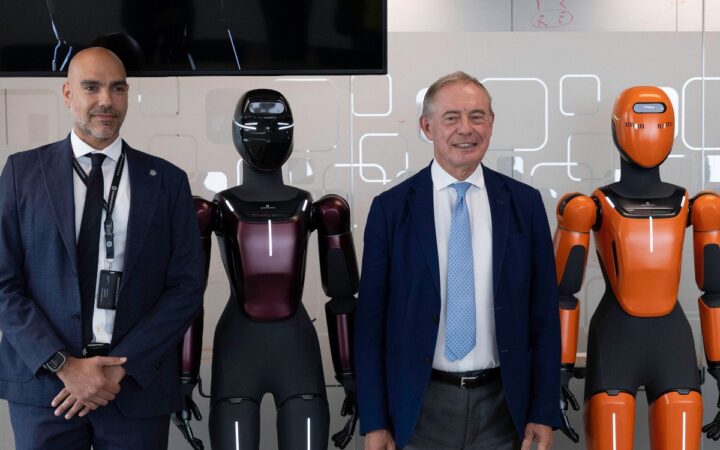
The immediate customers are teams developing robot capabilities, rather than manufacturers buying a finished humanoid workforce. Agile ONE SN combines a compact body with a preconfigured software and computing stack, giving laboratories a common starting point for collecting demonstrations and testing skills.
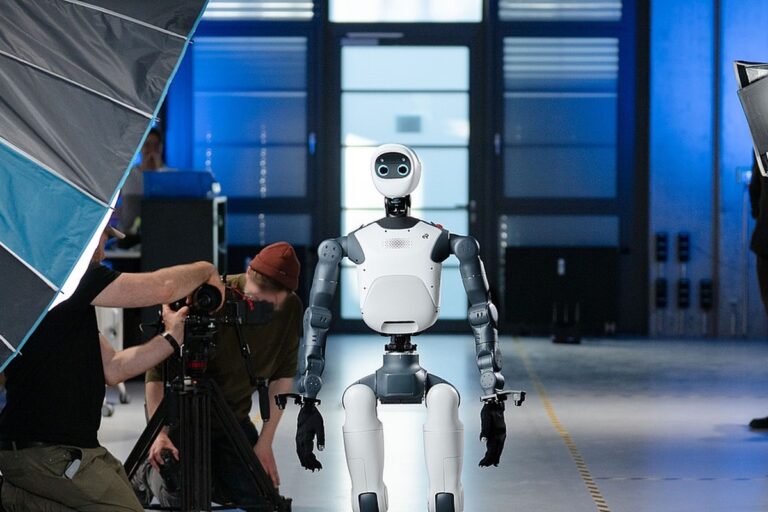
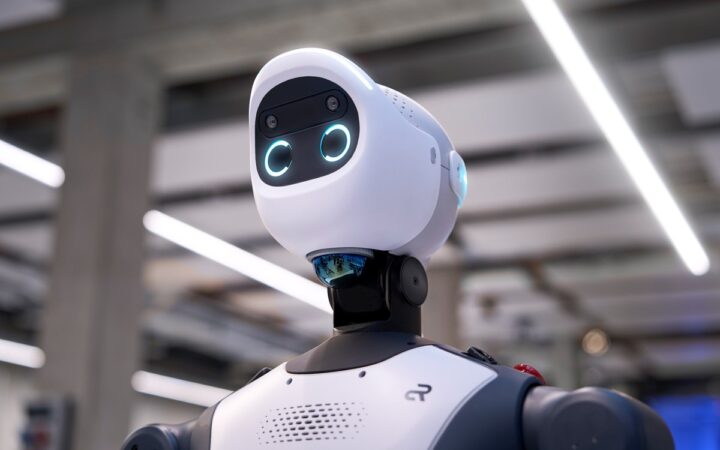
According to the product page and Agile’s launch announcement, the 1.4-meter platform uses NVIDIA Jetson Thor onboard computing and Isaac GR00T software. It has a 31-degree-of-freedom body and two tactile, five-finger hands, adding 20 degrees of freedom each.
Agile specifies up to 3 kilograms of payload per arm, with head and wrist cameras and 3D lidar supporting perception. The supplied workflow covers demonstration capture, simulation, training, evaluation and deployment, allowing researchers to work on robot behavior without first assembling the entire system from separate components.
Standardized Hardware Could Reduce Setup Work
NVIDIA robotics product director Spencer Huang told Reuters that a standardized configuration could save researchers two or three months otherwise spent integrating separately purchased components. That is NVIDIA’s estimate of the development benefit, not an independently measured saving across customer laboratories.
A shared platform can make experiments easier to reproduce: teams can compare results using similar sensors, hands, onboard processing and robot models. The value for a laboratory is earlier access to useful experiments, while the remaining work involves adapting policies to its tasks and validating their behavior.
RobotsBeat’s earlier Isaac platform coverage explains the wider software announcement, including Isaac Lab 3.0, Isaac OS and training-data resources. Agile’s production forecast adds a separate commercial question: how many physical systems the company can build and support as that developer ecosystem expands.
Early 2027 Availability Remains the Next Milestone
Agile’s official launch announcement schedules ONE SN availability for early 2027. A production start before year-end and availability the following year are different milestones; neither establishes that the projected annual volume has already been sold.
The company positions ONE SN as a research counterpart to the full-size Agile ONE industrial humanoid, with the aim of transferring skills and data toward industrial applications. Researchers still need to test whether behaviors developed on the compact platform carry over to different hardware and working environments.
That progression fits the broader industrial ambition discussed in our coverage of Germany’s physical AI push. For Agile, the near-term test is delivering research systems that laboratories can use reliably, then demonstrating how the resulting skills translate into useful work beyond the lab.
Disclaimer: RobotsBeat is an independent media brand owned and operated by NuvexMedia LLC, publishing news, research, and insights on artificial intelligence, emerging technologies, automation, and related industries. NuvexMedia LLC invests in and collaborates with companies across the AI, Robotics, technology, software, and digital innovation sectors. These relationships do not influence RobotsBeat's editorial coverage, and the publication maintains full editorial independence to provide accurate, timely, and objective information. © 2026 NuvexMedia LLC. All rights reserved. This content is for informational purposes only and should not be considered legal, tax, investment, financial, or other professional advice.