Key Notes
- NVIDIA’s Isaac expansion combines new robot-learning and runtime tools with Agile ONE SN, a humanoid research platform scheduled for early 2027.
- Isaac Lab 3.0 is generally available, while Isaac OS connects models, sensors and controls for real-time execution on physical robots.
- New simulation assets and human demonstration data broaden training resources, although full Human 1M Dataset access is limited to Cosmos Coalition partners.
NVIDIA has expanded its Isaac robotics platform with a new humanoid reference system, an open-source runtime and updated tools for training robots in simulation. Announced at GTC Berlin on October 21, the package aims to connect the separate stages of robot development, from collecting demonstrations to deploying learned behaviors on physical hardware.
The announcement includes Agile Robots’ Agile ONE SN, built around Isaac GR00T and Jetson Thor, alongside Isaac Lab 3.0, Isaac OS and new datasets. The releases address a practical bottleneck: teams often spend substantial effort connecting hardware, simulation, models and control software before they can test useful robot skills.
Agile ONE SN Combines Humanoid Hardware and GR00T
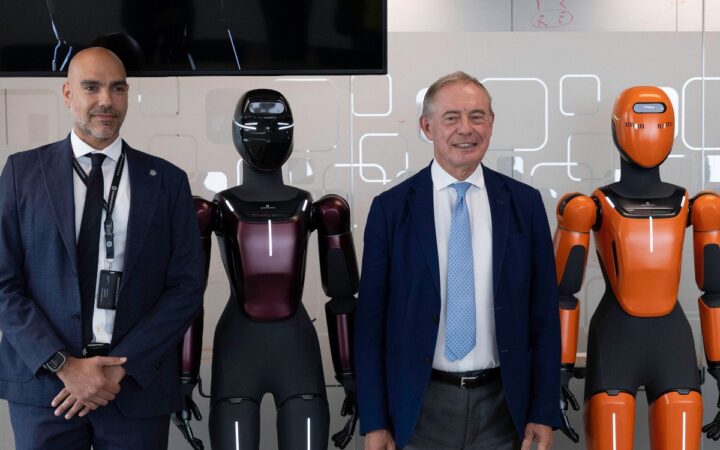
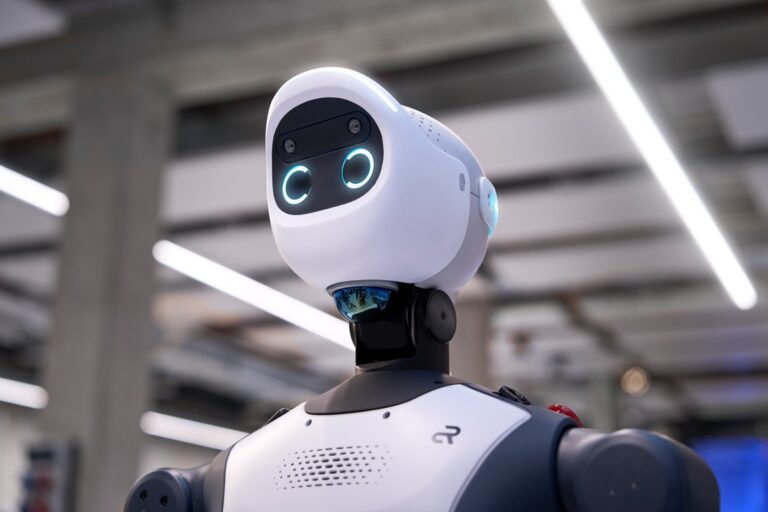
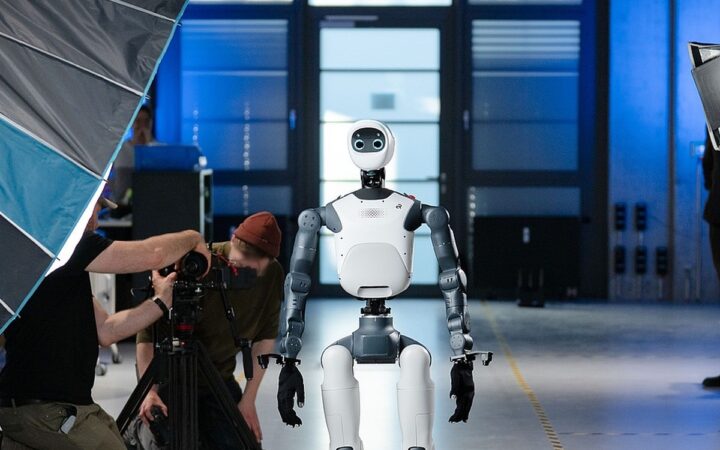
Agile Robots’ research platform is scheduled for availability in early 2027. It stands 1.4 meters tall and combines a 31-degree-of-freedom body with two tactile, five-finger Wuji hands, each adding 20 degrees of freedom. The resulting system has 71 degrees of freedom across its body and hands.
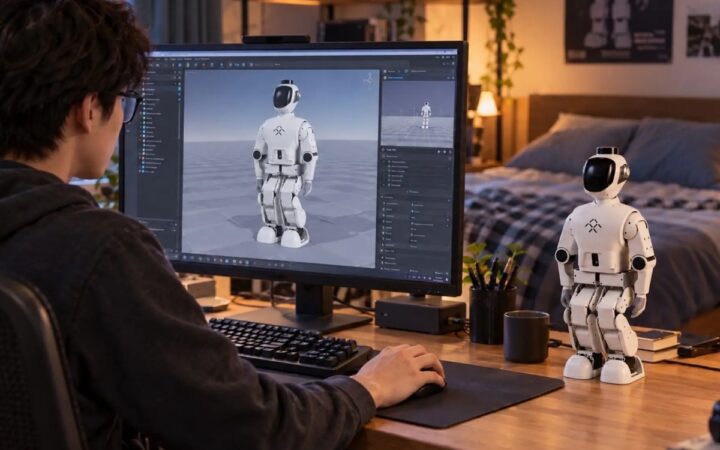
The company specifies a payload of up to 3 kilograms per arm, head-mounted RGB-D cameras, wrist cameras and 3D lidar. Jetson Thor provides onboard AI processing, while preconfigured GR00T software covers demonstration capture, training, evaluation and deployment. Simulation assets allow researchers to bring the robot into Isaac Sim and Isaac Lab.
Agile Robots positions the compact machine as a research counterpart to its full-size Agile ONE industrial humanoid. It says skills and data developed on the smaller platform can later transfer to Agile ONE. That is a development objective, rather than proof that every learned task will transfer without further training or validation.
Isaac Lab 3.0 and Isaac OS Connect Learning With Execution
NVIDIA says Isaac Lab 3.0 is generally available, supporting robot-policy training across multiple GPUs and physics engines including Newton and PhysX. Within the wider Isaac platform, simulation lets developers create and test behaviors before trying them on a physical machine.
The new Isaac OS runtime is built on Holoscan and connects AI models, sensors, controls and hardware for real-time execution. Its role differs from a robot foundation model: the runtime coordinates the components that must work together when a policy is running on an actual robot.
NVIDIA also announced three open-source reference workflows for DGX Station. They cover reinforcement-learning refinement of GR00T 1.7, dexterous manipulation training in Isaac Lab and post-training Cosmos world models for synthetic data generation, with ChatGPT Astra incorporated into the workflows.
More Simulation Assets and Human Demonstration Data
The SimReady Central Library adds more than 2,000 robotics and factory assets for simulation. The Human 1M Dataset includes synchronized video from three viewpoints and 3D hand tracking, providing material for learning from human activity.
Access conditions differ across the resources. NVIDIA says the full Human 1M Dataset is available to Cosmos Coalition partners, so developers should not assume that every part of the announcement is unrestricted public data.
These additions build on the data and model ecosystem covered in RobotsBeat’s reporting on LeRobot integration. Our coverage of Amazon’s physical AI toolchain examines another approach to connecting NVIDIA’s robotics tools with training and deployment infrastructure.
Industrial Adoption Extends Beyond Humanoid Research
NVIDIA names ABB Robotics, KUKA, Sereact, Hexagon Robotics, Humanoid and NEURA Robotics among companies building with its technologies. Their applications span virtual commissioning, goods handling, perception and robot-skill training, illustrating that Isaac’s scope extends beyond bipedal machines.
Safety remains a separate integration task. Agile Robots is exploring Halos integration, while other partners are incorporating NVIDIA’s safety technologies into their architectures. Those activities should not be read as blanket certification of every robot using the platform.
The immediate advance is a more connected set of development tools and a planned reference humanoid. The commercial test will be whether teams can use that foundation to produce reliable behaviors, reduce integration work and validate performance under the conditions their robots actually face.
Disclaimer: RobotsBeat is an independent media brand owned and operated by NuvexMedia LLC, publishing news, research, and insights on artificial intelligence, emerging technologies, automation, and related industries. NuvexMedia LLC invests in and collaborates with companies across the AI, Robotics, technology, software, and digital innovation sectors. These relationships do not influence RobotsBeat's editorial coverage, and the publication maintains full editorial independence to provide accurate, timely, and objective information. © 2026 NuvexMedia LLC. All rights reserved. This content is for informational purposes only and should not be considered legal, tax, investment, financial, or other professional advice.