Key Notes
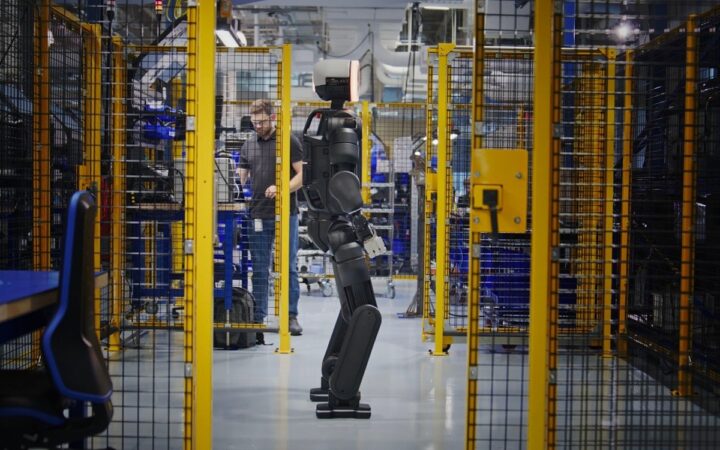
- Schaeffler has opened a Taicang factory where six humanoids work across five stations to assemble and handle components for other humanoid robots.
- The site brings manufacturing, robot training and digital twins together so engineers can compare learned skills with actual production conditions.
- Schaeffler reports about €400 million in global incoming humanoid robotics orders, a business figure that should not be confused with revenue from the new factory.
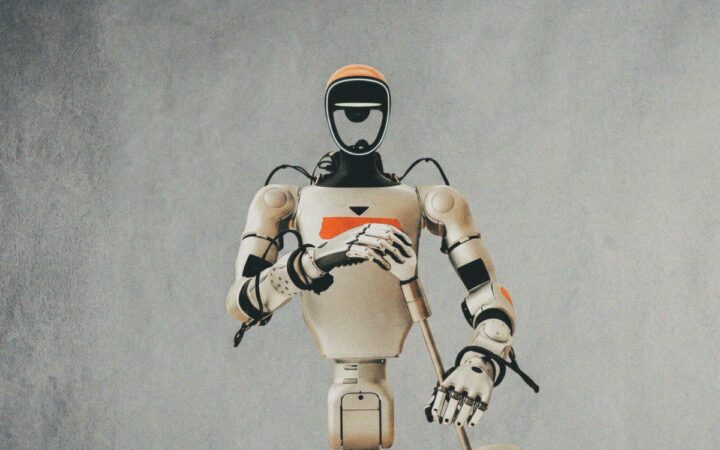
Schaeffler has opened a factory in Taicang, China, where humanoid robots help assemble components for other humanoids. The October 20 opening brings component production, robot training and digital simulation together as the automotive and industrial supplier expands its robotics business.
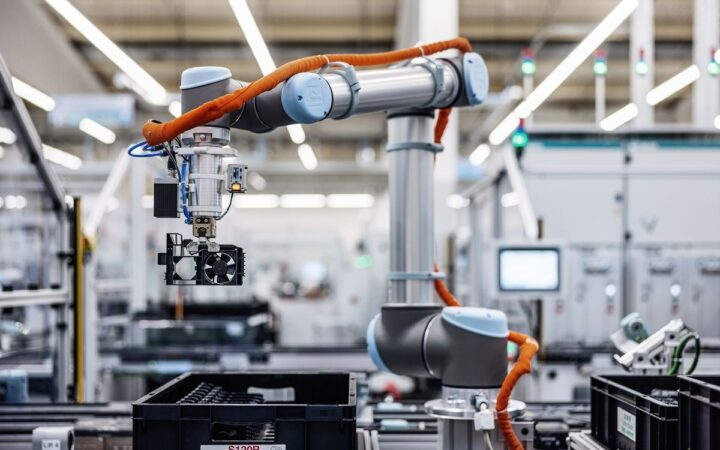
The company’s announcement describes six humanoids working across five stations in a roughly 7,500-square-meter facility. Their jobs include preparing parts, assembly, inspection, labeling and packaging for joint modules such as linear and rotary actuators.
Humanoids Work on Their Own Supply Chain
Actuators turn control commands into physical movement, making them a central part of a robot’s joints. Building those components consistently is a different industrial challenge from demonstrating the movement of a finished humanoid.
The Taicang line links the two: robots perform manufacturing work while the facility supplies components for future machines. The arrangement also gives engineers a place to examine the interfaces between a robot, its tooling and the parts it must handle.
Schaeffler says its global incoming orders in humanoid robotics have reached about €400 million. That is an order figure, not revenue already earned from this new factory, and the opening does not establish the line’s annual production capacity.
Training and Production Share a Site
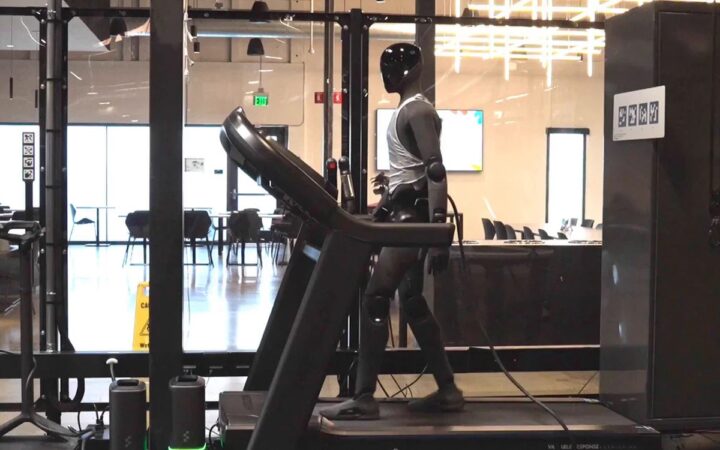
A digital twin mirrors the assembly process, while sensors track accuracy, work-step duration, energy use and equipment condition. The facility also includes a training and data-acquisition area, allowing skills to be developed and checked against industrial tasks.
Combining these activities can shorten the path between finding a problem and testing a change. An engineer can compare a proposed motion in simulation with its behavior on real machinery, then use operating data to refine the next version.
The company’s factory video provides a look at the site. It is a view of the announced installation, rather than independent evidence of long-term uptime or productivity.
A Practical Test for Physical AI
RobotsBeat’s coverage of Germany’s physical AI push follows a similar connection between manufacturing expertise, models and real production environments. Taicang offers a more specific setting in which those ideas can be tested.
The significance extends beyond the number of robots on the line. Repeatable assembly demands controlled contact, accurate positioning and reliable inspection, while a production team needs to know when an exception requires intervention.
Our reporting on Leju’s factory deployment illustrates another approach to industrial humanoids. The operations differ, but both put attention on defined jobs and measured results rather than general-purpose demonstrations.
Schaeffler’s new factory establishes a manufacturing and development site for that work. Its longer-term impact will depend on component output, quality and how successfully the learned tasks transfer to customer operations.
Disclaimer: RobotsBeat is an independent media brand owned and operated by NuvexMedia LLC, publishing news, research, and insights on artificial intelligence, emerging technologies, automation, and related industries. NuvexMedia LLC invests in and collaborates with companies across the AI, Robotics, technology, software, and digital innovation sectors. These relationships do not influence RobotsBeat's editorial coverage, and the publication maintains full editorial independence to provide accurate, timely, and objective information. © 2026 NuvexMedia LLC. All rights reserved. This content is for informational purposes only and should not be considered legal, tax, investment, financial, or other professional advice.