Key Notes
- Leju and Zhaofeng say 15 humanoids are working across 15 auto-parts loading stations, covering more than 10 component types with a reported 98% success rate.
- Loading cycles take less than 40 seconds, compared with roughly 15 seconds for a skilled worker, leaving speed and recovery performance important deployment questions.
- The project also contributes real-machine data to OpenLET, while operating figures remain company-reported rather than independently audited.
Leju Robotics and Zhaofeng have put 15 humanoid robots into routine operation on an automotive-parts production line in Hangzhou, China. The deployment supplies a more concrete measure of industrial humanoid progress than a staged demonstration: repeated loading work, with reported performance figures and a clear remaining speed gap.
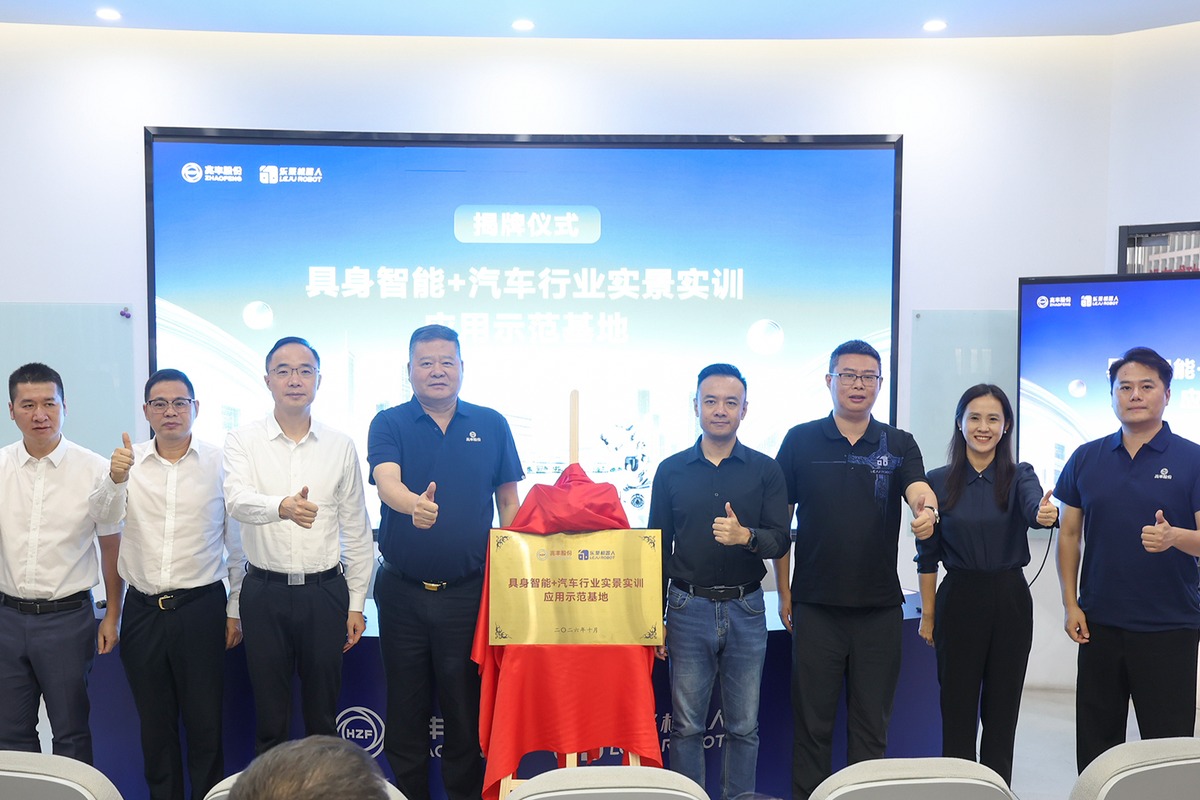
The companies presented their joint solution on October 15 at Zhaofeng’s No. 3 factory in Xiaoshan. In a company-supplied announcement, Leju says the robots cover 15 stations and more than 10 kinds of components, with a loading success rate of 98% and cycles taking less than 40 seconds.
Moving Small Components Into Machining Stations
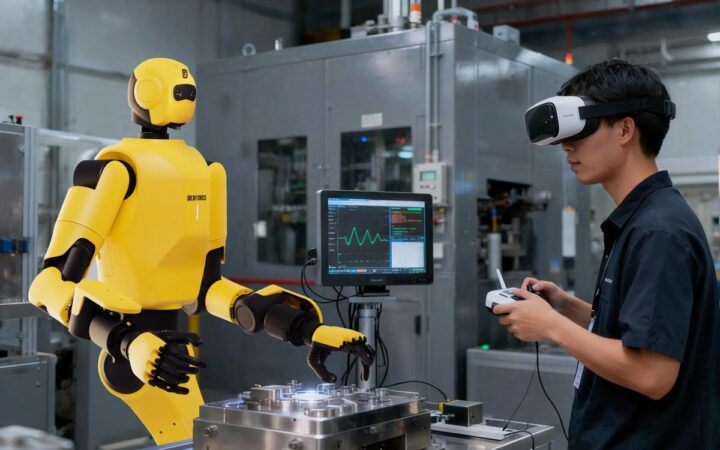
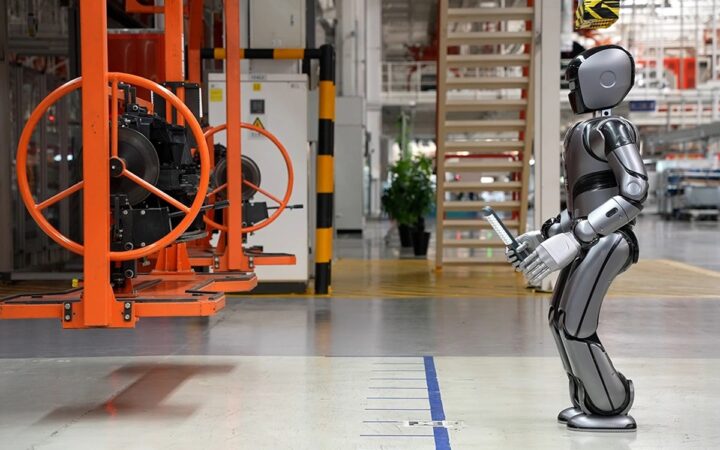
Securities Times reported observing a robot pick up a wheel-hub bearing and transfer it to the next operation. The work involves small components with inner diameters of 80–120 millimeters, handled among bins, loading tables and multiple workstations.
That environment tests a combination of perception, grasping, positioning and movement. A robot must complete the sequence without damaging a part or disrupting the equipment around it; successful walking alone says little about whether it can perform that job.
A Zhaofeng representative told the newspaper that the project had operated on site for more than two months without failure, accumulating about 1,000 operating hours and assisting production of more than 60,000 parts. These are reported project figures, not an independently audited reliability study or a per-robot total.
Useful Work Still Has a Speed Gap
The same report puts a skilled worker’s loading cycle at roughly 15 seconds. A robot cycle approaching 40 seconds would therefore take about 2.7 times as long, although actual comparisons depend on the part and station being measured.
A 98% loading success rate also measures something different from uptime or productivity. It does not disclose how long a failed attempt takes to recover, how often people intervene, or what proportion of an entire shift is spent completing useful work.
RobotsBeat has covered UBTECH’s factory trials and warehouse automation hurdles. The recurring industrial question is how robot performance translates into a dependable process, rather than whether a machine can complete a task once.
Using Production Data to Improve the System
Leju’s announcement also describes contributing an automotive-parts loading dataset to the OpenLET community under the OpenAtom Foundation. The intention is to make real-machine operating data available for embodied AI development.
That creates a second purpose for the deployment: collecting examples of the conditions a controller encounters outside a lab. Our coverage of robot-training work explains why repeated physical examples remain an important input to those systems.
The next meaningful evidence will be sustained output, recovery performance and deployment costs across more stations. Leju and Zhaofeng have described a working application; whether it can be replicated economically is the larger test.
Disclaimer: RobotsBeat is an independent media brand owned and operated by NuvexMedia LLC, publishing news, research, and insights on artificial intelligence, emerging technologies, automation, and related industries. NuvexMedia LLC invests in and collaborates with companies across the AI, Robotics, technology, software, and digital innovation sectors. These relationships do not influence RobotsBeat's editorial coverage, and the publication maintains full editorial independence to provide accurate, timely, and objective information. © 2026 NuvexMedia LLC. All rights reserved. This content is for informational purposes only and should not be considered legal, tax, investment, financial, or other professional advice.