Key Notes
- 120ft has raised €576,000 from 22 angel investors to develop shared robotic microfactories housed in three 40-foot shipping containers.
- Brands would keep their component suppliers and pay per finished product, with initial pilots focused on rigid parts under 5 kg assembled using screws or press-fits.
- The company reports cutting assembly-skill programming from seven weeks in 2025 to seven hours in 2026, while seven minutes remains a 2027 target rather than a demonstrated production cycle.
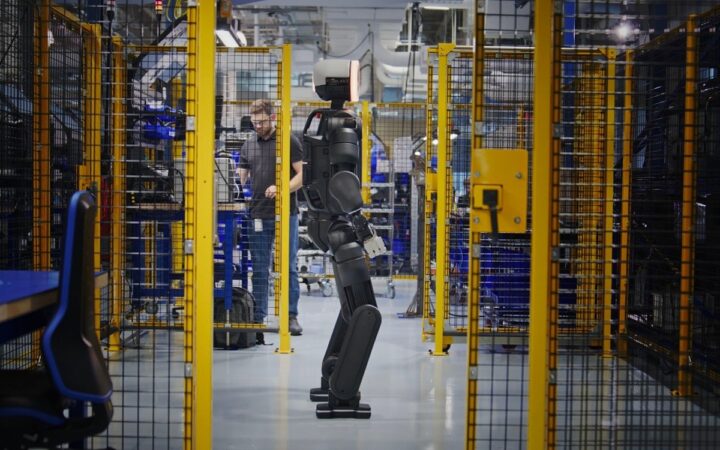
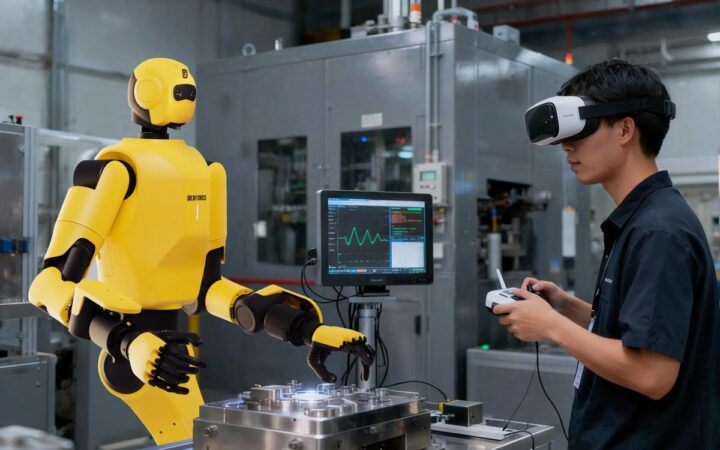
Swedish startup 120ft Factory AB has raised €576,000 from 22 angel investors to develop microfactories operated by humanoid robots. The Stockholm company wants to give consumer brands access to local assembly without requiring them to buy robots or build a dedicated production line.
SiliconANGLE reported the launch on October 15. The funding will support software and factory infrastructure as 120ft works toward commercial production, rather than mark the rollout of an established autonomous manufacturing network.
Three Containers, With Brands Paying Per Product
The proposed factory fits into three 40-foot shipping containers, the combined length behind the 120ft name. The company’s factory model divides the work into preparing components, assembling products, and inspecting and packing finished units.
Brands would retain their designs and existing component suppliers, sending parts to a facility operated by 120ft. Multiple customers would share the robotic infrastructure and pay for completed products. The company advertises small runs starting at 100 units.
That arrangement localizes final assembly rather than the entire supply chain. Components can still arrive from overseas suppliers; the potential benefit is a shorter path between assembling a batch and selling it in the target market.
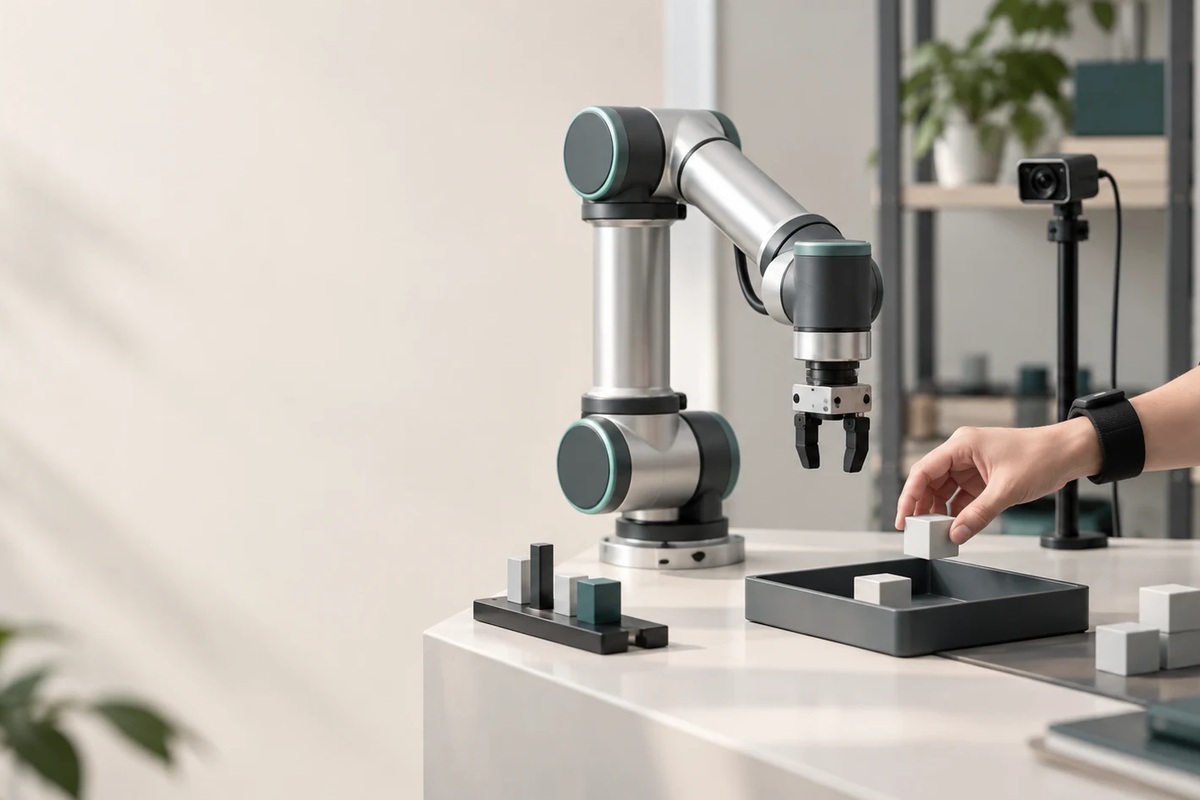
Initial pilots have a deliberately limited scope: rigid parts weighing under 5 kg, joined with screws or press-fits. The company lists cables, flexible materials and gluing as later phases. Those boundaries give prospective customers a clearer starting point than a general promise that humanoids can manufacture any product.
Factory OS Connects Instructions to Robot Work
Customers provide parts lists, drawings and quality requirements. 120ft says it converts that information into a production recipe and tests the process in simulation before its software coordinates robots, tools and quality checks.
The company’s Factory OS is described as an orchestration layer connecting different AI models, robots and automation platforms. Its approach combines structured assembly sequences with physics simulation and learned capabilities, rather than relying on a robot model alone to manage the factory.
120ft reports that programming an end-to-end assembly skill took seven weeks in 2025 and takes seven hours in 2026. Its seven-minute figure is a target for 2027. The company explicitly labels the accompanying curve as illustrative, not a measured time series.
These figures concern preparing a skill, not the time required to build one finished product. Faster preparation could improve the economics of changing between small orders, but dependable output also requires repeatable quality, workable recovery procedures and manageable human supervision.
Hardware Experience Behind the Manufacturing Bet
Founder and CEO Martin Willers started 120ft in 2025 after working in hardware design and co-founding speaker brand Transparent. Named angel investors include Ted Persson, Sophia Bendz and Matthias Dantone, according to SiliconANGLE. Their professional affiliations should not be confused with institutional investments by each of their firms.
The proposal sits alongside other efforts to move robotics from individual tasks into complete production workflows. RobotsBeat has covered Multiply Labs in pharmaceutical manufacturing and Atlas production at Boston Dynamics, each addressing a different part of that industrial transition.
For 120ft, the next milestone is demonstrating that shared robotic assembly can deliver acceptable products consistently across changing jobs. Throughput, rejected units, downtime and total cost per finished product will matter more to customers than the number of robots inside a container.
Disclaimer: RobotsBeat is an independent media brand owned and operated by NuvexMedia LLC, publishing news, research, and insights on artificial intelligence, emerging technologies, automation, and related industries. NuvexMedia LLC invests in and collaborates with companies across the AI, Robotics, technology, software, and digital innovation sectors. These relationships do not influence RobotsBeat's editorial coverage, and the publication maintains full editorial independence to provide accurate, timely, and objective information. © 2026 NuvexMedia LLC. All rights reserved. This content is for informational purposes only and should not be considered legal, tax, investment, financial, or other professional advice.