Key Notes
- Hugo combines 43 actuators with animatronic character design to create a mobile robot aimed at personal encounters in theme parks, resorts and entertainment venues.
- Dynamic Creatures is developing a Vision-Language-Expression model alongside navigation and safety capabilities, so the introduction does not establish unrestricted autonomous guest interaction.
- The Boston Dynamics entertainment partner uses its SnowJay platform to coordinate physical skills, perception and behavior across existing robotic platforms and custom character machines.
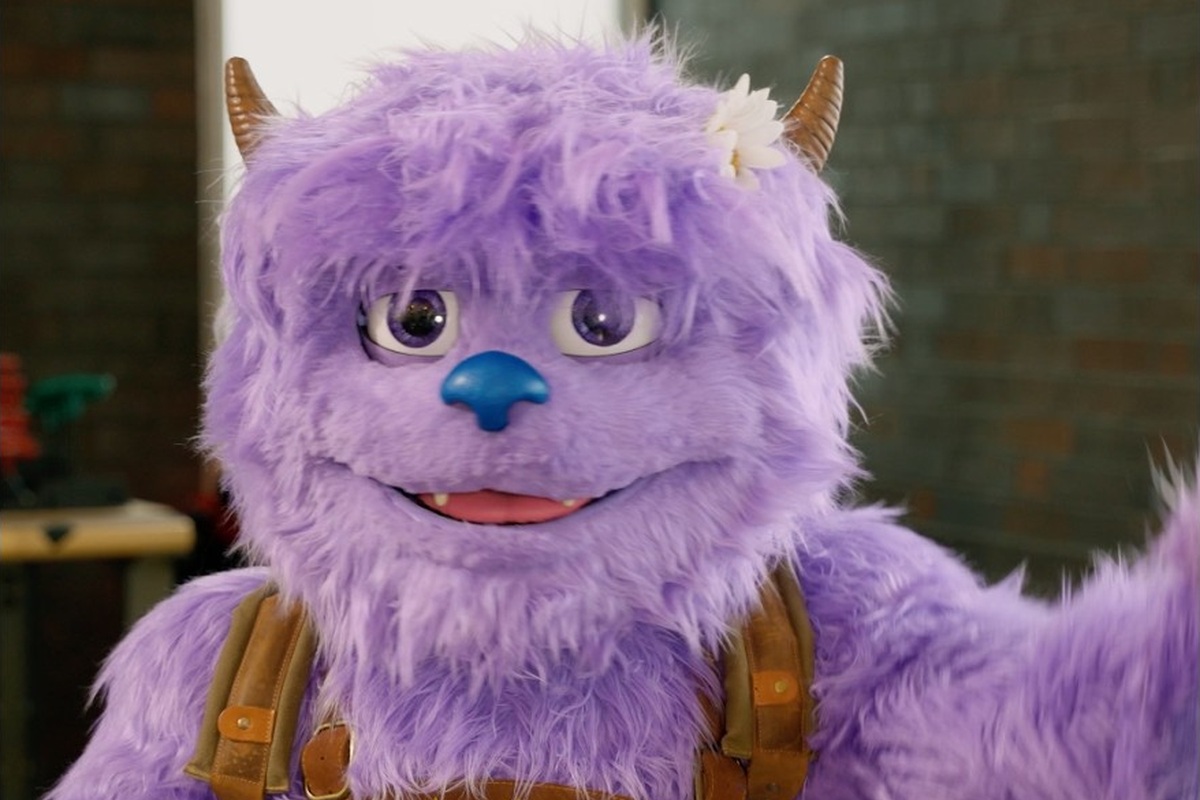
Dynamic Creatures has introduced Hugo, a furry, two-legged character robot designed for encounters with guests at theme parks, resorts and other entertainment venues. The Boston company is using robotics and animatronic design to build a character that can move among visitors rather than remain on a fixed stage.
Hugo has 43 actuators, according to the company’s introduction video. Its purple fur, horns, blue nose and backpack give it a creature-like appearance, placing personality ahead of the industrial styling common to many humanoid robots.
The Boston Business Journal reported on the unveiling on October 13, describing Hugo as a bipedal robot for amusement parks and resorts. The announcement expands the range of robots being developed for public interaction, where an engaging encounter is the product rather than a completed warehouse task.
A Character Built Around Physical Interaction
Dynamic Creatures says Hugo combines an advanced robotic platform with animatronic character design, expressive movement and human–robot interaction. Its engineering effort includes a Vision-Language-Expression model intended to connect what the robot perceives and hears with gestures, motion and emotional expression.
That system remains a development effort. The company also says it is developing navigation and safety capabilities for close contact with people. The introduction therefore establishes a character and a technical direction; it does not establish unrestricted autonomous operation in a crowded theme park.
The intended experience differs from watching a programmed show. A roaming character must respond to a particular visitor while maintaining its balance, choosing a movement and accounting for people nearby. For operators, the appeal would be an encounter that changes with the guest rather than simply repeating a performance.
SnowJay Coordinates Movement and Behavior
The company’s SnowJay platform brings together robot control, perception and behavior. Dynamic Creatures describes onboard software that executes skills, manages transitions between them, monitors system health and handles stopping and shutdown states.
Its development tools also support learning physical behaviors from motion capture and animation. The platform description includes expressive gestures, locomotion, fall recovery and choreography, alongside calibration and simulation-to-real testing.
Those functions address a practical requirement of character robotics: a convincing gesture still has to be a controllable physical action. Synchronizing gaze, movement and responses can make a robot appear attentive, but deploying that interaction around visitors also requires predictable operating limits and recovery procedures.
Entertainment Rather Than Factory Work
Dynamic Creatures launched in September as Boston Dynamics’ official hospitality and entertainment partner. Its founders are Marc Theermann, formerly Boston Dynamics’ chief strategy officer, and robotics researcher Farbod Farshidian.
The company says it works with both existing robotic platforms and custom machines designed around a particular character or setting. At launch, it disclosed work with a large theme park and retailer without identifying them. That broader partnership announcement should not be read as confirmation that Hugo is already deployed at either customer.
RobotsBeat’s coverage of Philadelphia’s Awebot shows another use of robots as public-facing creative experiences. By contrast, Boston Dynamics’ Atlas production work concerns manufacturing an industrial humanoid. Hugo’s commercial test will be different: whether a character can deliver engaging, repeatable encounters while operating safely and reliably around guests.
Disclaimer: RobotsBeat is an independent media brand owned and operated by NuvexMedia LLC, publishing news, research, and insights on artificial intelligence, emerging technologies, automation, and related industries. NuvexMedia LLC invests in and collaborates with companies across the AI, Robotics, technology, software, and digital innovation sectors. These relationships do not influence RobotsBeat's editorial coverage, and the publication maintains full editorial independence to provide accurate, timely, and objective information. © 2026 NuvexMedia LLC. All rights reserved. This content is for informational purposes only and should not be considered legal, tax, investment, financial, or other professional advice.