Key Notes
- Boston Dynamics says an Atlas build currently takes about a day, with a goal of reducing that process to roughly one hour next year and minutes in later years.
- Its prototype operations team combines precision machining, assembly and repair, allowing engineers to revise components and return hardware to testing quickly.
- The stated build-time targets do not establish daily factory output or commercial deliveries, which also depend on parts supply, inspection and testing.
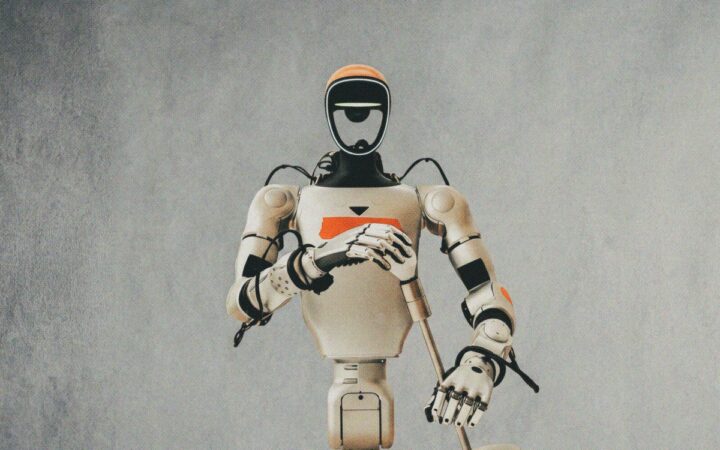
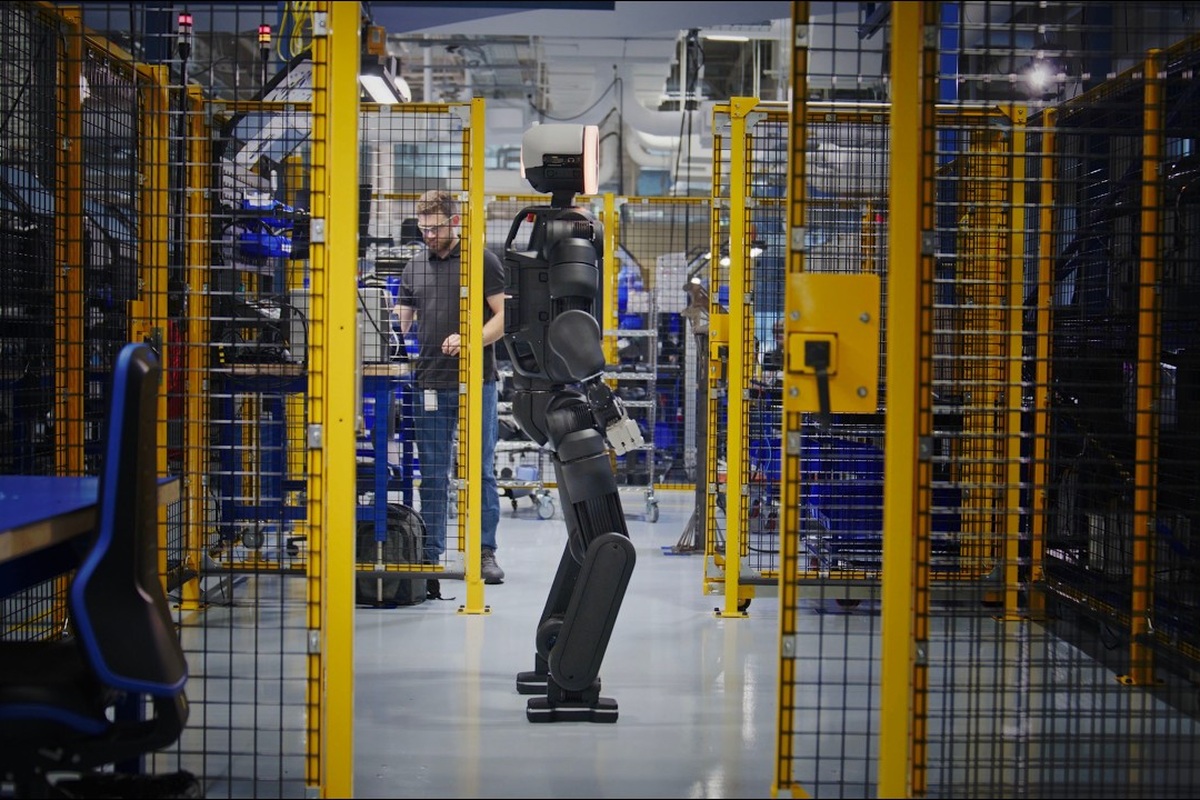
Boston Dynamics says it can now build an Atlas robot in about a day and is aiming to reduce that process to roughly one hour next year. A new video takes viewers inside the prototype operations team responsible for machining components, assembling hardware and keeping robots available for development.
The nearly six-minute official video shows a workshop that applies manufacturing discipline to research hardware. The emphasis is on making designs easier to build and revise, rather than announcing a commercial factory output rate.
Precision Machining Sits Close to Engineering
Boston Dynamics staff describe an in-house machine shop capable of making specialized components with tight tolerances, including gears. Keeping that capability nearby allows engineers and machinists to work through design changes directly instead of treating a drawing as a finished instruction handed to an outside supplier.
The team develops manufacturing methods alongside the components themselves. Tool selection, cutting procedures and the sequence of operations affect whether an experimental part can be produced consistently and at a practical cost.
In the film, staff explain that some newly machined parts reach assembly the same day or the following day. That shortens the distance between a proposed change and a robot that can test it. A component’s first physical trial can then reveal problems that require another design or manufacturing adjustment.
For a humanoid, the challenge is cumulative: many parts must work together while carrying loads and moving repeatedly. A faster workshop is valuable when it produces hardware suitable for those tests, rather than simply more components waiting for integration.
One-Hour Builds Are a Target, Not an Output Rate
A team member describes the progression from a single robot being a major undertaking a year ago to a build taking about a day now. The stated ambition is approximately an hour next year, followed by minutes in later years. These are forward-looking build-time goals.
They do not establish how many finished robots a production line ships in a day. Multiple units can move through different stations at once, while component supply, inspection, calibration and testing can constrain delivery independently of the assembly time for one machine.
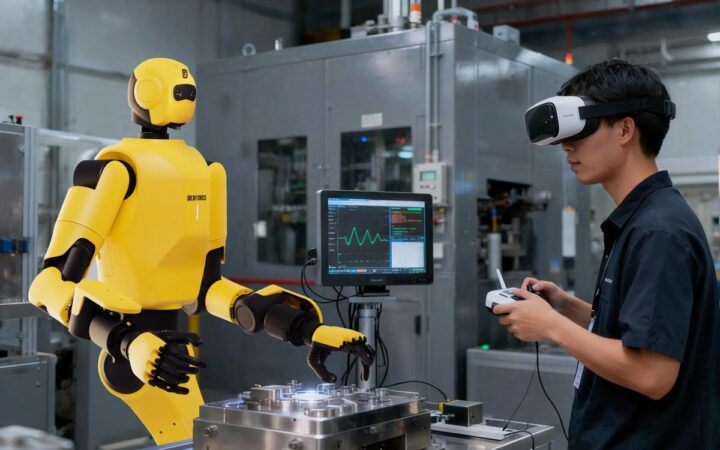
The video also shows robotic arms integrated into assembly work. It does not describe a workforce-free factory: machinists, engineers and assembly specialists remain central to translating designs into working systems.
That distinction matters when comparing humanoid manufacturers. A short assembly operation, a complete robot build and annual factory capacity measure different things. The video offers a view of Boston Dynamics’ development process, rather than enough information to calculate a verified commercial production rate.
Repair Is Part of the Development Loop
Prototype operations supports hardware after assembly as well as before it. Repair and maintenance help return robots to testing, keeping development moving while engineers revise mechanisms and processes.
For research hardware, serviceability has an immediate consequence: a robot awaiting repair cannot collect more test experience. Connecting the people who make a component with the people who assemble and maintain it can expose recurring problems and inform the next revision.
Our earlier coverage of Atlas’ hands examined the related trade-off between dexterity, strength, durability and hardware complexity. Manufacturing and repair requirements help determine whether a design is useful beyond a demonstration.
Building Atlas and Teaching It Work
RobotsBeat also covered Boston Dynamics’ Hyundai training center, where the focus is developing industrial applications. That is a different stage from producing the hardware: a robot must be built, tested and taught the work expected of it.
The factory film makes the connection visible. Faster machining and assembly can put revised robots into engineers’ hands sooner; testing and maintenance then provide feedback for further changes. The practical measure is how that process improves dependable machines, alongside whether the stated build-time targets are achieved.
Disclaimer: RobotsBeat is an independent media brand owned and operated by NuvexMedia LLC, publishing news, research, and insights on artificial intelligence, emerging technologies, automation, and related industries. NuvexMedia LLC invests in and collaborates with companies across the AI, Robotics, technology, software, and digital innovation sectors. These relationships do not influence RobotsBeat's editorial coverage, and the publication maintains full editorial independence to provide accurate, timely, and objective information. © 2026 NuvexMedia LLC. All rights reserved. This content is for informational purposes only and should not be considered legal, tax, investment, financial, or other professional advice.