Key Notes
- Atlas’ new hand has four fingers and 13 degrees of freedom.
- The design targets tool use and manipulation rather than grasping alone.
- Boston Dynamics is developing simulation-based training for the hand.
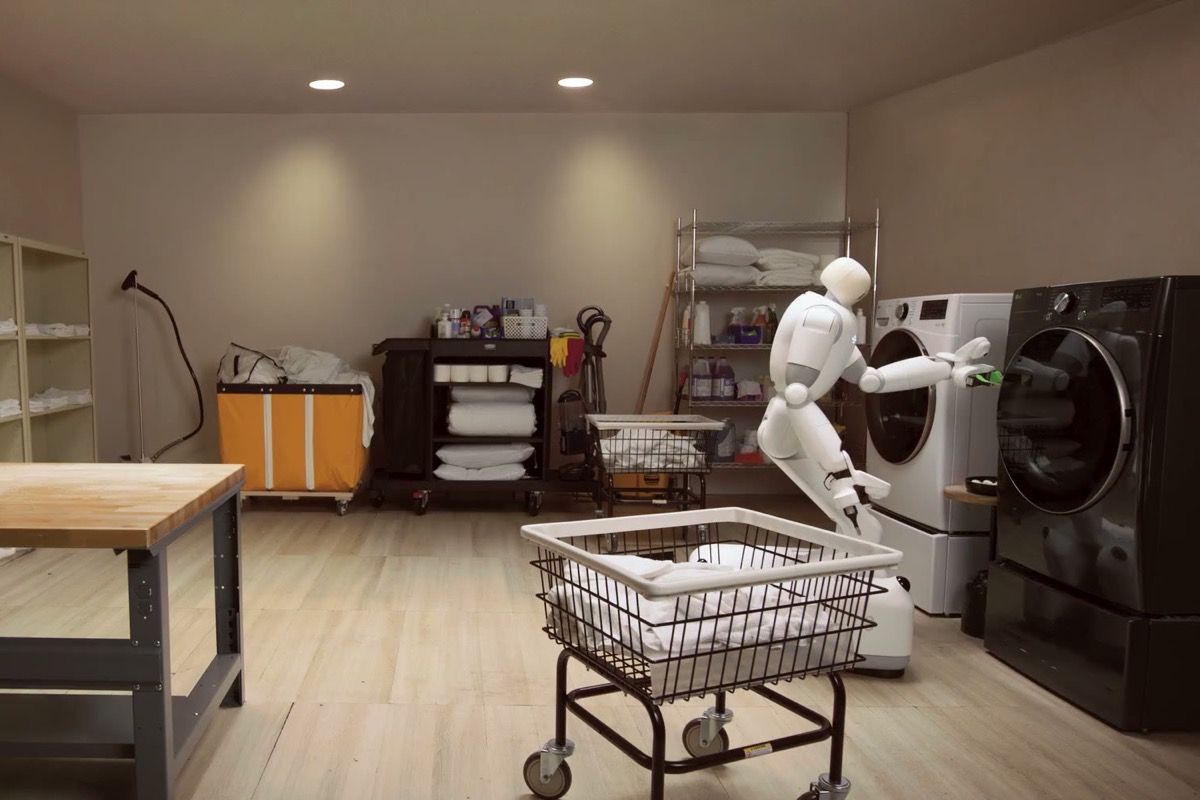
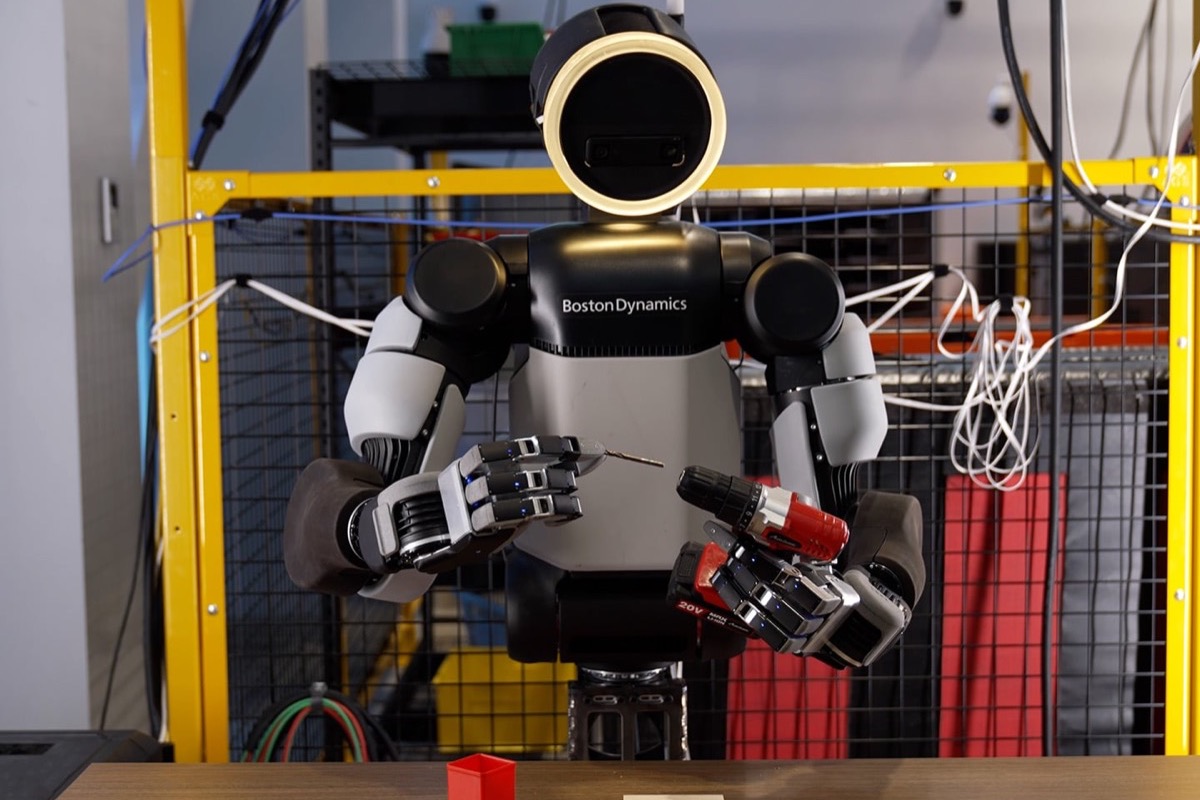
Boston Dynamics has introduced a four-finger hand for Atlas, increasing its articulation from seven to 13 degrees of freedom while deliberately leaving out the pinkie. The redesign targets a practical industrial skill: adjusting an object after picking it up, including holding a tool while operating its trigger.
In its technical announcement, the company describes a hand built around competing demands for dexterity, strength, durability and manufacturing cost. The accompanying official video explains the engineering choices behind the new GR3 design.
Why Atlas Does Not Need a Pinkie
The thumb has four degrees of freedom, while each of the other three fingers has three. Boston Dynamics says adding a fifth finger would bring three more actuators, increasing size, cost and potential failure points without enough extra usefulness to justify the tradeoff.
The development team also tried a simple human experiment: taping the ring and little fingers together for a day to assess the lost capability. The resulting hand keeps a broadly human-scale shape, an important consideration for reaching into workspaces and handling tools designed for people.
From Holding Objects to Working With Them
The engineers describe pinch and three-point grasps, repositioning objects within the hand, and recovery when an object starts to slip. Trigger operation is another target: grasping a power tool securely and pressing its control are separate movements that must work together.
In the video, the team explains that object-reorientation exercises stand in for skills relevant to tools and assembly. That distinction helps explain the redesign: a stable grip gets an object off a shelf, but useful manipulation may require changing its orientation without putting it down.
The hand uses directly actuated joints and enclosed actuators, with tactile pressure sensing on the fingertips and palm. These mechanisms provide feedback about movement and contact; the announcement does not present a general task-success score demonstrating that every intended industrial operation is already solved.
A Hand Built to Learn in Simulation
The video also emphasizes backdrivability: a joint can yield when an outside force acts on it, rather than resisting every impact rigidly. Engineers connect that property to both force feedback and protection of the mechanism.
Boston Dynamics argues that demonstrations alone do not capture all the rapid control needed for manipulation. It is pursuing reinforcement learning in simulation, varying conditions before transferring trained behavior to hardware. The key question is whether those learned movements remain dependable as contacts, parts and working conditions change.
How the Upgrade Fits Atlas’ Factory Plans
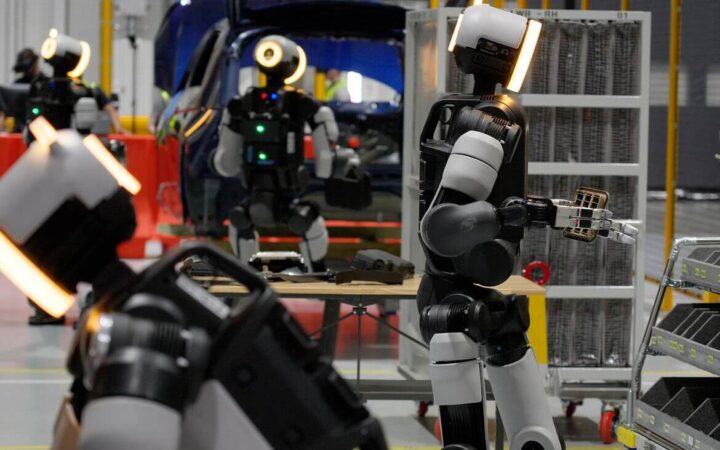
The hand announcement follows Boston Dynamics’ Hyundai training center, covered previously by RobotsBeat. Better manipulation gives that industrial program another component to test against actual manufacturing requirements.
RobotsBeat’s reporting on Optimus production similarly highlights the gap between producing robot bodies and making them consistently useful. For Atlas, the four-finger decision illustrates that progress can involve removing hardware while improving the control of what remains.
Factory value will ultimately depend on repeatable task completion, maintenance needs and performance across a full shift. The new hand establishes an engineering direction; sustained deployment will determine how well it delivers.
Disclaimer: RobotsBeat is an independent media brand owned and operated by NuvexMedia LLC, publishing news, research, and insights on artificial intelligence, emerging technologies, automation, and related industries. NuvexMedia LLC invests in and collaborates with companies across the AI, Robotics, technology, software, and digital innovation sectors. These relationships do not influence RobotsBeat's editorial coverage, and the publication maintains full editorial independence to provide accurate, timely, and objective information. © 2026 NuvexMedia LLC. All rights reserved. This content is for informational purposes only and should not be considered legal, tax, investment, financial, or other professional advice.