
Key Notes
- LG Electronics and KIRIA signed a November 13 agreement to develop humanoid safety and usability evaluations, contribute to standards and pursue domestic pilot certification for robots including CLOiD.
- LG is targeting a first-quarter 2027 unveiling for an NVIDIA-based bipedal reference robot, while the agreement provides no completed certification result or commercial delivery schedule.
- The safety programme complements LG’s Data Factory training work, whose previously announced 100,000-hour target combines real and synthetic data and is not reported as an achieved total in this update.
LG Electronics is working with the Korea Institute for Robot Industry Advancement, or KIRIA, to develop a safety and usability evaluation framework for humanoid robots and pursue pilot certification for models including LG CLOiD. The company announced the agreement on November 16, ahead of a planned bipedal robot unveiling in early 2027.
The memorandum of understanding was signed at LG Twin Towers in Seoul on November 13. It brings LG’s robot-development experience into work on evaluation methods and standards as the company expands its physical AI business across industrial, commercial and home applications.
Pilot Certification Becomes Part of Robot Development
LG will participate in building the evaluation system for KIRIA’s Humanoid Robot Safety Certification Center and in developing related international and national standards. It also plans to seek domestic pilot safety certification for its humanoid robotics portfolio, including CLOiD.
These are planned assessment and standardization activities. The announcement does not report that CLOiD has already passed the pilot process or publish a test result, certificate or completed evaluation schedule.
Kim Chang-min, who leads LG’s Quality Management Center, framed the partnership as a way to build confidence in safety and quality before the products reach a wider market. KIRIA President Cho Young-hoon emphasized incorporating practical industry experience into the evaluation framework.
The engineering reason for starting early is straightforward: a robot’s intended tasks, movements and working environment affect what needs to be tested. A system operating near people needs its behaviour assessed as part of the complete application, including how it responds when a task cannot proceed as expected.
A Bipedal Robot Is Targeted for Early 2027
LG says it is developing a bipedal reference robot using NVIDIA robotics technology, with an unveiling targeted for the first quarter of 2027. That is a presentation target, with no commercial launch date, price or shipment commitment disclosed in this safety agreement.
Our earlier LG–NVIDIA report follows the companies’ broader robotics collaboration. The latest announcement adds work on assessment and certification alongside that development programme; it does not establish that the upcoming bipedal machine has completed safety validation.
CLOiD’s pilot-certification plan and the bipedal development target are related parts of LG’s robotics strategy. The release does not provide a final specification for the new machine or say that every CLOiD configuration and future humanoid will be assessed through an identical test programme.
The Data Factory Provides a Development Base
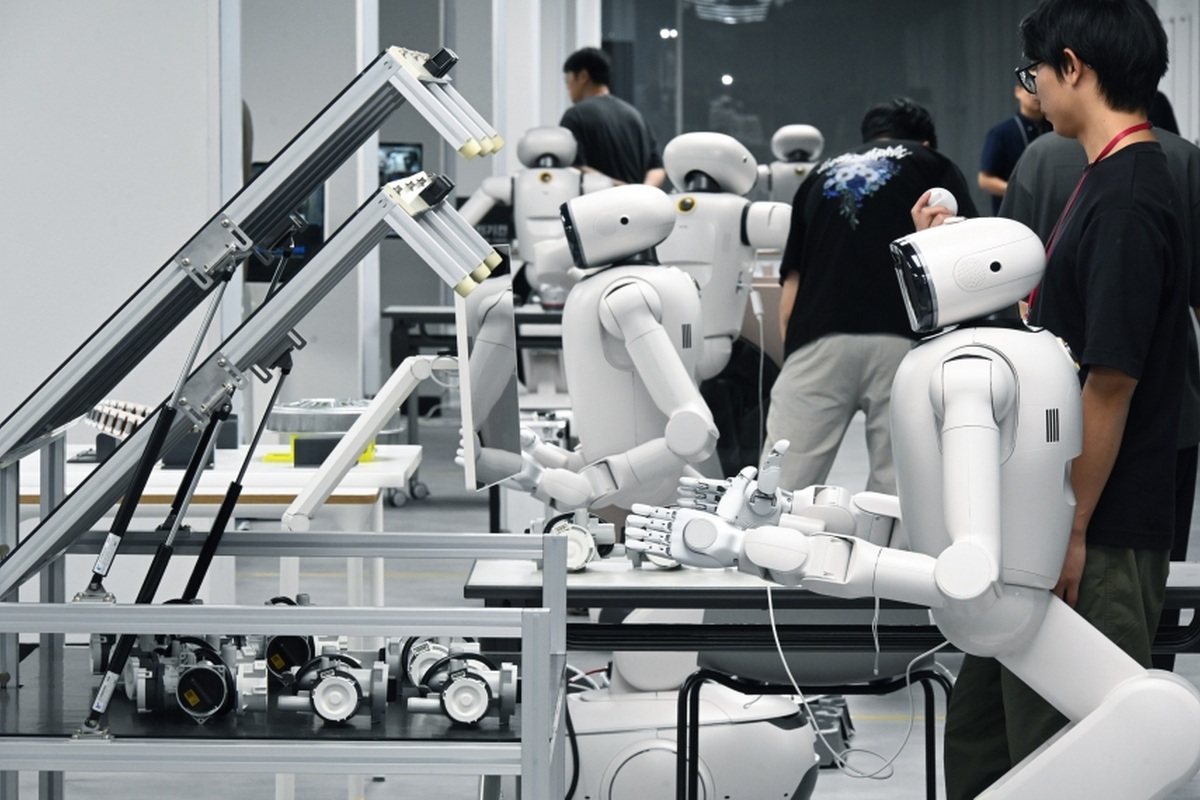
LG’s robotics effort also includes the Data Factory at its Yangjae research campus in Seoul. In its August development update, LG described training spaces where CLOiD robots repeat household tasks and move, stack and assemble parts in a simulated manufacturing environment modeled on its Tennessee washing-machine plant.
The company outlined a pipeline combining real robot observations with data augmented or generated using NVIDIA technologies. Its end-of-year target was 100,000 hours of combined physical and synthetic training data; that remains a previously announced goal, rather than a new achieved total in the KIRIA agreement.
RobotsBeat’s Data Factory coverage examines that training programme. The new safety work addresses another requirement for deployment: establishing how a robot’s performance and behaviour will be evaluated for its intended environment.
The immediate milestone is a partnership to develop that framework and pursue pilot assessments. Evidence of completed certification, physical test outcomes and a defined operating envelope would show how the programme translates into a product that is ready for customer use.
Disclaimer: RobotsBeat is an independent media brand owned and operated by NuvexMedia LLC, publishing news, research, and insights on artificial intelligence, emerging technologies, automation, and related industries. NuvexMedia LLC invests in and collaborates with companies across the AI, Robotics, technology, software, and digital innovation sectors. These relationships do not influence RobotsBeat's editorial coverage, and the publication maintains full editorial independence to provide accurate, timely, and objective information. © 2026 NuvexMedia LLC. All rights reserved. This content is for informational purposes only and should not be considered legal, tax, investment, financial, or other professional advice.