Key Notes
- Aptiv expects to deploy 100 TARSBOT A-Series industrial robots by the end of 2026 across eight process categories and 33 application scenarios, with an initial batch already operating at a smart factory.
- The partners plan to integrate Aptiv computing and intelligent power distribution into robotic platforms, while factory experience will inform continued development of TARSBOT’s AWE foundation model.
- A broader 1,000-robot fleet remains a separate goal without a disclosed completion date, and the announcements provide no audited uptime, intervention rates or financial returns.
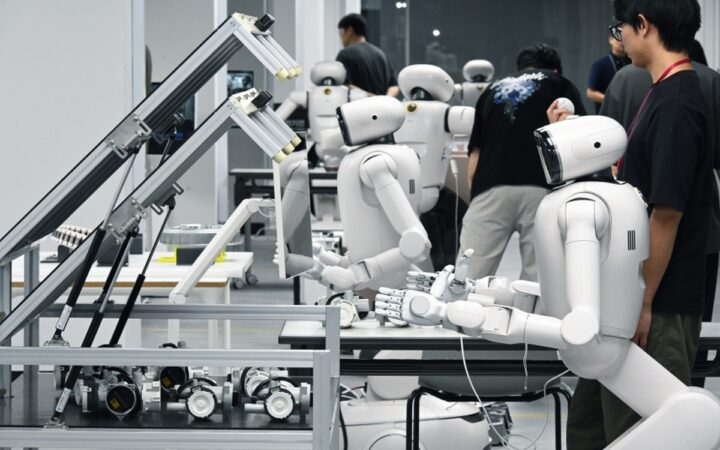
Aptiv expects to deploy 100 TARSBOT A-Series industrial robots by the end of 2026, expanding a partnership that already has an initial batch working on production lines at an Aptiv smart factory. TARSBOT disclosed the target in a November 16 announcement following an agreement signed at the China International Import Expo.
The update adds a specific near-term deployment goal to cooperation Aptiv announced on November 6. The partnership works in both directions: Aptiv provides factory environments for robotic systems, while its computing and power-management technology is intended to become part of the robots themselves.
A 100-Robot Rollout Within a Larger Fleet Plan
TARSBOT says the planned rollout covers eight manufacturing process categories and 33 application scenarios, including flexible assembly, coordinated inspection and production management. The announcement does not identify the number of robots in the first operating batch or provide a breakdown of completed installations by task.
The partners also describe a broader project targeting 1,000 industrial embodied AI robots, supported by Shanghai’s Jiading District government. That is a separate expansion goal: the release does not set a completion date for the full 1,000-unit fleet.
For a factory operator, task coverage is only one measure of progress. A robot assigned to assembly must handle part variation, fixtures and production timing; an inspection task needs a reliable route from finding a defect to deciding what the line should do about it.
Aptiv Supplies Computing and Power Distribution
Aptiv’s own announcement identifies high-performance computing platforms and intelligent power distribution among the technologies planned for integration into robots from TARS and Shanghai Electric. It describes computing for perception, decision-making and motion control, with an architecture intended to support different robot configurations.
The November 6 statement refers to hundreds of robots being gradually introduced across both partnerships. That combined figure should not be treated as a separate count of TARSBOT units already installed, or added to the new 100-robot target.
Aptiv expects initial production of the integrated platforms by the end of this year. Neither announcement specifies the computing chipset, power budget or cost of the configurations involved. The industrial contribution is a combination of components, engineering validation and access to real manufacturing processes.
Production Experience Feeds the AWE Model
TARSBOT says insights from the factory work will support continued development of AWE, its AI World Engine foundation model for embodied AI. The production environment provides a place to test whether a robot’s perception and actions remain useful across repeated operations.
In its earlier WAIC presentation, TARS described AWE 3.5 as combining action, perception, geometry and tactile sensing. It also demonstrated A1 robots handling flexible wiring-harness assembly. Those demonstrations provide background on the model programme; the latest agreement does not specify which AWE version runs in each factory robot.
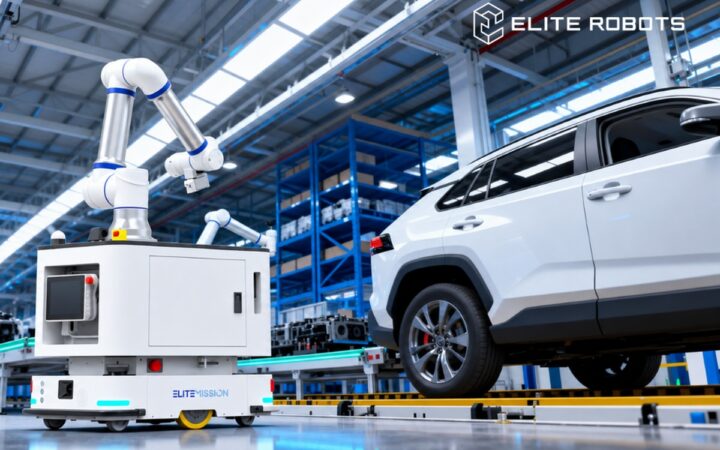
Our coverage of the Siemens factory trial examines a related effort to connect embodied AI with production workflows. The ELITEMISSION report looks at mobile manipulators designed to serve several workstations, another route to applying robotics within existing facilities.
The TARSBOT–Aptiv update supplies a named industrial partner, an initial operating deployment and a year-end target. It does not publish audited uptime, intervention rates, yield improvements or financial returns. Completing the 100-unit rollout and reporting sustained task-level results would provide a clearer measure of how the collaboration performs at scale.
Disclaimer: RobotsBeat is an independent media brand owned and operated by NuvexMedia LLC, publishing news, research, and insights on artificial intelligence, emerging technologies, automation, and related industries. NuvexMedia LLC invests in and collaborates with companies across the AI, Robotics, technology, software, and digital innovation sectors. These relationships do not influence RobotsBeat's editorial coverage, and the publication maintains full editorial independence to provide accurate, timely, and objective information. © 2026 NuvexMedia LLC. All rights reserved. This content is for informational purposes only and should not be considered legal, tax, investment, financial, or other professional advice.