Key Notes
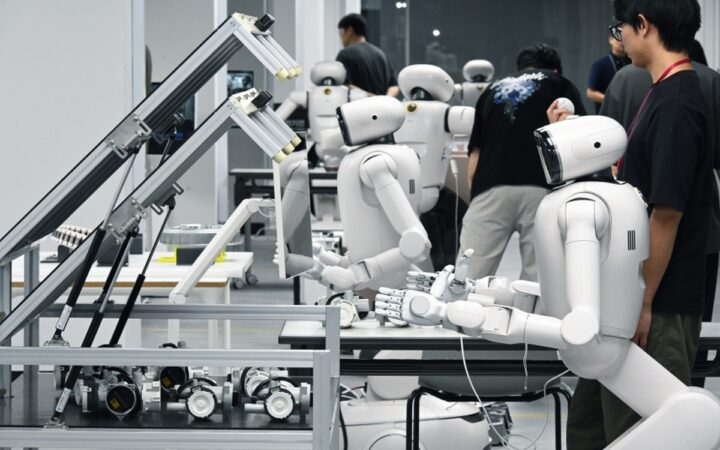
- FFR says it delivered two Aegis Ultra robots to Central Michigan University, its first Michigan customer, with teaching and research applications proposed for the university’s recreation and leisure-services department.
- Brain Blocks now combines gesture, pose, object and sound recognition with motion recording and playback, allowing those inputs to be used in visual robot programs without writing code.
- Faber U has completed a label-based sorting exercise in simulation, while physical robot tests and an industrial proof of concept remain future steps rather than verified production deployments.
FF EAI Robotics Ecosystem says it has delivered two Aegis Ultra robots to Central Michigan University, adding a university customer as it expands its education business. The company also reported new Brain Blocks programming tools and progress on a simulated industrial sorting task in a weekly update from CEO YT Jia.
The update was released on November 15. FFR is pursuing education, security, industrial and commercial applications at different stages of development, with the latest report combining customer deliveries and developer tools with work toward physical industrial trials.
Two Aegis Ultra Robots Expand the Education Business
FFR describes Central Michigan as its first customer in Michigan and the delivery as its first sale to a university laboratory in the state. Jia identified the university’s Department of Recreation, Parks, and Leisure Services Administration as a setting for potential physical AI teaching, research and hands-on practice.
The announcement does not detail a curriculum, research protocol or measured educational outcomes. The completed delivery gives the company a university reference customer; the academic applications still need to be developed and evaluated in that setting.
Our earlier education coverage followed Faraday Future’s school demonstrations and service-robot deployments. The CMU delivery extends that effort into university use, rather than establishing that the same learning programme is already operating across multiple campuses.
Brain Blocks Adds Perception to Visual Programming
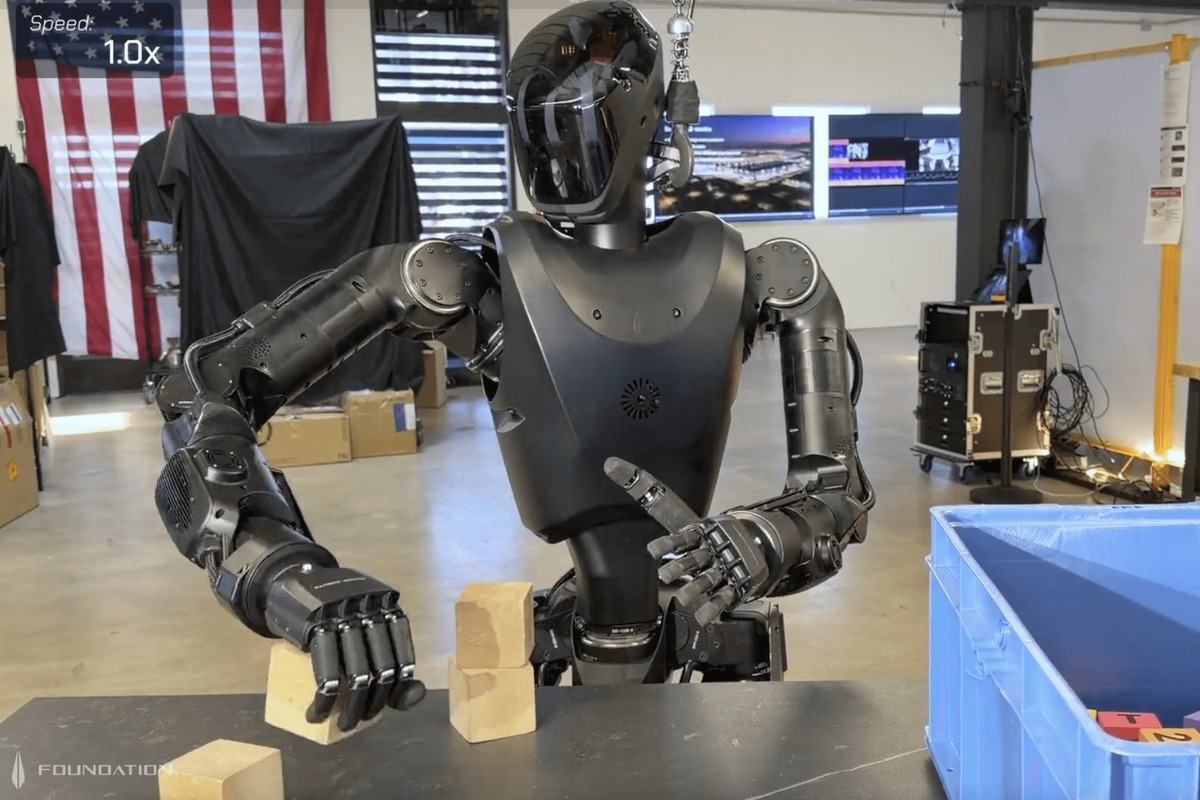
Brain Blocks has introduced an AI module that recognizes gestures, body poses, objects and sounds, alongside motion recording and playback. FFR says those recognition results can be used in block-based programs without writing code, allowing users to connect perception with robot behaviour.
The company’s quarterly update places Brain Blocks within a six-tool developer platform. Other tools address motion creation from teleoperation and video, conversational behaviour, natural-language skill generation and the development workflow from data collection to inference. An SDK and API serve professional engineers.
For students, the practical value is a shorter route from observing an input to testing a response. Visual programming can make that relationship easier to inspect, although the update provides no comparative study of programming time or learning outcomes.
RobotsBeat’s FF Nova report examines the hardware side of the developer strategy. The new Brain Blocks functions concern software tools and should not be assumed to run identically on every robot in FFR’s portfolio.
Faber U Sorting Work Remains in Simulation
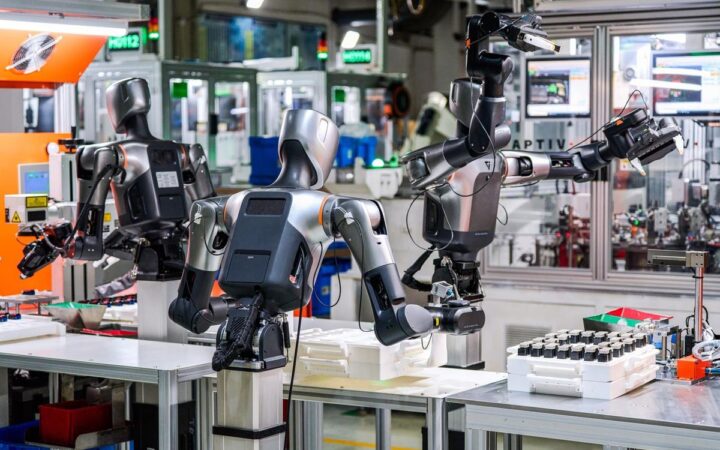
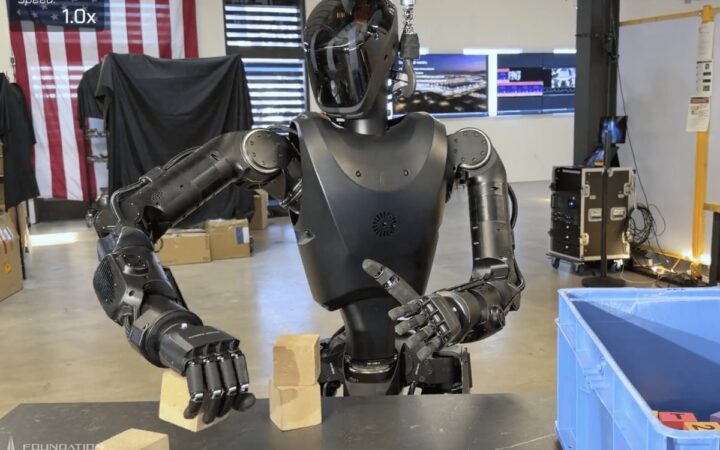
In industrial robotics, FFR says it completed simulation-based validation of label-based parts sorting with Faber U, a wheeled mobile manipulator. Testing on physical robots and customer-site proof-of-concept projects are subsequent steps, rather than completed results from this exercise.
The intended applications include sorting, machine loading and unloading, and logistics transfers. Its quarterly outlook targets completion of a real-world industrial proof of concept in the first quarter of 2027; that remains a company goal.
Our OmniMind analysis also separates simulation performance from deployed robot capability. Physical trials would need to show how the sorting workflow handles variations in parts, labels and positioning, as well as failed attempts and operator intervention.
The latest update therefore records three distinct stages: a reported two-robot delivery, newly available programming functions and an industrial task validated in simulation. FFR has not published physical sorting throughput, success rates or customer acceptance results for Faber U in this announcement.
Disclaimer: RobotsBeat is an independent media brand owned and operated by NuvexMedia LLC, publishing news, research, and insights on artificial intelligence, emerging technologies, automation, and related industries. NuvexMedia LLC invests in and collaborates with companies across the AI, Robotics, technology, software, and digital innovation sectors. These relationships do not influence RobotsBeat's editorial coverage, and the publication maintains full editorial independence to provide accurate, timely, and objective information. © 2026 NuvexMedia LLC. All rights reserved. This content is for informational purposes only and should not be considered legal, tax, investment, financial, or other professional advice.