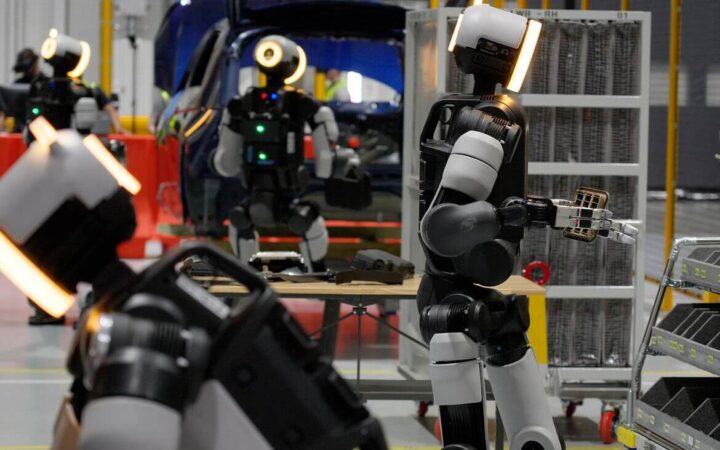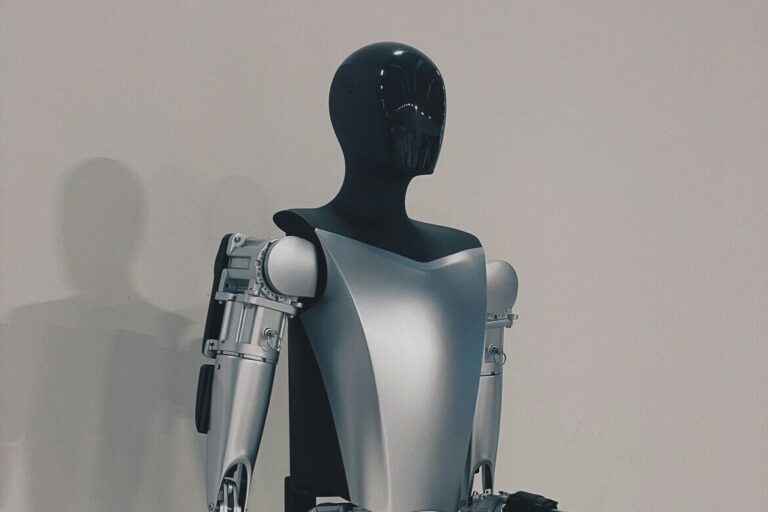
Tesla has reported that it is now producing hundreds of Optimus humanoid robots weekly – approximately a tenfold increase from Q2 2026 production levels – and expects to reach around 1,000 units per week by year-end if current trends hold, according to reporting by The Information. The production ramp is the most significant manufacturing acceleration in Tesla’s Optimus program since the Fremont line conversion began in August.
But the reports accompanying the production milestone are candid about where the bottleneck has shifted: from building the robot body to making it useful at work.
The Generalization Problem
For Optimus to be commercially deployable at scale, it needs to generalize – to handle novel tasks and unfamiliar situations without requiring days of specific training for each variation. A robot that can only perform tasks it has been explicitly trained on, and produces unpredictable behavior in unfamiliar situations, cannot substitute for a human worker who can adapt to changing conditions on the job.
Tesla’s Optimus currently falls short of that standard. A relatively simple task – taking boxes and placing them on a specific shelf – requires handling boxes of different sizes and weights, picking up fallen items, navigating around obstructions, and adapting in real time. Optimus is not yet reliably capable of this without prior training on the specific scenario.
Tesla’s proposed solution is building a library of fundamental behaviors – grabbing, lifting, walking, placing, manipulating – that the robot’s AI can eventually combine into novel actions for tasks it has not been trained on directly. The company has accumulated more than 500,000 hours of training data collected through motion-capture suits and camera-equipped human workers, and continues to expand that dataset. That volume of training data is substantial, but the transition from a library of individual behaviors to reliable generalization across varied real-world conditions is the central unsolved problem across the physical AI field, not unique to Tesla.
The Hand Problem
A second constraint is mechanical. Optimus’ hands contain more than 100 separate components, making assembly labor-intensive and error-prone – small misalignments during assembly require rework. The hands must also survive millions of repetitions of industrial tasks that stress the fine motor and tactile sensing components in ways that controlled demonstrations do not.
Touch sensor durability has been a specific reported issue. Tesla’s proposed solution is a replaceable sensor “glove” design, allowing failed sensors to be swapped out without replacing the entire hand assembly – a serviceability fix that acknowledges the current durability limitations rather than solving them outright.
What the Production Milestone Actually Means
The shift in Tesla’s internal framing – from production volume as the bottleneck to task generalization and hardware reliability as the binding constraints – mirrors the finding from the IFR’s first humanoid count, published this week, showing only 7,000 humanoids sold globally in 2025 with most going to research and data collection rather than productive factory work.
Building 1,000 Optimus robots per week is a meaningful manufacturing achievement. Each robot that enters Tesla’s Optimus Academy – the internal closed-loop deployment where production robots perform tasks on Tesla’s factory floors – generates operational data that feeds back into AI model development. That data flywheel is the mechanism by which the generalization problem is supposed to be solved over time.
Whether that flywheel turns fast enough to produce reliably generalizable robots before the competitive and financial pressures of Tesla’s $25 billion-plus 2026 capital expenditure program require commercial revenue from Optimus is the central question the production ramp alone cannot answer.
Disclaimer: RobotsBeat is an independent media brand owned and operated by NuvexMedia LLC, publishing news, research, and insights on artificial intelligence, emerging technologies, automation, and related industries. NuvexMedia LLC invests in and collaborates with companies across the AI, Robotics, technology, software, and digital innovation sectors. These relationships do not influence RobotsBeat's editorial coverage, and the publication maintains full editorial independence to provide accurate, timely, and objective information. © 2026 NuvexMedia LLC. All rights reserved. This content is for informational purposes only and should not be considered legal, tax, investment, financial, or other professional advice.