Key Notes
- Hedra launched Model Factory on November 10 to help robotics and physical AI teams adapt, evaluate and deploy models using researchers, AI agents and GPU infrastructure.
- Its reported gripper-change result recovered task success without retraining in simulation, with no physical robot validation presented in the launch announcement.
- The service keeps researchers and customer evaluations in the update process, while Hedra labels its broader recursive self-improvement work a research preview.
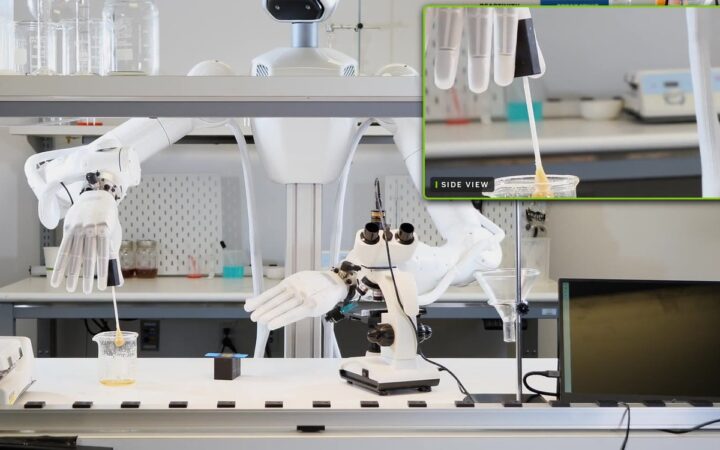
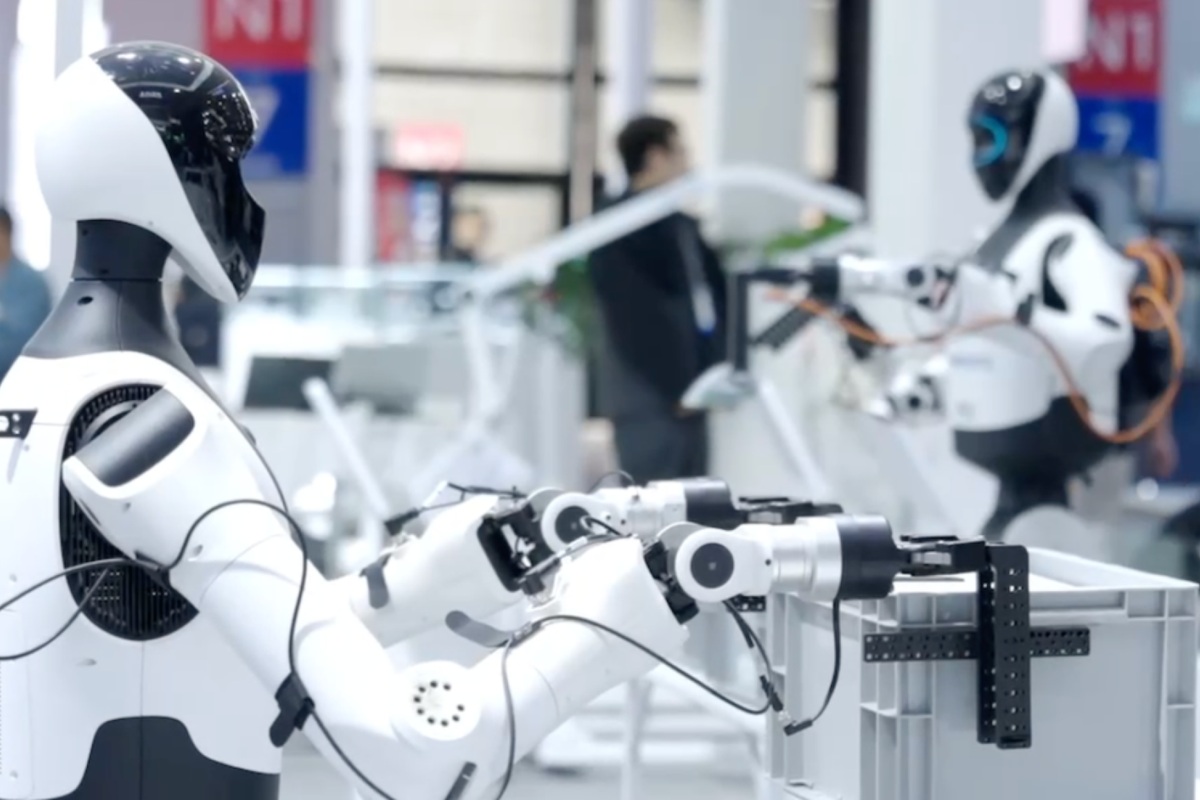
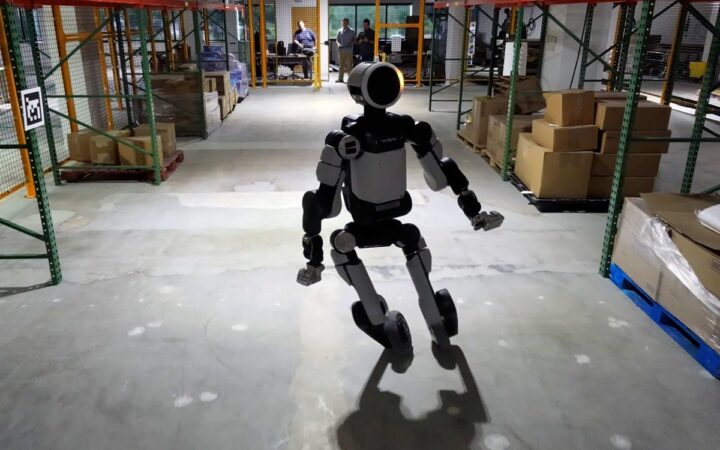
Hedra has launched Model Factory, a service that combines researchers, AI agents and GPU infrastructure to adapt and deploy models for robotics and other physical AI applications. The November 10 launch announcement describes support for customer data, simulation environments and models that need to act on real-world inputs.
Its robotics example is a simulation study: a trained policy lost almost all task success after a gripper change, then recovered to near 100% without retraining. Hedra attributes the recovery to matching the replacement gripper’s reach and grasp point in the wrist-camera view. The release presents no physical robot validation of that result.
Researchers and Agents Share the Development Work
The Model Factory page describes a managed workflow. Hedra researchers work with a customer to define the required behavior, prepare data and develop training environments. Researchers and agents then run supervised fine-tuning or reinforcement-learning experiments and evaluate the results.
The company also offers inference optimization and deployment on its infrastructure or the customer’s own systems. Once a model is in use, production results inform the next round of experiments. The proposed service therefore covers the work around a model, including training, evaluation and serving, rather than supplying robot hardware.
The Gripper Result Tests a Narrower Question
Changing an end effector can alter the relationship between what a wrist camera sees and where a robot grasps. Hedra’s reported simulation explores whether matching the new gripper to the expected reach and grasp geometry can preserve a policy’s behavior.
That is a different claim from demonstrating general adaptation to any replacement tool. The launch gives no physical deployment trial or broad hardware comparison. Its near-100% figure should be read as the reported outcome of the described simulation, rather than an operating success rate for customers’ robots.
Inference Has to Fit the Robot
Hedra’s physical AI page identifies response time, device memory and power as deployment constraints. Connectivity and restrictions on moving data off site also affect where inference can run. Its listed grasping and inspection workflows are illustrative applications, rather than named customer deployments.
For a robotics team, training a stronger model and running it inside the machine’s response-time budget are connected tasks. A useful evaluation has to preserve the required behavior on the intended hardware, with representative inputs and operating conditions.
Customer Evaluations Gate Model Updates
Hedra says researchers analyze deployed performance and release updated versions only after they pass customer evaluations. Its research page says people set objectives and review findings while AI researchers run experiments. The site labels its broader recursive self-improvement work a research preview.
The new commercial offering is available for teams to discuss a custom engagement with Hedra. The launch does not disclose a standard robotics deployment price or a measured improvement across customers’ production fleets.
Our NVIDIA CoRL analysis examines the wider role of simulation and model evaluation in robot learning. We also covered Physical Intelligence’s API for training and inference. Hedra is entering that development stack with a researcher-led service and company-reported experimental results.
Disclaimer: RobotsBeat is an independent media brand owned and operated by NuvexMedia LLC, publishing news, research, and insights on artificial intelligence, emerging technologies, automation, and related industries. NuvexMedia LLC invests in and collaborates with companies across the AI, Robotics, technology, software, and digital innovation sectors. These relationships do not influence RobotsBeat's editorial coverage, and the publication maintains full editorial independence to provide accurate, timely, and objective information. © 2026 NuvexMedia LLC. All rights reserved. This content is for informational purposes only and should not be considered legal, tax, investment, financial, or other professional advice.