Key Notes
- NVIDIA’s GR00T 2 jointly predicts future video and robot actions, aiming to transfer skills learned from human demonstrations and other machines.
- The company reports 40% zero-shot trial success across 50 tasks and 95% after five demonstrations per task, with code availability listed for December.
- Isaac Lab simulation and Lab-Arena evaluation tools support training and failure analysis, while physical deployment still requires validation beyond benchmark results.
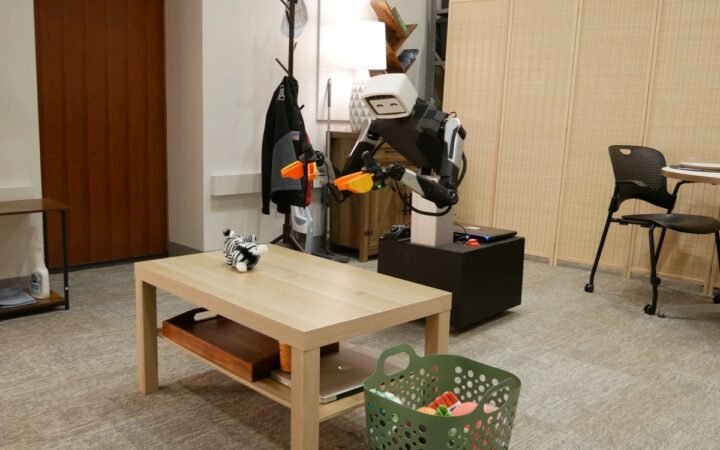
NVIDIA has introduced GR00T 2, a robot foundation model that predicts future video and physical actions together, as part of its Conference on Robot Learning announcements. The research aims to help robots reuse skills from human demonstrations and other machines, then adapt with limited task-specific data.
The company’s research page reports 40% zero-shot success across 50 tasks absent from the target robot’s training data. One demonstration per task raised average success to 71%, and five raised it to 95%. Those are NVIDIA’s results under its evaluation conditions, rather than a guarantee for arbitrary customer tasks.
Predicting the Outcome Alongside the Action
GR00T 2 takes recent video, a language instruction and the robot’s state, then jointly predicts future observations and an action sequence. The idea is to connect how the scene should change with the movements that produce that change.
The research distinguishes two measures that can otherwise be confused. The pretrained model succeeded at least once on 40 of the 50 tasks, while its average trial success was 40%. Completing a task once is different from completing it reliably across repeated attempts.
NVIDIA lists code availability for December. The research announcement therefore precedes the stated code release; it should not be treated as confirmation that the full new implementation is already downloadable.
Simulation Extends the Training Pipeline
NVIDIA’s CoRL announcement connects the model with simulation, data collection and evaluation. It also describes GR00T 2 testing for laundry handling, server manufacturing and other industrial applications, placing the technology in development and evaluation workflows rather than establishing broad commercial reliability.
Isaac Lab 3.0 supplies part of that training infrastructure. It supports modular physics and rendering backends and large-scale learning, including work with Newton on deformable materials and articulated systems. Our Isaac Lab coverage explains the release, which was available before CoRL rather than first launching at this conference.
In one vision-based dexterous-manipulation benchmark, NVIDIA reports up to 2.5x training throughput for Isaac Lab 3.0 with Newton compared with Isaac Lab 2.3 using PhysX. That result concerns the specified simulation-training workload, not a claim that physical robots perform every job 2.5x faster.
Benchmarks Test More Than a Successful Demonstration
The company is also presenting new benchmark content around Isaac Lab-Arena, including DexBench and VABAR. Its evaluation framework lets developers compose tasks from reusable components, vary operating conditions and analyze the failures that emerge during parallel simulation.
That capability matters because nominal task completion can hide sensitivity to object placement, appearance or physical parameters. A policy that works in one carefully arranged scene may need substantial improvement before it tolerates the variation expected at a real workstation.
A repeatable benchmark helps identify those weaknesses, but simulation remains a model of the world. Hardware testing is still needed to establish how sensing errors, wear, contact forces and unexpected interruptions affect useful output.
Human Data and Robot Control Solve Different Parts of the Problem
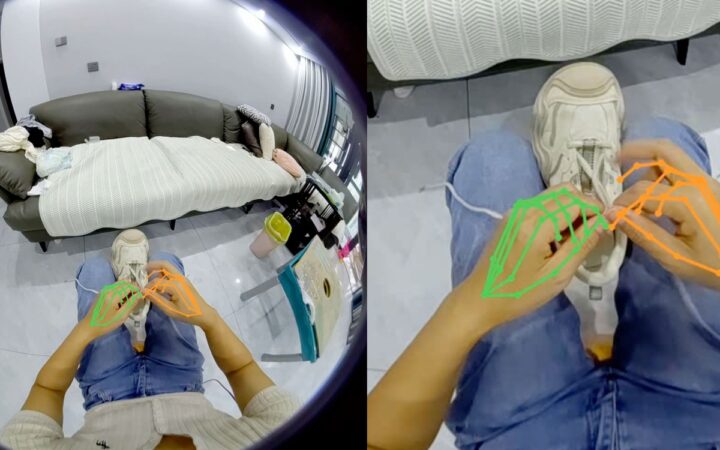
The new work sits alongside efforts to make human demonstrations more useful for robotics. Our HiPHI-Hand report examines precise reference data used in NVIDIA’s hand-reconstruction research. Turning observed movement into a dependable robot skill requires additional control, adaptation and evaluation.
The Isaac platform report follows the wider development stack. Together, these projects address successive parts of the same workflow: record experience, train a policy, test its limits and deploy it on an appropriate robot.
GR00T 2’s few-demonstration results make that adaptation process the central story. The next practical test is whether those gains remain repeatable as developers move beyond the published task set into changing, sustained real-world work.
For the broader development workflow, read our NVIDIA CoRL overview, covering robot models, simulation, evaluation and agentic programming.
Disclaimer: RobotsBeat is an independent media brand owned and operated by NuvexMedia LLC, publishing news, research, and insights on artificial intelligence, emerging technologies, automation, and related industries. NuvexMedia LLC invests in and collaborates with companies across the AI, Robotics, technology, software, and digital innovation sectors. These relationships do not influence RobotsBeat's editorial coverage, and the publication maintains full editorial independence to provide accurate, timely, and objective information. © 2026 NuvexMedia LLC. All rights reserved. This content is for informational purposes only and should not be considered legal, tax, investment, financial, or other professional advice.