Key Notes
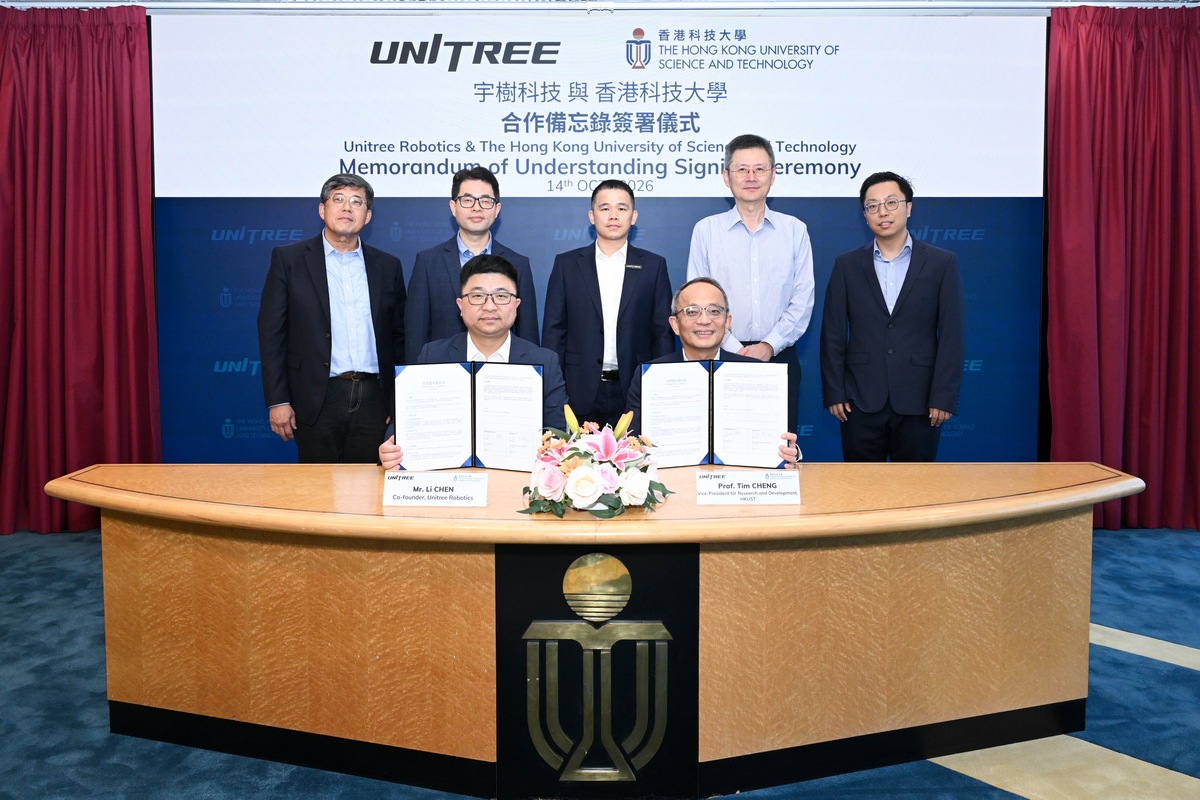
- HKUST announced the partnership on November 9 following an October 14 signing, with Unitree supporting the university’s developing Future AI Lab.
- The collaboration covers research platforms and postgraduate training while setting a future joint laboratory as a goal rather than an already opened facility.
- Useful research outcomes will require physical validation, reproducible evaluations and clearly stated limits as learning systems move from simulation to real robots.
The Hong Kong University of Science and Technology and Unitree have signed a memorandum of understanding covering embodied AI research and training. HKUST’s November 9 announcement says the agreement was signed on October 14.
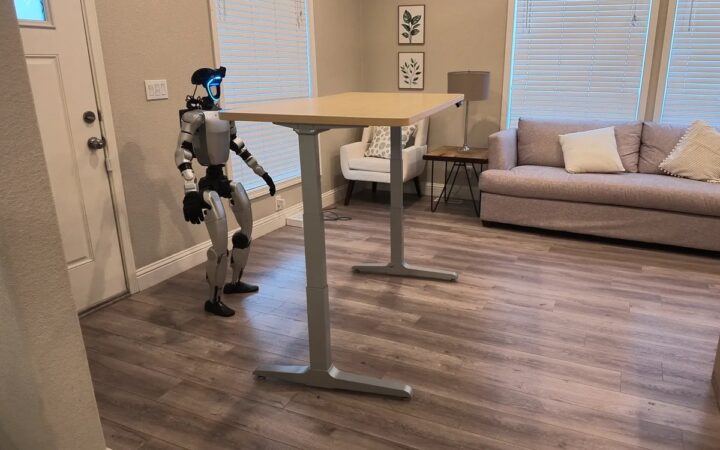
Unitree will provide hardware for the computer science department’s Future AI Lab, which is under construction. Planned resources span mobile dual-arm, humanoid, quadruped and wheeled-quadruped research platforms. The partners also aim to establish a joint laboratory.
Research Hardware Connects AI With Physical Testing
The research agenda includes safety, human-robot interaction, medical robotics and autonomous navigation. The agreement also provides for postgraduate internships at Unitree and exploration of joint teaching materials. It does not disclose a budget, equipment quantities or a joint-lab opening date.
Access to physical robots matters because a controller that works in simulation still has to contend with real sensing errors, friction, actuator limits and changing surroundings. A research platform gives teams a way to investigate those differences and measure whether a proposed method survives contact with the physical environment.
Different robot bodies also create different constraints. A wheeled platform may offer a stable base for manipulation on level floors, while a legged machine adds balance and foot-placement problems. Findings from one configuration therefore need testing before being applied to another.
From Learning Policies to Measured Results
Recent research illustrates the importance of that validation. The HALO paper describes an autonomy system trained using generated home environments and tested in six unfamiliar real-world settings. Its authors report 91% success across 360 trials involving six physical skills, rather than unrestricted competence in every household task.
Our HALO coverage explains the research and its limitations. The work is separate from the new HKUST agreement, but offers an example of the questions robot-learning experiments can address: what transfers, where performance falls and how the test conditions affect the result.
Safety and Reproducibility Shape Useful Collaboration
For a university-industry programme, meaningful progress will be visible in concrete research outputs: clearly defined tasks, repeatable evaluations, documented failures and methods that other teams can scrutinize. Hardware availability supports that work, but does not itself establish an advance in autonomy.
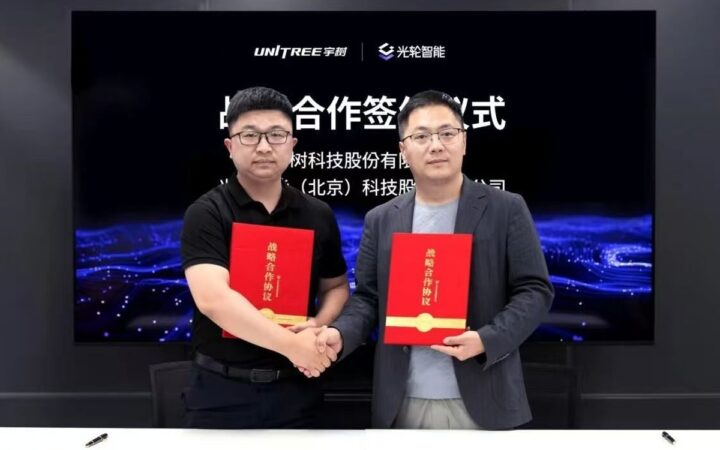
Our Unitree-Lightwheel report examines another connection between robot platforms, simulation and deployment. The HKUST partnership adds an academic route for experimentation and training; its impact will depend on the projects and results that follow the agreement.
Disclaimer: RobotsBeat is an independent media brand owned and operated by NuvexMedia LLC, publishing news, research, and insights on artificial intelligence, emerging technologies, automation, and related industries. NuvexMedia LLC invests in and collaborates with companies across the AI, Robotics, technology, software, and digital innovation sectors. These relationships do not influence RobotsBeat's editorial coverage, and the publication maintains full editorial independence to provide accurate, timely, and objective information. © 2026 NuvexMedia LLC. All rights reserved. This content is for informational purposes only and should not be considered legal, tax, investment, financial, or other professional advice.