Key Notes
- Pudu is developing reusable AI capabilities across its D5 quadruped, D7 semi-humanoid and D9 humanoid while retaining task-specific hardware and motion control.
- The company’s 130,000-plus shipment figure covers its wider robot business and should not be treated as a humanoid deployment count.
- FCC restrictions block new authorizations for covered foreign-produced devices, with conditional exemptions making market access a product-specific question.
Pudu Robotics is pursuing a shared AI architecture across quadruped, wheeled semi-humanoid and bipedal humanoid robots. Its effort to expand beyond established service machines also faces a separate constraint: U.S. restrictions on new equipment authorizations for foreign-produced advanced robotic devices.
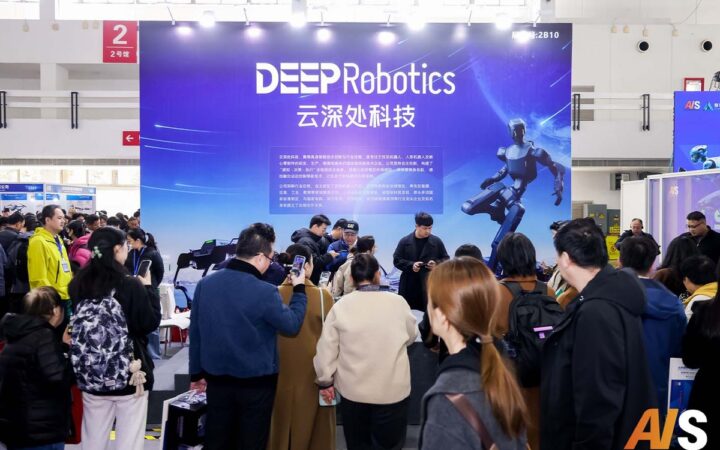
The company’s strategy announcement identifies PuduFM and PuduAgent OS as foundations for reusing AI capabilities, software modules and skills across different robot platforms. Hardware and motion control remain tailored to the task, making the proposal more specific than simply putting identical software on every machine.
One Architecture Across Different Bodies
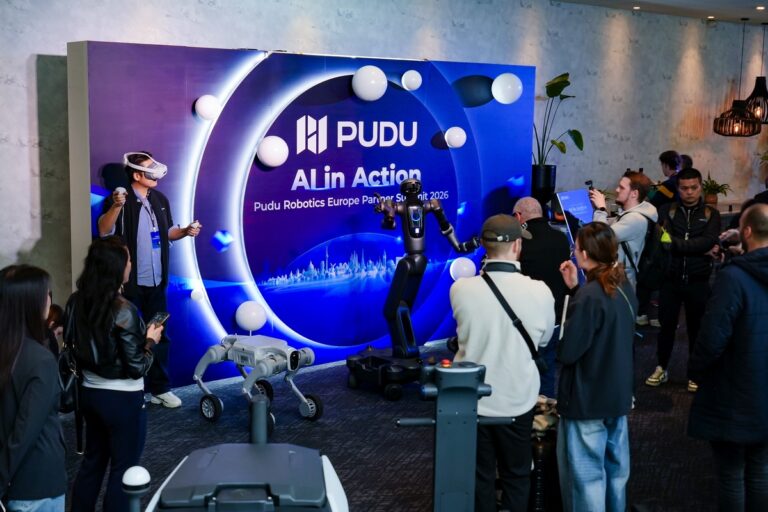
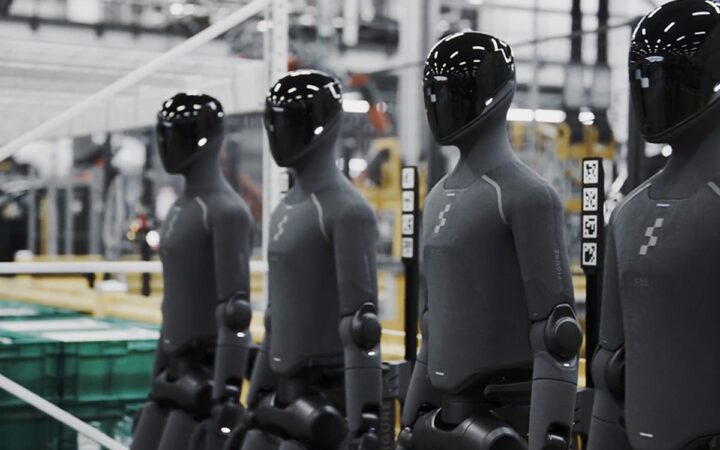
Pudu’s general embodied-AI portfolio spans the D5 quadruped, D7 semi-humanoid and D9 humanoid. Those bodies address different physical requirements: moving across uneven routes, combining wheeled travel with manipulation, or using a bipedal form in human-designed environments.
A shared model can reduce duplication in perception and task reasoning, but body differences still matter. A policy must respect each platform’s reach, balance, joint limits and payload. Reusing an AI component does not establish that every skill transfers between all three robots without additional training or validation.
Commercial Scale Is Not Humanoid Scale
Pudu reports more than 130,000 robots shipped across over 85 countries and regions. That is its broader commercial robotics footprint, not a disclosed shipment count for the D9 humanoid or evidence that all those machines use the same current foundation model.
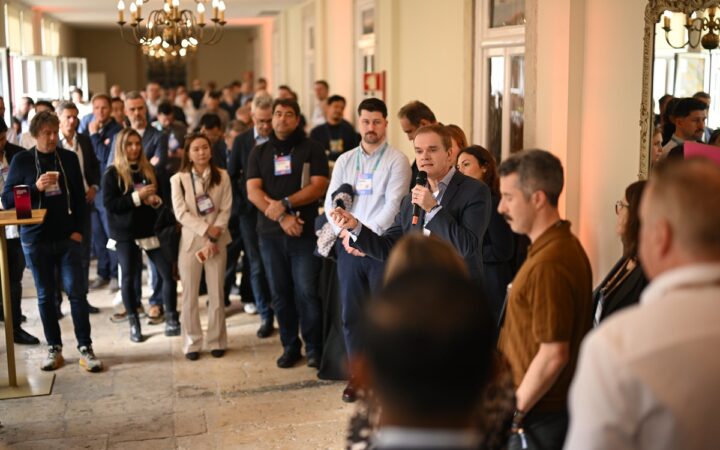
Our Amsterdam summit coverage follows the portfolio expansion, while the TOMO S report examines Pudu’s separate move into home lawn care. The company is extending an existing service-robot business into additional forms and applications, rather than starting every product category from an equally mature deployment base.
What the FCC Restriction Actually Does
The FCC’s July 28 public notice added foreign-produced advanced robotic devices to its Covered List, subject to conditional exemptions. Covered equipment cannot receive new FCC equipment authorizations. The measure is based on production location and equipment category, rather than a Pudu-specific finding.
That creates a market-access barrier for new covered robots, including humanoid and quadruped models. It is not equivalent to a recall of every Pudu robot already in use, and a shared AI model does not by itself establish whether a particular product has the authorization needed for its U.S. introduction.
Conditional Approvals Keep the Position Model-Specific
The FCC’s November 6 approval update demonstrates the exception process: specified ABB Robotics and Pantograph devices received conditional exemptions linked to continuing onshoring commitments and vetting. Pudu is not named in that notice’s updated approvals list.
The distinction matters commercially. Technical readiness, a successful demonstration and equipment authorization are separate milestones. Pudu’s architecture may help it develop a wider product range, but U.S. access depends on the status of the actual device and any applicable exemption, rather than the breadth of the company’s global installed base.
Disclaimer: RobotsBeat is an independent media brand owned and operated by NuvexMedia LLC, publishing news, research, and insights on artificial intelligence, emerging technologies, automation, and related industries. NuvexMedia LLC invests in and collaborates with companies across the AI, Robotics, technology, software, and digital innovation sectors. These relationships do not influence RobotsBeat's editorial coverage, and the publication maintains full editorial independence to provide accurate, timely, and objective information. © 2026 NuvexMedia LLC. All rights reserved. This content is for informational purposes only and should not be considered legal, tax, investment, financial, or other professional advice.