Key Notes
- Allegro’s portfolio combines direct 48V power management with position sensors for high-torque robot joints and compact hands.
- The claimed 50% footprint and cost savings concern the power subsystem, rather than the size or price of a complete humanoid.
- Sarcomere Dynamics is integrating Allegro components into its Scorpion gripper and plans an extension to a next-generation ARTUS Dex hand.
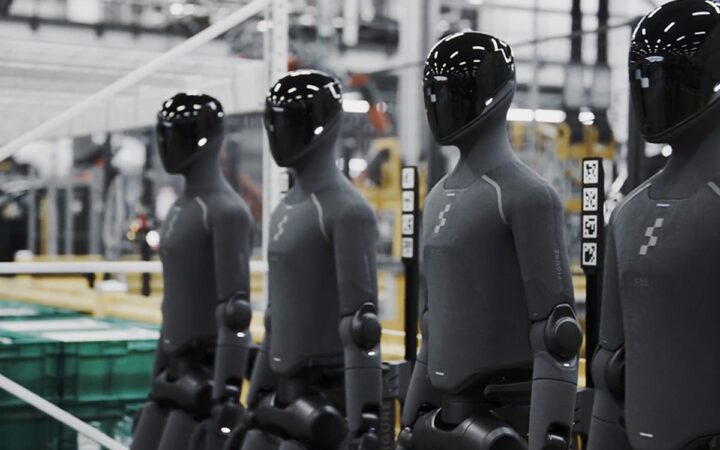
Allegro MicroSystems is expanding the power and sensing electronics used inside humanoid robot joints, pairing a 48V power-management chip with position sensors for large actuators and compact hands. The portfolio targets constraints that become difficult to manage when a mobile robot carries many motors, sensors and control boards.
The company’s announcement was published on October 20, ahead of EE Times Asia’s November 9 coverage. It includes the A81481 power-management IC, A17802 and A17803 inductive position sensors, and CT310 and A33023 magnetic angle sensors.
Power Electronics Must Fit Inside the Robot
The A81481 accepts power directly from a 48V battery architecture without an external pre-regulator. Allegro lists two buck regulators, five low-dropout outputs and a triple-watchdog monitoring architecture, with an operating range of 12V to 72V.
The integration can reduce the number of separate components needed around a controller and its sensors. Allegro claims roughly 50% savings in the relevant power-system footprint and bill of materials; that is not a claim that a complete humanoid becomes 50% smaller or cheaper.
At a given power level, increasing supply voltage reduces current, which can reduce resistive losses in wiring. Designers still have to manage voltage conversion, electrical noise and heat in small enclosures, especially when electronics sit close to motors and moving joints.
Large Joints and Fingers Need Different Sensors
Allegro positions the A17802 and A17803 for high-torque joints such as hips, knees and shoulders, citing tolerance of changing mechanical air gaps and immunity to stray magnetic fields. Its smaller CT310 TMR and A33023 Hall-effect angle sensors address tighter packaging constraints.
The CT310 specifications describe contactless angular sensing and include a 2 mm by 2 mm DFN package option. Accuracy figures are tied to compensation and operating conditions, rather than guaranteeing the final positioning accuracy of an assembled robot hand.
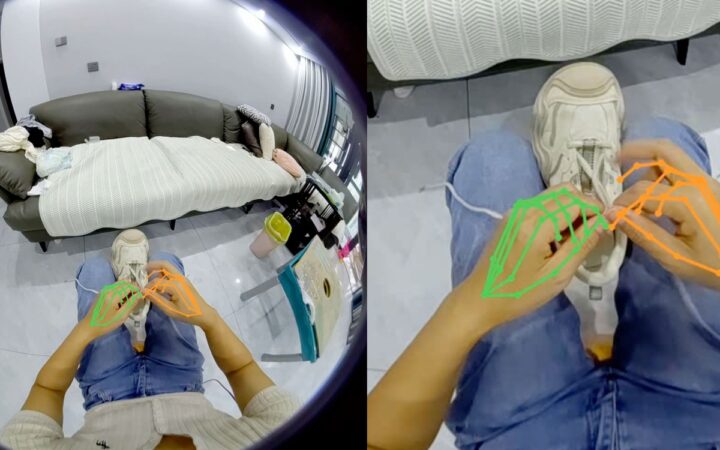
An angle sensor tells the controller where a rotating part is. It does not alone measure contact force or make a grasp reliable: mechanical compliance, motor control, calibration and task software all contribute to the result.
Sarcomere Connects the Chips to Manipulation Hardware
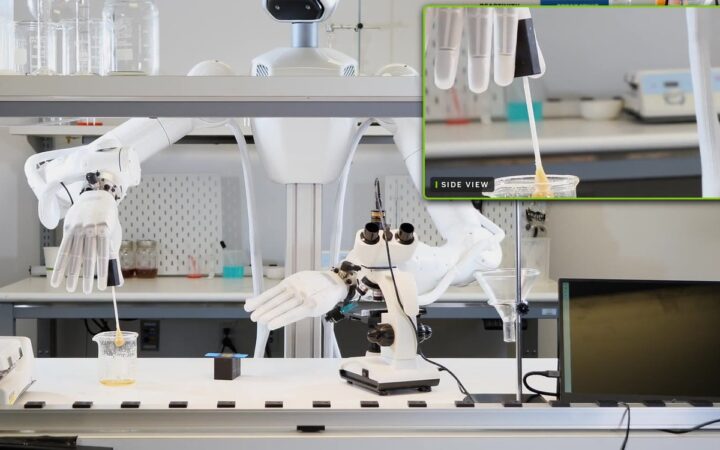
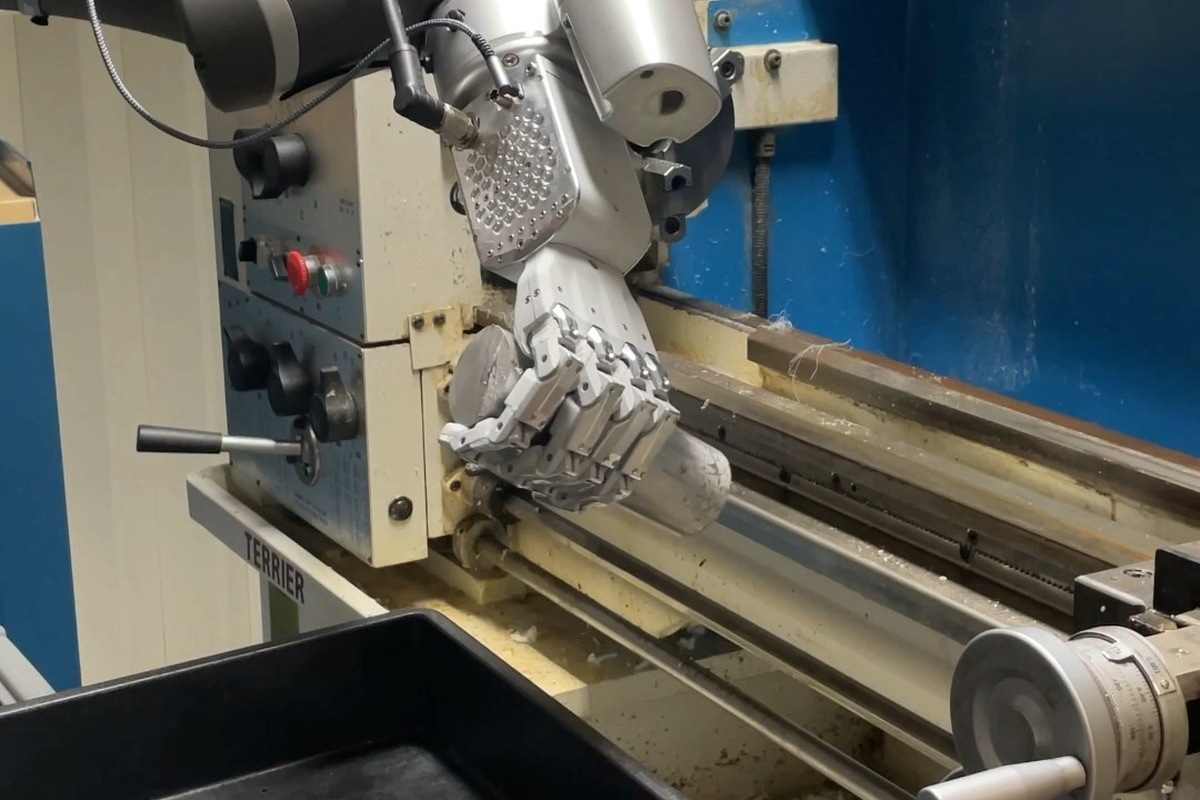
Sarcomere Dynamics says it is integrating Allegro controllers, sensors and power ICs into its Scorpion gripper, with plans to extend the collaboration to a next-generation 24-degree-of-freedom ARTUS Dex hand. The announcement distinguishes that planned extension from completed deployment of the future hand.
Our Daimon sensing coverage examines another part of the hardware stack: contact information. The Atlas hand report shows how mechanical choices also shape useful manipulation.
Component Capability Is One Step Toward a Working System
The A81481’s functional-safety capabilities support system design; they do not by themselves certify a humanoid as safe to work beside people. Engineers must validate the complete electrical, mechanical and control system for its intended use.
Allegro’s portfolio addresses practical building blocks beneath physical AI. Its value will be measured in integrated joints and grippers: how much space and heat are saved, how reliably position is measured and how those gains translate into repeatable work.
Disclaimer: RobotsBeat is an independent media brand owned and operated by NuvexMedia LLC, publishing news, research, and insights on artificial intelligence, emerging technologies, automation, and related industries. NuvexMedia LLC invests in and collaborates with companies across the AI, Robotics, technology, software, and digital innovation sectors. These relationships do not influence RobotsBeat's editorial coverage, and the publication maintains full editorial independence to provide accurate, timely, and objective information. © 2026 NuvexMedia LLC. All rights reserved. This content is for informational purposes only and should not be considered legal, tax, investment, financial, or other professional advice.