Key Notes
- Tesla, Figure and UBTECH are pursuing factory humanoids through real-world learning, coordinated whole-body control and multi-robot collaboration, with different levels of deployment evidence.
- Tesla reports early Optimus production in Fremont, while Figure’s BMW work and UBTECH’s industrial programmes address task execution and integration into manufacturing workflows.
- Useful comparisons require accepted output, human-intervention rates, error recovery and total operating costs measured under clearly stated production conditions.
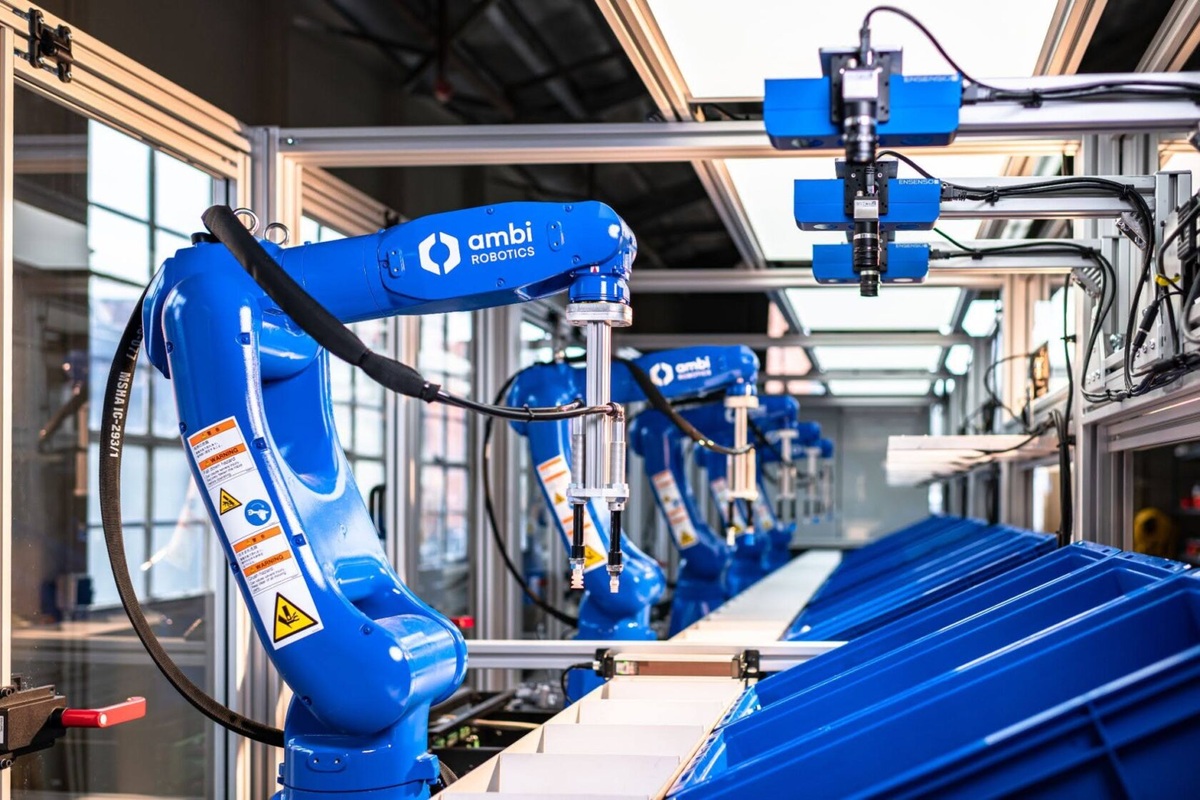
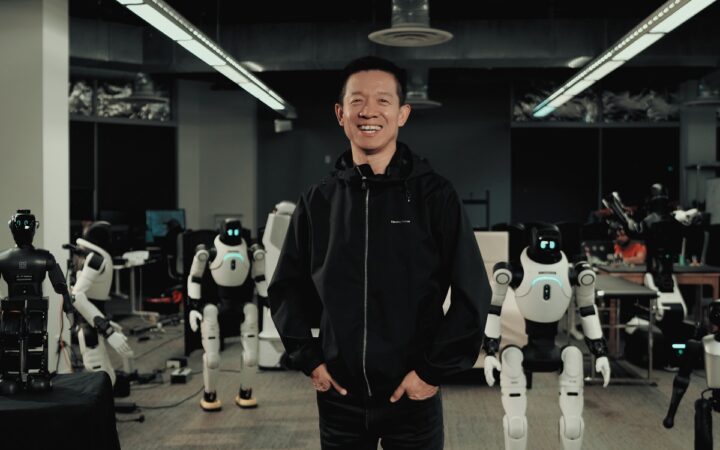
Tesla, Figure AI and UBTECH are pushing humanoid robots further into manufacturing, bringing different approaches to learning, movement and fleet coordination. Their next challenge is to turn those capabilities into dependable work across a production shift, with enough useful output to justify the cost of deployment.
A November 9 Maeil Business report highlights this shift toward practical performance. It describes Tesla’s use of real-world training data, Figure’s integrated whole-body control and UBTECH’s emphasis on coordinating multiple industrial humanoids. These are overlapping approaches to factory automation, rather than comparable results from a common test.
The distinction matters for manufacturers considering a pilot. A robot that handles a carefully arranged part once has demonstrated a capability. A robot that repeatedly handles changing parts, detects mistakes and resumes work without stopping the line has demonstrated something much closer to a usable production system.
Tesla Moves From Building Prototypes to Production-Quality Optimus
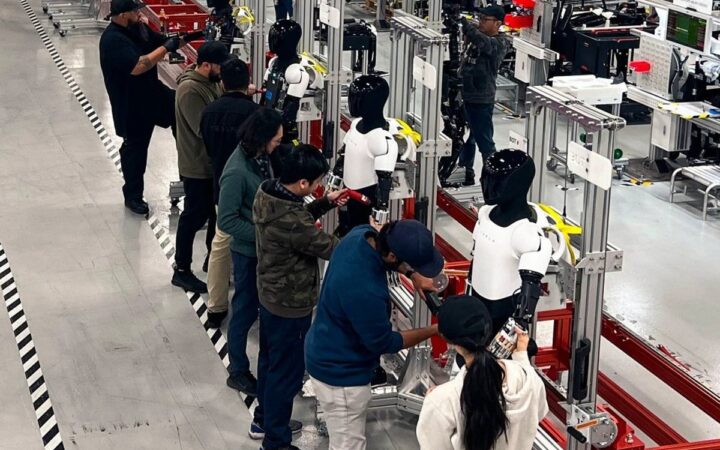
Tesla’s quarterly update provides a concrete manufacturing milestone: Optimus production began on its Fremont high-volume lines. Tesla describes the machines coming off those lines as its first production-quality robots, while saying it will continue to iterate on the hardware and manufacturing process.
The same document lists California Optimus manufacturing as being in an early ramp and the Texas operation as under construction. Producing a commercial-quality robot is an important step, but it does not establish how many useful tasks that robot can complete autonomously at a customer site.
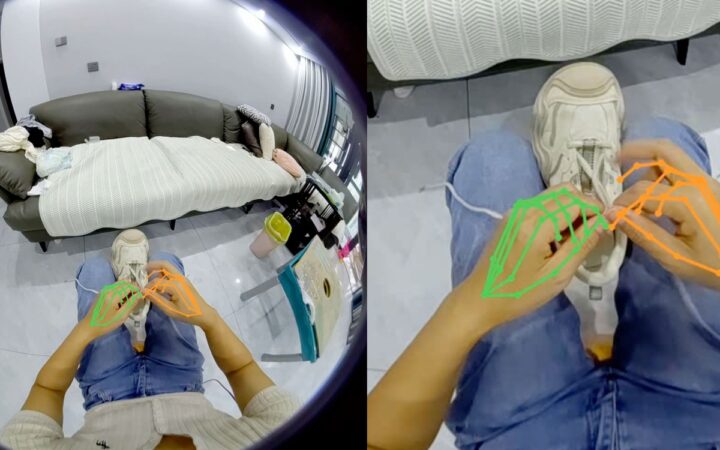
Tesla has an opportunity to connect robot development with its own manufacturing environment. The central question is how effectively experience collected during work improves the next attempt, and whether those gains transfer when the part, workstation or task changes. Our Optimus production coverage examines the manufacturing ramp separately from longer-term output targets.
Figure Connects Hands, Balance and Movement
Figure’s approach addresses the difficulty of manipulating objects while the rest of the body moves. Its Helix 02 system, introduced in January, combines vision, touch and body-state information with control of the legs, torso, arms and fingers. Coordinating those elements matters when reaching or pulling changes the forces acting on the robot.
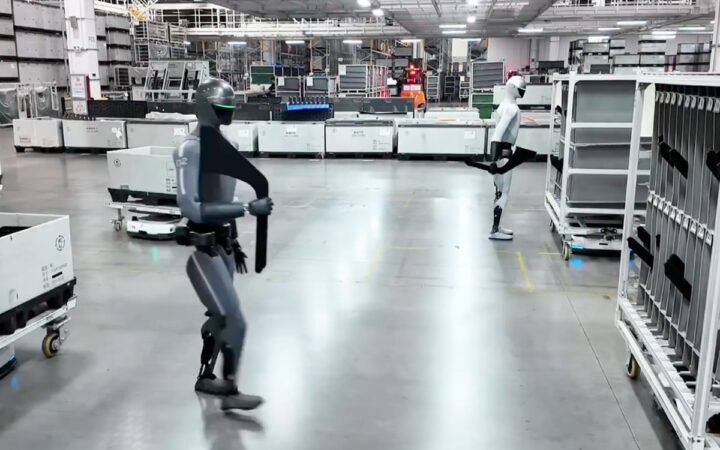
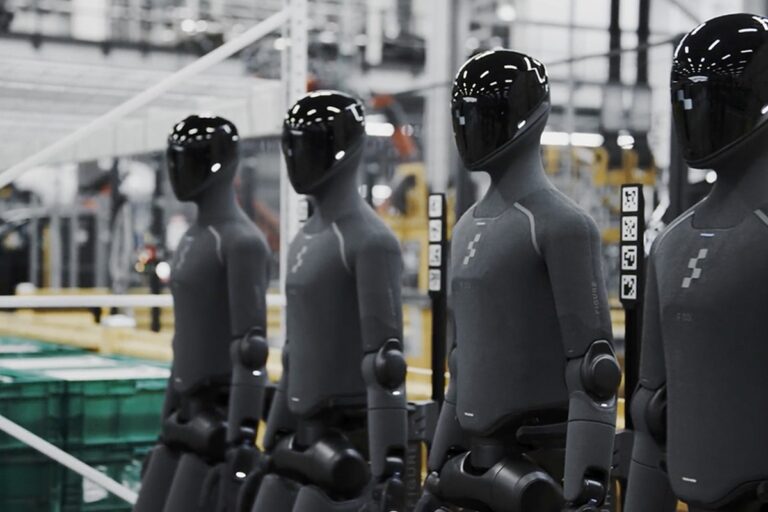
In its June BMW update, Figure showed Figure 03 performing a logistics sequencing workflow at Plant Spartanburg. The demonstration combined picking and placing individual parts with stepping, repositioning and pulling a heavy wheeled cart. Figure described the controller as adjusting to variation in the position of parts and containers.
That is a more demanding control problem than replaying an arm movement from a fixed stance. It is still a company demonstration of a particular workflow, however, rather than an independently established productivity comparison with Tesla, UBTECH or conventional automation.
Figure also has operational experience to draw on. Its November 2025 deployment review reported more than 90,000 parts loaded and 1,250 hours of runtime for Figure 02 at BMW. It identified cycle time, placement accuracy and human interventions as the key measures, and described forearm electronics as a hardware weakness that informed the next generation.
Those details are more useful than an isolated speed claim because they connect learning to the demands of a specific station. Figure’s published accuracy and zero-intervention objectives were targets for that deployment; they should not be presented as universal results achieved by every robot or every shift.
UBTECH Focuses on the Production System Around Each Robot
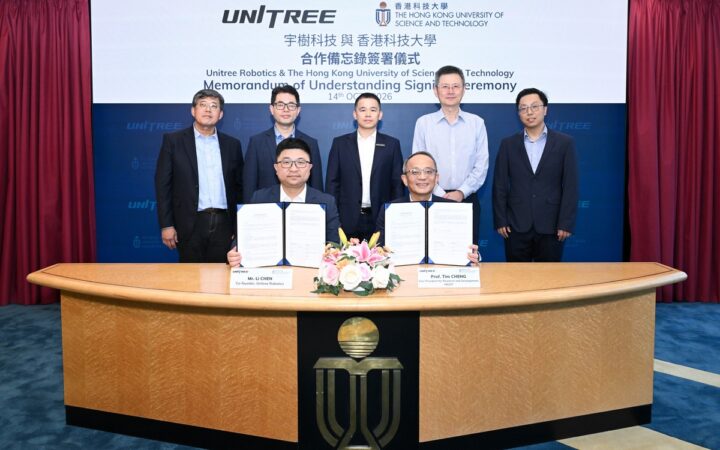
UBTECH’s strategy extends beyond individual task execution to the coordination of robots within a factory workflow. The Maeil report highlights Walker S2 and work with automakers including BYD and Geely, placing multi-robot collaboration alongside the ability of each machine to perform useful actions.
The company’s earlier Walker S2 announcement described its BrainNet platform and Co-Agent system for planning, tool use and anomaly handling. These are UBTECH’s descriptions of its capabilities; an order, partnership or delivery alone does not reveal sustained throughput at a particular customer’s workstation.
Our FAW-Volkswagen coverage follows the practical expansion of those industrial trials. At fleet level, manufacturers also need to know what happens when one robot falls behind: whether work can be reassigned, a shared route remains clear and the rest of the process continues safely.
The Numbers That Would Make Comparisons Meaningful
For a factory buyer, the most useful starting point is accepted output per operating hour. Counting attempted picks can hide dropped parts, incorrect placements and work that a person must finish. Counting only successful cycles can also mislead if charging, repairs and resets are excluded from the time recorded.
Intervention frequency needs similar context. A short assisted demonstration and an unattended shift are different operating conditions. Reporting the reason for each intervention, its duration and whether it required an on-site technician would make the resulting numbers much easier to compare.
Recovery is another decisive test. If a part slips or a container arrives slightly out of position, a useful system should detect the problem and either correct it or stop safely. A fast nominal cycle offers limited value if a routine disturbance repeatedly interrupts the wider line.
Task-change time belongs in the calculation too. A robot’s flexibility becomes commercially valuable when a manufacturer can switch products or workstations without a disproportionate effort in data collection, programming and validation. Our Xiaomi shift report illustrates why charging and operating conditions need to accompany a headline about hours worked.
Humanoids Must Earn Their Place Beside Existing Automation
A human-shaped body can offer reach and mobility in spaces designed for people. That potential has to be evaluated against the alternatives for each task, including fixed arms, mobile manipulators, conveyors and changes to the workstation itself. The cheapest dependable solution may differ from one station to the next.
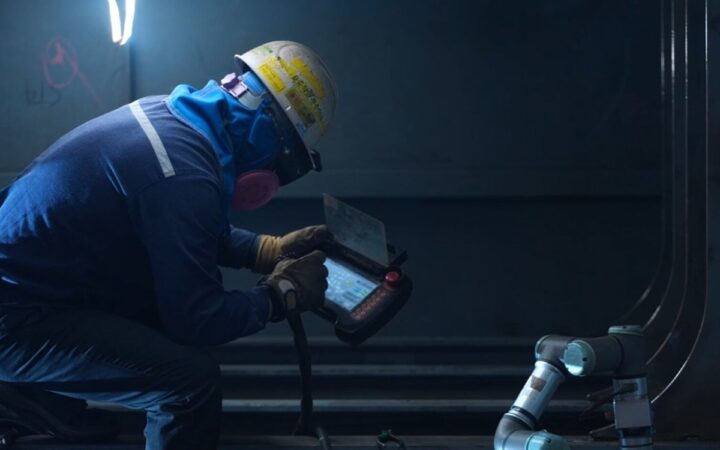
Total operating cost should therefore include integration, supervision, maintenance, energy and downtime alongside the robot’s purchase price. Safety validation and predictable behavior around workers also remain system-level requirements, regardless of how capable the underlying AI becomes.
Tesla’s production ramp, Figure’s whole-body logistics work and UBTECH’s fleet strategy show where the competition is developing. The strongest evidence of progress will be customer results that disclose the task, accepted output, operating hours and support required—enough detail to explain why a factory chose a humanoid and whether it would deploy another.
Disclaimer: RobotsBeat is an independent media brand owned and operated by NuvexMedia LLC, publishing news, research, and insights on artificial intelligence, emerging technologies, automation, and related industries. NuvexMedia LLC invests in and collaborates with companies across the AI, Robotics, technology, software, and digital innovation sectors. These relationships do not influence RobotsBeat's editorial coverage, and the publication maintains full editorial independence to provide accurate, timely, and objective information. © 2026 NuvexMedia LLC. All rights reserved. This content is for informational purposes only and should not be considered legal, tax, investment, financial, or other professional advice.