Key Notes
- Musk predicts capable humanoids could deliver at least five times a human worker’s weekly output by combining longer operating hours with faster movement.
- He suggested Tesla would probably rent Optimus, but did not announce rental prices, contract terms or a customer ordering date.
- The claims are future expectations rather than measured Optimus productivity, with charging, maintenance, task reliability and human assistance central to actual output.
Elon Musk says highly capable humanoid robots could eventually deliver at least five times the weekly output of a human worker, arguing that continuous operation and faster movement could transform the economics of physical work. He made the forecast during a November 6 conversation with investor Ron Baron.
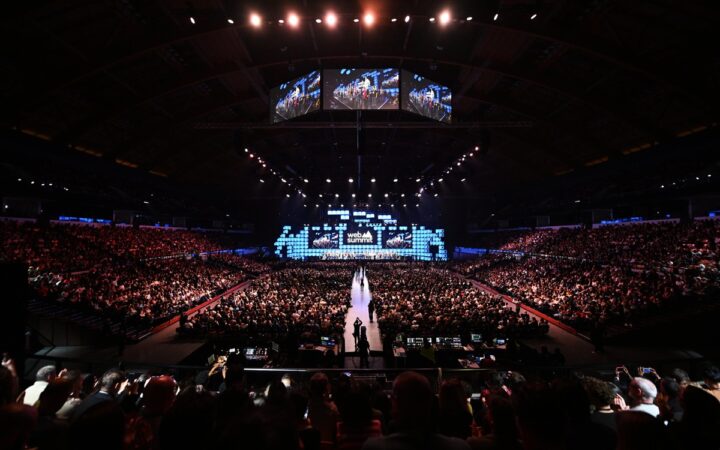
The discussion was part of the Baron conference in New York. The interview broadcast and a published transcript provide the context: Musk was describing a future productivity expectation, not announcing an independently measured result from Tesla’s Optimus.
Why Musk Arrives at 5x
Musk compared 168 hours in a full week with a roughly 40-hour working week for a person. He also assumed a robot could move faster and would not need human breaks. On that basis, he argued for a minimum expectation of five times a person’s weekly productivity.
The distinction matters. His claim is about output accumulated over time, not proof that Optimus can complete every individual task five times faster. Dividing 168 by 40 gives 4.2 before accounting for speed, but it also assumes that all those hours can be turned into useful work.
Continuous Availability Is an Engineering Requirement
An actual deployment has to allow for charging, maintenance, faults, task changes and human assistance. Faster motion is useful only when the robot can preserve accuracy, avoid damaging objects and work within the safety limits of its environment.
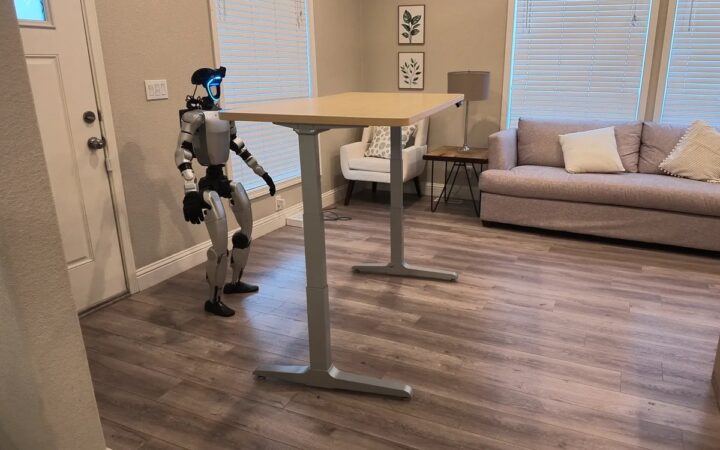
RobotsBeat’s Optimus Academy coverage examines Tesla’s plan to collect practice through large-scale task training. Our report on production-quality builds separates manufacturing ambitions from the reliability and generalization required after a robot leaves the line.
Renting Optimus Is a Possibility, Not a Published Offer
When Baron asked whether Tesla would sell or rent humanoid robots, Musk indicated that renting was probably the likely model. He also suggested manufacturing costs could initially resemble those of a car before falling with scale.
The exchange did not set a rental rate, contract length, service package or ordering date. Manufacturing cost estimates are also different from the price a customer would pay. A rental business would need to support the hardware throughout its working life, making uptime and maintenance part of the product.
A Much Larger Economic Forecast
Musk estimated that roughly 20 million to 30 million sufficiently productive humanoids could theoretically match US goods-and-services output. That is his economy-wide scenario, not an order book or a forecast validated by current robot deployments.
The same conversation ranged across orbital AI computing, lower launch costs and greater Starlink capacity. Those ambitions supply the wider context, but the robotics argument rests on a narrower question: whether a machine can repeatedly do valuable physical work with limited intervention.
The Test Is Useful Work per Week
For customers, the relevant comparison is completed work at an acceptable cost, quality and safety level. A robot’s scheduled hours alone do not establish its output, just as a compelling demonstration does not establish months of dependable operation.
Musk’s 5x expectation sets an ambitious target for humanoid economics. Evidence would require sustained task results, documented downtime and transparent supervision requirements. Until then, it remains a prediction about what mature robots could achieve, rather than an established capability of today’s Optimus fleet.
Disclaimer: RobotsBeat is an independent media brand owned and operated by NuvexMedia LLC, publishing news, research, and insights on artificial intelligence, emerging technologies, automation, and related industries. NuvexMedia LLC invests in and collaborates with companies across the AI, Robotics, technology, software, and digital innovation sectors. These relationships do not influence RobotsBeat's editorial coverage, and the publication maintains full editorial independence to provide accurate, timely, and objective information. © 2026 NuvexMedia LLC. All rights reserved. This content is for informational purposes only and should not be considered legal, tax, investment, financial, or other professional advice.