Key Notes
- Web Summit returns to Lisbon on November 9–12 with Unitree and AGIBOT representatives and Galbot’s G1 robot among the announced participants.
- Xynova plans manipulation demonstrations with its Prima 1 and Flex 2 hands, while Intel will address the engineering and economics of physical-AI deployment.
- The event is still ahead, so new product launches and commercial progress must be assessed separately from planned appearances and demonstrations.
Web Summit 2026 will bring humanoid robot makers, dexterous-hand developers and physical-AI demonstrations to Lisbon from November 9 to 12, as the industry tries to turn increasingly capable AI into useful action outside the screen. Unitree and AGIBOT representatives are among the announced participants, while Galbot’s G1 robot appears in the organiser’s featured speaker lineup.
The gathering at MEO Arena and the Feira Internacional de Lisboa exhibition halls will offer a meeting point for robot developers, technology suppliers, investors and prospective customers. The event has not yet opened: the announced programme describes planned appearances and demonstrations, rather than launches or deployments that have already taken place.
Humanoid Robotics Joins the Main Conversation
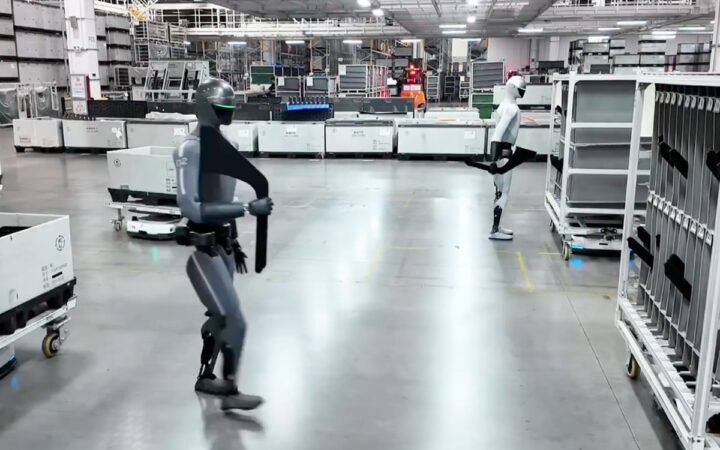
The official speaker lineup lists Unitree co-founder Li Chen and Junnie Wang, CMO of AGIBOT Europe, alongside technology executives from software and AI companies. The listing also identifies Galbot G1 as an embodied large-model robot. Its presence underlines how the discussion is widening from AI assistants toward machines that perceive and manipulate their surroundings.
That does not establish that any of the participating companies will unveil a new humanoid in Lisbon. Product announcements, the scope of live demonstrations and evidence of commercial progress will need to be assessed as they emerge. For robotics buyers, an appearance on stage answers a different question from whether a machine can work dependably through a full shift.
Dexterous Hands Get a Practical Showcase
Xynova has announced plans to exhibit Prima 1 and Flex 2 at booth E109, including hands-on manipulation demonstrations with everyday objects. The company says the event will mark Prima 1’s European debut and plans a founder keynote focused on making dexterity a reusable capability for physical AI.
According to Xynova, Prima 1 uses a fully direct-drive architecture with 22 degrees of freedom, aimed at research, data collection and algorithm development. Flex 2 combines tendon-driven and direct-drive mechanisms in a 23-degree-of-freedom design weighing 400 grams. Those are company specifications, not results from an independent comparative evaluation.
The engineering issue is concrete: a robot needs more than a correct verbal answer to handle an unfamiliar object. Sensing contact, adjusting force and recovering when a grip changes connect the AI system’s decisions to the work the machine can actually perform. Live demonstrations can make that connection visible, although they cannot alone prove performance across every customer environment.
Intel Puts Deployment Economics on the Agenda
Intel’s event programme centres on edge, agentic and physical AI across manufacturing, retail, healthcare and smart-city applications. The company plans demonstrations at Pavilion 2, stand E267, and sessions covering the transition from pilots to production.
A November 11 masterclass is scheduled to examine what it takes to put AI robots to work, including reliability and economic viability. Intel also points to trade-offs involving performance, latency, power and cost. These questions matter when a robot must process sensor information and trigger actions quickly enough to operate in a changing physical environment.
What to Watch Beyond the Demonstrations
RobotsBeat’s recent coverage of Unitree’s AI experiments shows why task demonstrations need technical context. Pretrained models, supplied skills and control software can work together, while the resulting system still requires testing for repeatability and intervention rates.
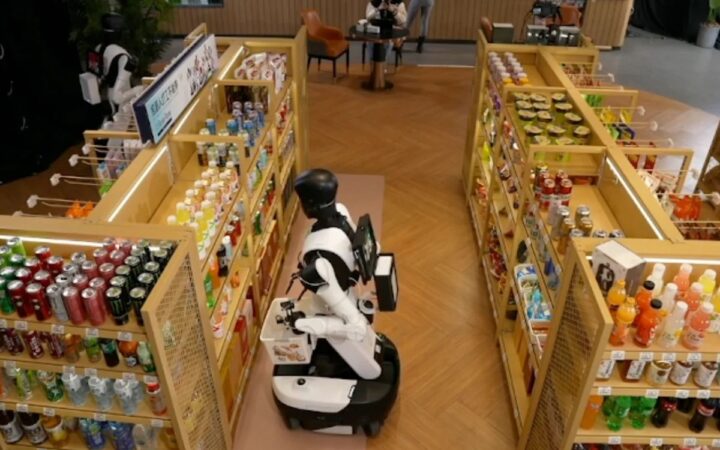
Similarly, the AGIBOT store trial illustrates the value of reporting failures alongside completed tasks. In Lisbon, the most useful signals will be specific operating conditions, clearly identified customer deployments and evidence that robots can sustain useful work. The programme offers opportunities to examine those questions; it is not yet evidence that the industry has resolved them.
Disclaimer: RobotsBeat is an independent media brand owned and operated by NuvexMedia LLC, publishing news, research, and insights on artificial intelligence, emerging technologies, automation, and related industries. NuvexMedia LLC invests in and collaborates with companies across the AI, Robotics, technology, software, and digital innovation sectors. These relationships do not influence RobotsBeat's editorial coverage, and the publication maintains full editorial independence to provide accurate, timely, and objective information. © 2026 NuvexMedia LLC. All rights reserved. This content is for informational purposes only and should not be considered legal, tax, investment, financial, or other professional advice.