Key Notes
- KIMM and ETRI’s new Daejeon facility operates 12 humanoids to collect task data through human-guided robot movements.
- Recorded demonstrations feed a cycle of AI training and real-robot testing rather than proving that the demonstrated tasks are already autonomous.
- KIMM plans wider access for domestic companies and research institutions from late 2027 without announcing unrestricted public dataset releases.
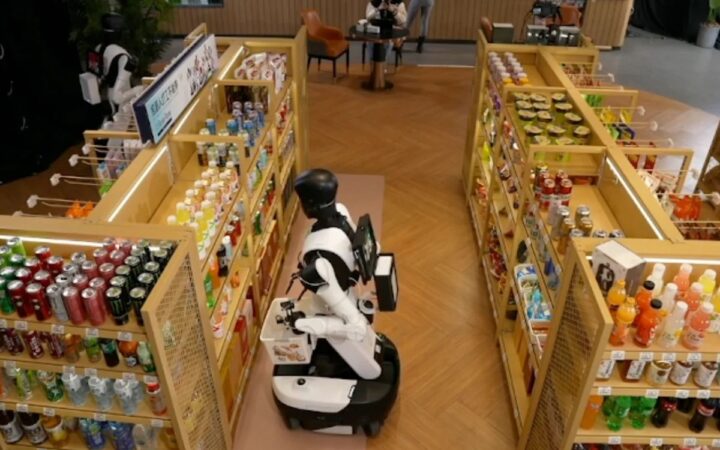
South Korea’s Korea Institute of Machinery and Materials has opened a humanoid training-data facility in Daejeon, using 12 robots to record physical tasks for AI development. The project targets a practical bottleneck in robotics: collecting examples of how machines should move and interact with objects.
KIMM announced the AI Humanoid Data Factory on November 3, following its construction with the Electronics and Telecommunications Research Institute. The institute describes it as South Korea’s first data-production facility dedicated to bipedal humanoids.
Human Demonstrations Produce Robot Task Data
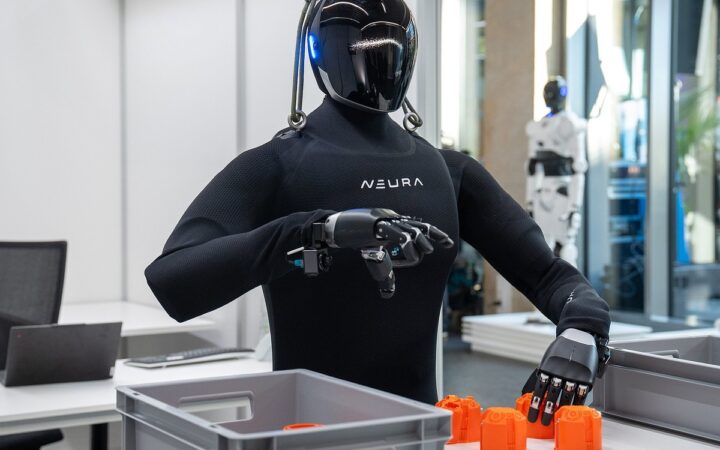
Researchers remotely operate robots and record their movements and task information. The opening demonstrations included retrieving refrigerator items, handling laundry, tidying a sofa and operating vehicle buttons and levers. KIMM also showed manipulation and whole-body motion-imitation work involving its KAIROS humanoid.
These are data-collection demonstrations, rather than evidence that every task is already performed autonomously. Human guidance can supply useful examples of a movement while leaving open the separate question of how reliably a trained policy can reproduce it without assistance.
Aju Press reports that the facility occupies about 1,000 square metres across two floors and has plans to expand to 25 robots. That larger fleet is a plan, distinct from the 12 machines described as currently operating.
The physical setting matters because manipulation involves contact as well as visual recognition. A useful demonstration must capture more than which object was selected: the approach, grasp and movement all influence whether the operation succeeds.
Collection, Training and Testing Form a Loop
KIMM describes a cycle in which recorded data trains AI, the trained system is tested on real robots, and information from those tests feeds back into training. The stated goal is to improve models usable across different robots and support a Korean humanoid platform.
That feedback loop can help researchers examine where a learned behavior breaks down. Repeating a task under changed conditions may reveal weaknesses that are hidden in a successful demonstration, such as difficulty with a shifted object or an unfamiliar starting position.
Robot count alone does not measure the value of a dataset. Coverage of different objects, movements and failure cases, together with consistent records of the task conditions, affects what a model can learn from the collected examples.
The approach connects to RobotsBeat’s coverage of Generative Bionics’ plans for physical AI infrastructure and Bleu’s demonstration learning. Each addresses part of the work needed to turn physical experience into useful robot behavior.
Wider Facility Access Is Planned for Late 2027
KIMM plans to open the facility progressively to domestic companies, universities and research institutes from late 2027. That is a future access timetable, rather than a statement that the facility is already generally available to outside users.
Access to a shared research facility also differs from public release of its datasets or trained models. The announcement does not establish unrestricted downloads or specific licensing terms for everything produced there.
The opening provides infrastructure for collecting and testing physical task data. The next evidence to watch is how that work changes robot performance across repeated tasks, unfamiliar conditions and different hardware, with human assistance clearly accounted for.
Disclaimer: RobotsBeat is an independent media brand owned and operated by NuvexMedia LLC, publishing news, research, and insights on artificial intelligence, emerging technologies, automation, and related industries. NuvexMedia LLC invests in and collaborates with companies across the AI, Robotics, technology, software, and digital innovation sectors. These relationships do not influence RobotsBeat's editorial coverage, and the publication maintains full editorial independence to provide accurate, timely, and objective information. © 2026 NuvexMedia LLC. All rights reserved. This content is for informational purposes only and should not be considered legal, tax, investment, financial, or other professional advice.