Key Notes
- Sprout combines a living Monstera with a TurtleBot 4 base to seek sunlight and request human help when its planter sensor detects thirst.
- Google’s demonstration combines Gemini components for vision and voice with AI-assisted software development and casing design.
- The semi-autonomous prototype demonstrates a developer workflow rather than an announced retail product or an automatic watering system.
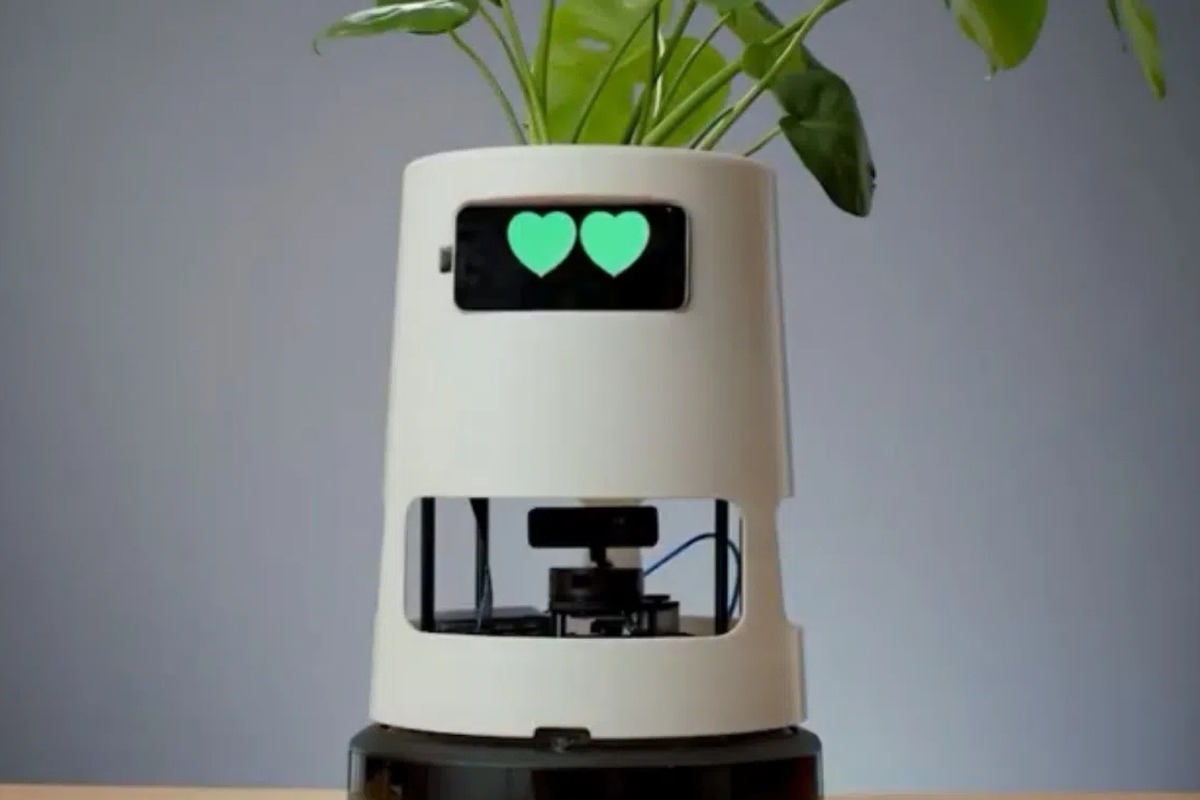
Google has demonstrated Sprout, a semi-autonomous plant rover that moves through an office to find sunlight and asks people for water. The project puts a living Monstera on a robotic base, turning an ordinary indoor plant into an interactive demonstration of Gemini-powered robotics.
Google for Developers introduced the rover as a project built with Google AI Studio and Antigravity. Its practical scope is deliberately modest: relocating a plant and communicating its needs, rather than replacing human care with an automatic watering system.
A TurtleBot Base Gives the Plant Mobility
In Google’s official build video, the team identifies a TurtleBot 4 base, a Pixel 11 serving as the face and eyes, and a sensor in the planter that detects when the plant needs water. Cameras and lidar help the rover map its surroundings and avoid obstacles.
The TurtleBot 4 is an established education and research platform. Its official documentation describes a ROS 2 system built on an iRobot Create 3 mobile base, with a Raspberry Pi computer, lidar and a depth camera. That existing foundation gives a project team navigation and sensing hardware to build on, rather than requiring it to design an entire mobile robot from scratch.
Sprout’s premise also separates two kinds of plant care. Mobility can change where a pot sits, while a moisture reading can trigger a request for help. Neither function establishes that the rover independently supplies water or optimizes a plant’s long-term health.
Different Gemini Components Handle Different Jobs
The developers describe using Gemini Flash for vision, Robotics ER 2.0 for segmentation and Gemini Live for voice interaction. Nano Banana helped sketch the casing, while Gemini assisted software development in Antigravity. The team puts the build at about two weeks.
These tools have different roles. Designing an enclosure or generating code during development is separate from the software making decisions while the machine is moving. Combining them in one demonstration does not mean a single model directly handles every sensor and motor command.
Google’s robotics documentation explains how its embodied-reasoning models interpret visual information, reason about spatial relationships and call robot functions. It also notes limitations including model errors, ambiguous inputs and latency. Those constraints matter when an AI system’s output leads to physical movement around people and furniture.
A Developer Demonstration, Not a Retail Launch
The useful idea is a small, observable chain: sense the surroundings, select an action, move, and ask for human assistance when needed. Sprout makes that interaction easy to understand because its passenger is a familiar office plant.
The demonstration connects to Google’s broader work covered in RobotsBeat’s ER 2 report and our coverage of Gemini-powered Spot inspections. The applications differ, but both place perception and reasoning inside a larger robotics system.
Google’s announcement points developers toward its AI tools rather than providing a retail price or sales date for Sprout. The video shows a prototype and its build process; it does not provide independently measured navigation reliability, comparative plant-growth results or evidence of unattended operation over long periods.
Disclaimer: RobotsBeat is an independent media brand owned and operated by NuvexMedia LLC, publishing news, research, and insights on artificial intelligence, emerging technologies, automation, and related industries. NuvexMedia LLC invests in and collaborates with companies across the AI, Robotics, technology, software, and digital innovation sectors. These relationships do not influence RobotsBeat's editorial coverage, and the publication maintains full editorial independence to provide accurate, timely, and objective information. © 2026 NuvexMedia LLC. All rights reserved. This content is for informational purposes only and should not be considered legal, tax, investment, financial, or other professional advice.