Key Notes
- AGIBOT specifies up to 40 kg of dual-arm handling capacity for G2 Max rather than stating that payload for each arm.
- The industrial platform combines 21 degrees of freedom with adjustable working height and omnidirectional mobility.
- Broader G2-family deployment examples do not independently establish G2 Max performance or installation numbers.
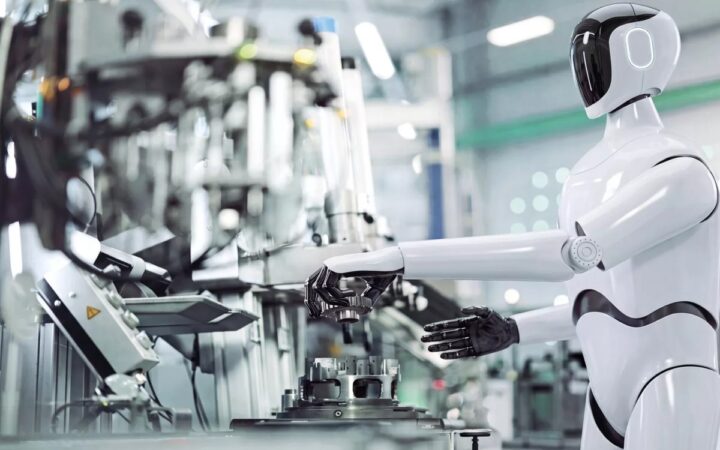
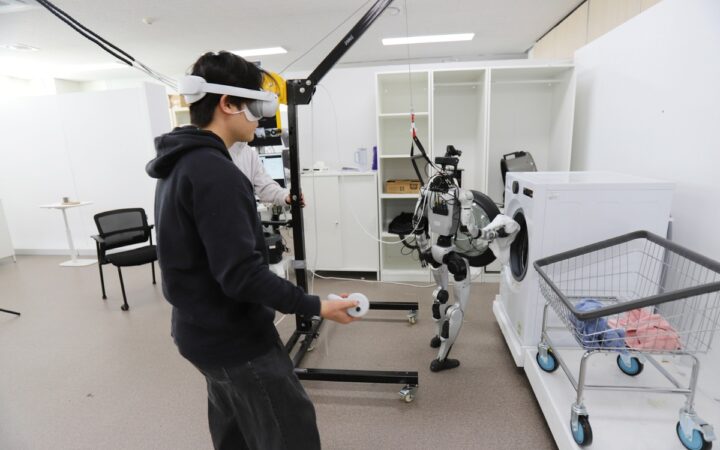
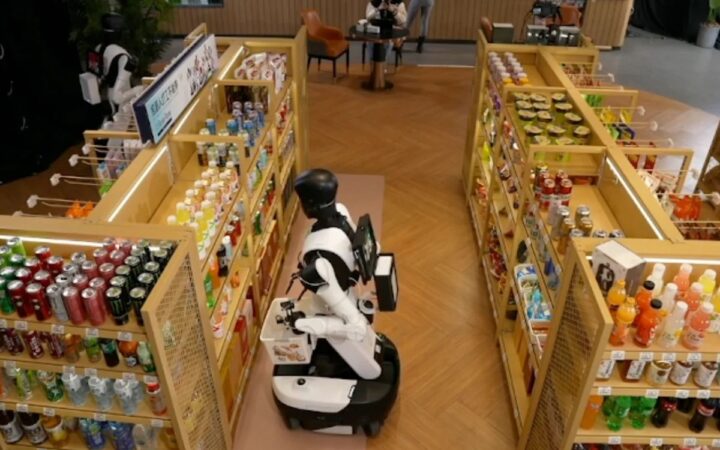
AGIBOT has launched G2 Max, an industrial robot aimed at material handling in factories and logistics operations. The company specifies dual-arm handling of up to 40 kg, positioning the wheeled machine for heavier physical work.
The October 29 announcement lists 21 degrees of freedom, an adjustable working height of 0.1 to 2.5 metres, force-controlled manipulation and omnidirectional mobility. The 40 kg figure describes dual-arm capacity, not a stated allowance for each arm.
Mobile Handling Combines Reach and Load Capacity
A mobile manipulator connects two parts of a workflow that are often considered separately: transporting an item and physically handling it. A useful installation must coordinate the route through a facility with the position and orientation required at the pickup or delivery point.
For a prospective customer, payload is only the starting point. The size and shape of an object, the available grip and the movement required around nearby equipment determine whether a nominal lifting capacity translates into a practical task. A robot that handles one standardized load successfully still needs validation for a different load or station.
The ability to vary working height could be useful where material has to move between different levels. That remains a task-design question: clearances, reach and stability must be assessed together rather than inferred from a single specification.
Factory Applications Need Repeatable Results
AGIBOT highlights G2 Max applications in industrial transport, warehouse handling and pallet-related operations. The release separately discusses deployments of the broader G2 family; those examples should not automatically be counted as verified G2 Max installations.
The distinction matters when assessing a new model. Experience with an existing robot family can inform deployment, but a new machine’s operating envelope still needs to be established under its own loads and working conditions.
For plant managers, meaningful evidence would include completed cycles, acceptable handling quality, uptime and the frequency of human assistance. A demonstration establishes that an operation can be performed under the shown conditions. Production use requires that it can be repeated and that failures can be recovered from without disrupting the rest of the line.
Useful Output Is the Commercial Test
Our earlier Innovation Day coverage examined AGIBOT’s wider hardware and model announcements, including its proposed Worken productivity framework. G2 Max provides a more specific machine to assess within that broader discussion.
RobotsBeat’s Genie Studio report also looks at the software surrounding deployment. Hardware capacity and application software have to work together before a customer can judge the cost of a completed operation.
The immediate news is a new industrial handling platform with published specifications. Its commercial significance will depend on task-level performance, integration effort and sustained operation at customer sites, rather than payload capacity alone.
Disclaimer: RobotsBeat is an independent media brand owned and operated by NuvexMedia LLC, publishing news, research, and insights on artificial intelligence, emerging technologies, automation, and related industries. NuvexMedia LLC invests in and collaborates with companies across the AI, Robotics, technology, software, and digital innovation sectors. These relationships do not influence RobotsBeat's editorial coverage, and the publication maintains full editorial independence to provide accurate, timely, and objective information. © 2026 NuvexMedia LLC. All rights reserved. This content is for informational purposes only and should not be considered legal, tax, investment, financial, or other professional advice.