Key Notes
- Genie Studio 2.0 joins model training, task orchestration and fleet operations in three connected modules designed to simplify robot deployments.
- AgiBot’s as-few-as-seven-day validation claim is a best-case figure, while its reported six-machine-tool project took 14 days.
- Six G2 robots are scheduled for a 24-hour convenience-store livestream on November 2–3, providing a future test of sustained work and exception handling.
AgiBot has released Genie Studio 2.0, a platform that connects robot training, task workflows and fleet operations. Launched on October 23, the software targets the engineering work between a robot succeeding in a demonstration and completing useful jobs at a customer’s site.
The company says a new operating scenario can reach deployment validation in as few as seven days. That is a best-case company claim, not a universal installation schedule or proof that a robot can independently learn any new job in a week.
Three Modules Connect Learning With Operations
As detailed in the launch report, Genie Studio 2.0 divides the process into Flywheel, Agent and Monitor. Flywheel manages data, model training and simulated evaluation; Agent combines robot skills into workflows; Monitor handles deployed machines and operational feedback.
The distinction is practical. Picking up a component is one skill. Completing a factory job also requires knowing when a machine is ready, moving material to the correct place and deciding what to do when an operation fails.
A visual workflow editor lets teams connect capabilities such as navigation, visual positioning and model inference with business logic. Reusable templates can preserve the equipment connections and task sequence, reducing the need to rebuild an application for every installation.
Deployment Claims Need Their Own Context
Reported examples include a CNC loading project involving six machine tools and automated guided vehicles. AgiBot says that project took 14 days from requirements gathering to production-line validation, illustrating why its seven-day headline should not be treated as a promise for every customer.
The company also reports centralized monitoring of more than 60 devices in a Guangzhou Metro service setting. Monitoring a fleet is different from proving that every machine can perform unrestricted autonomous work, but it addresses a necessary operating requirement: identifying problems and coordinating intervention.
RobotsBeat previously covered AgiBot’s electronics manufacturing deployments. The new platform focuses on the software and operating processes around those kinds of installations, rather than introducing another robot body.
Real-World Feedback Closes the Development Loop
A deployed robot encounters variation that a demonstration may not expose. Materials arrive in different positions, equipment states change and objects can be dropped or obstructed. Recording those failures creates useful evidence for improving both the learned behavior and the surrounding workflow.
Genie Studio’s proposed advantage is keeping that process connected. Operational failures can inform another training run, while an updated workflow can be tested before it is sent back to a working machine. The value depends on whether customers can repeat that improvement across sites.
A Convenience-Store Shift Comes Next
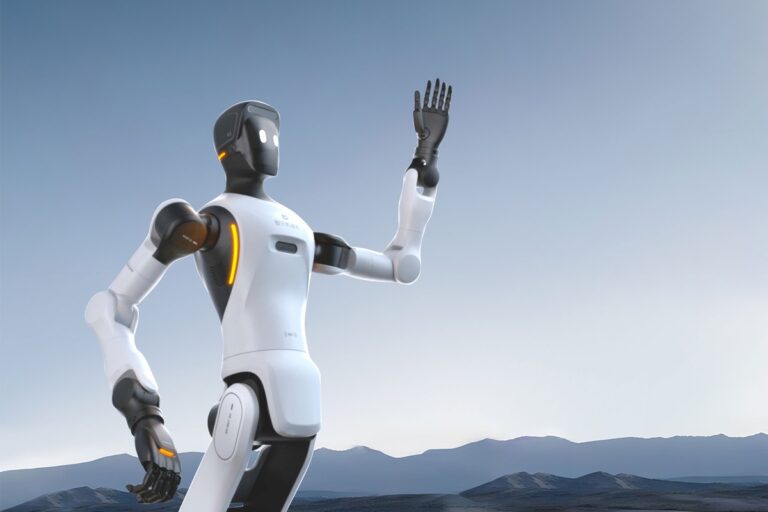
AgiBot’s official AI WAVE roadmap places Genie Studio 2.0 within a series of seven releases spanning data, hardware, models and learning tools. It also schedules six G2 robots for a 24-hour convenience-store livestream on November 2–3, covering activities including replenishment, hot-food preparation and coffee.
That event is still ahead. It could offer a clearer view of sustained work and exception handling than isolated clips, particularly if viewers can see interventions and incomplete tasks. Our coverage of supermarket robot trials highlights why those details matter when automation enters retail.
Disclaimer: RobotsBeat is an independent media brand owned and operated by NuvexMedia LLC, publishing news, research, and insights on artificial intelligence, emerging technologies, automation, and related industries. NuvexMedia LLC invests in and collaborates with companies across the AI, Robotics, technology, software, and digital innovation sectors. These relationships do not influence RobotsBeat's editorial coverage, and the publication maintains full editorial independence to provide accurate, timely, and objective information. © 2026 NuvexMedia LLC. All rights reserved. This content is for informational purposes only and should not be considered legal, tax, investment, financial, or other professional advice.