Key Notes
- Unitree founder Wang Xingxing forecasts a practical humanoid breakthrough as soon as 2028, revising a more cautious timeline that could extend to a decade.
- His proposed milestone centers on robots completing around 80% of requested tasks, rather than a verified success rate already achieved by current products.
- Generalization, efficiency and reliable performance in unfamiliar homes and factories remain key tests as Unitree develops its AI and training systems.
Unitree Robotics founder Wang Xingxing now expects a major breakthrough in practical humanoid robots as soon as 2028, bringing forward a timeline he previously said could stretch to a decade. His renewed optimism centers on advances in AI models that could help machines respond to spoken instructions and handle unfamiliar work.
Bloomberg reported on October 23 that Wang envisages robots completing 80% of assigned tasks in homes or factories after receiving verbal orders. That is his proposed threshold for a breakthrough, rather than a verified success rate for Unitree’s current products.
What Wang Means by a Robotics Breakthrough
The forecast concerns useful behavior beyond a carefully prepared demonstration. Bloomberg’s report describes Wang acknowledging that a humanoid bought today would still struggle to clean a room on request. He credits improving AI models with changing his view of how quickly that gap could narrow.
Wang also discussed using AI to find research, write code, train robot models in simulation and incorporate feedback from physical tests. He outlined ambitions to expand production capacity for much larger potential demand. Those ambitions should be read as preparations for a future market, rather than confirmed orders.
Generalization Remains the Main Test
China Daily separately reported Wang’s view that a turning point could arrive within one or two years. It described his benchmark more specifically as completing roughly 80% of tasks in 80% of unfamiliar settings from voice or text instructions.
That report also records his acknowledgment that versatility and efficiency remain barriers to large-scale use. Testing a robot in a factory or home is an intermediate step: it does not establish that the machine can work reliably across the many different layouts, objects and interruptions encountered by customers.
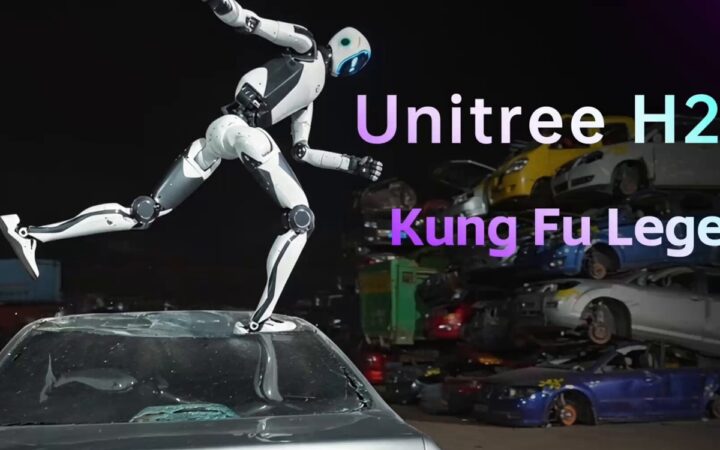
The difference is especially important for readers following Unitree’s H2-X demonstration. Athletic movement and choreographed protective actions do not measure the same capability as carrying out varied household instructions without assistance.
Training Infrastructure Becomes More Important
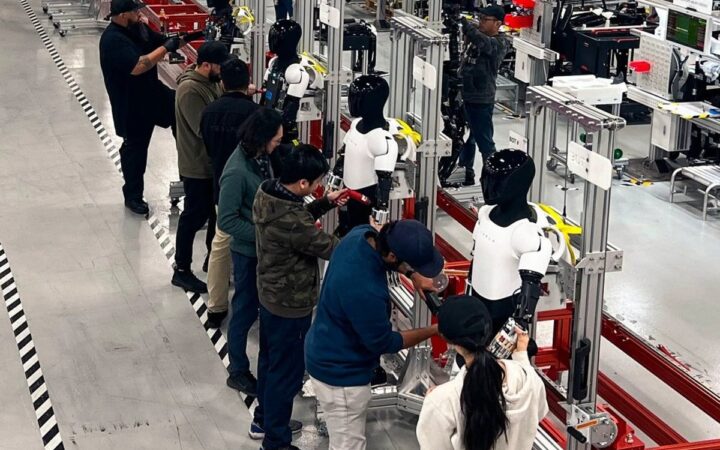
Other robotics developers are building places to gather and test physical experience. RobotsBeat recently covered TUM RoboGym and Tesla’s planned Optimus Academy. Those projects address a related problem: turning practice into skills that remain useful outside the training environment.
Wang’s prediction makes 2028 a milestone to watch, but its significance will depend on how performance is measured. A useful evaluation would specify the tasks attempted, the environments used, how often people intervene and whether the robot can recover after a mistake. Without those details, an 80% headline cannot show how much dependable work a customer would receive.
Disclaimer: RobotsBeat is an independent media brand owned and operated by NuvexMedia LLC, publishing news, research, and insights on artificial intelligence, emerging technologies, automation, and related industries. NuvexMedia LLC invests in and collaborates with companies across the AI, Robotics, technology, software, and digital innovation sectors. These relationships do not influence RobotsBeat's editorial coverage, and the publication maintains full editorial independence to provide accurate, timely, and objective information. © 2026 NuvexMedia LLC. All rights reserved. This content is for informational purposes only and should not be considered legal, tax, investment, financial, or other professional advice.