Key Notes
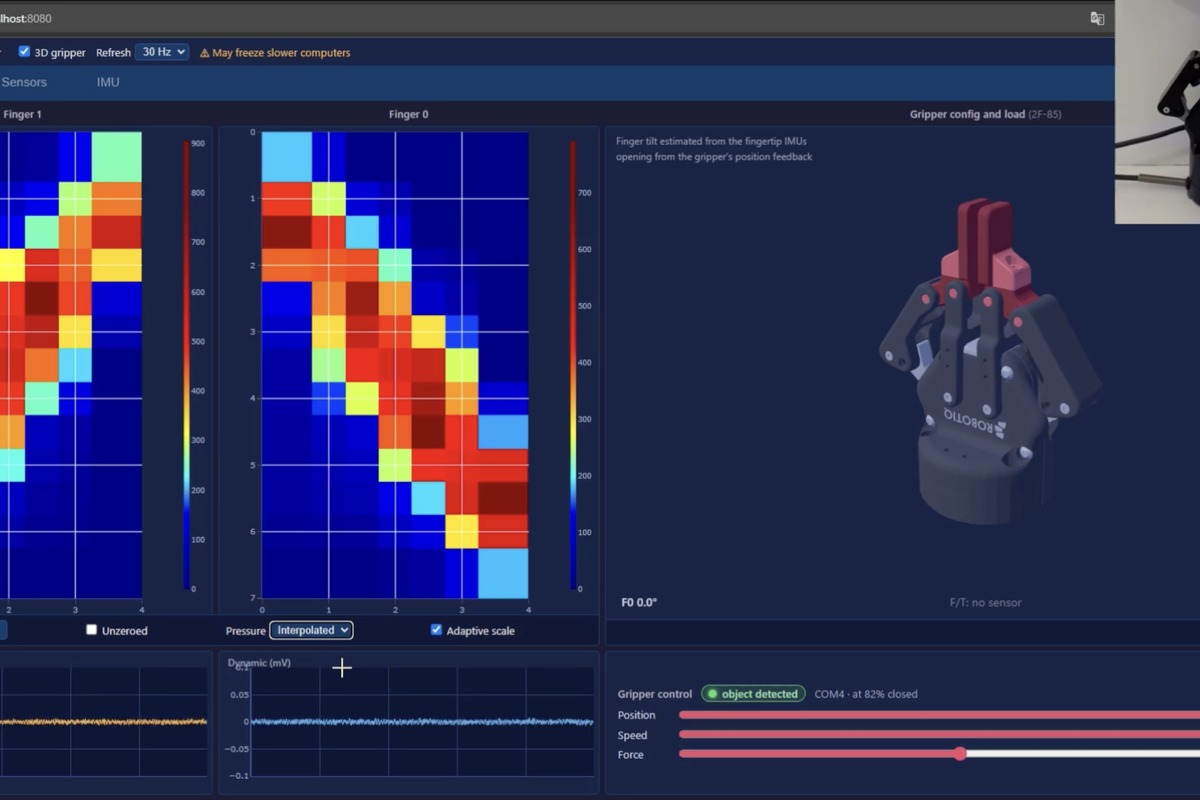
- Robotiq’s 2FC combines tactile sensing with onboard functions for slip detection, grasp assessment and object-state estimation.
- Pre-orders are open with shipments planned for the first quarter of 2027, while existing 2F-85 and 2F-140 grippers can be upgraded with additional hardware.
- The company positions the system for collecting contact-rich training data and deploying grasp behaviors on the same equipment, with customer performance still to be evaluated.
Robotiq has introduced the 2FC Physical AI Gripper, adding tactile sensing and onboard intelligence to an adaptive gripper intended to collect training data and perform manipulation tasks. Pre-orders are open, with shipping scheduled for the first quarter of 2027.
The product announcement targets a gap in robot manipulation: cameras can show where an object is, but contact signals help establish whether it is held securely or beginning to slip. Robotiq combines those signals with local grasp functions rather than leaving every interpretation to a separate computer.
Turning Contact Into Robot Feedback
The gripper collects pressure, vibration, force, speed, position and proprioceptive information, synchronizing signals with millisecond-level timestamps. Its embedded functions include grasp-quality assessment, early slip detection, object-pose estimation, centering and checking whether a pickup succeeded.
These functions address different stages of a grasp. Slip detection can flag an unstable hold, while outcome verification helps distinguish a completed motion from a successful pickup. The resulting event labels can also make contact data more useful for training and evaluating robot policies.
Training and Deployment on the Same Hardware
Robotiq lists 85-millimeter and 140-millimeter stroke variants and dynamic sensing at 1,000 Hz. It rates the hardware for two million cycles and says existing 2F-85 or 2F-140 users can add tactile fingertips and an AI Hub while retaining the tool center point.
Preserving that reference point can reduce changes to existing robot programs, although integration still depends on the controller, software and task. A published durability rating also needs to be considered alongside operating conditions and maintenance requirements.
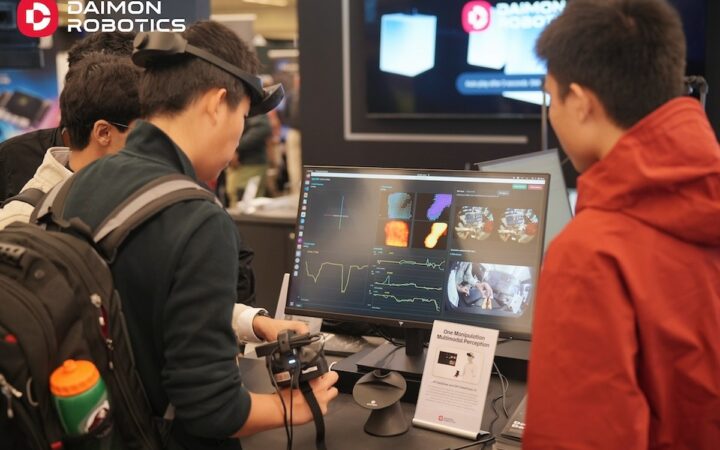
The launch adds another approach to the manipulation problem covered in RobotsBeat’s reporting on Daimon’s tactile infrastructure and Eka’s force-aware AI. Robotiq’s emphasis is a gripper that combines contact sensing with deployable grasp functions.
Availability and the Practical Test
The company’s specifications describe intended product capabilities, rather than an independent comparison against competing grippers. Buyers will still need to evaluate performance on their own objects, including slippery surfaces, deformable packaging and changes in placement.
For physical AI developers, the useful proposition is continuity between collecting contact-rich data and running trained behaviors on the same equipment. The next milestone is shipment in Q1 2027, followed by evidence of how the sensing and embedded functions perform in sustained customer operation.
Disclaimer: RobotsBeat is an independent media brand owned and operated by NuvexMedia LLC, publishing news, research, and insights on artificial intelligence, emerging technologies, automation, and related industries. NuvexMedia LLC invests in and collaborates with companies across the AI, Robotics, technology, software, and digital innovation sectors. These relationships do not influence RobotsBeat's editorial coverage, and the publication maintains full editorial independence to provide accurate, timely, and objective information. © 2026 NuvexMedia LLC. All rights reserved. This content is for informational purposes only and should not be considered legal, tax, investment, financial, or other professional advice.