Key Notes
- Eka Robotics has raised $150 million for robot AI and grippers that combine visual perception with contact forces to adapt to different objects and handling tasks.
- The startup uses reinforcement learning in physics simulation to develop manipulation skills, including responses to slipping objects and resistance during contact.
- Eka reports about 1,500 picks per hour in laboratory tasks and is testing industrial applications, with sustained production performance still to be demonstrated.
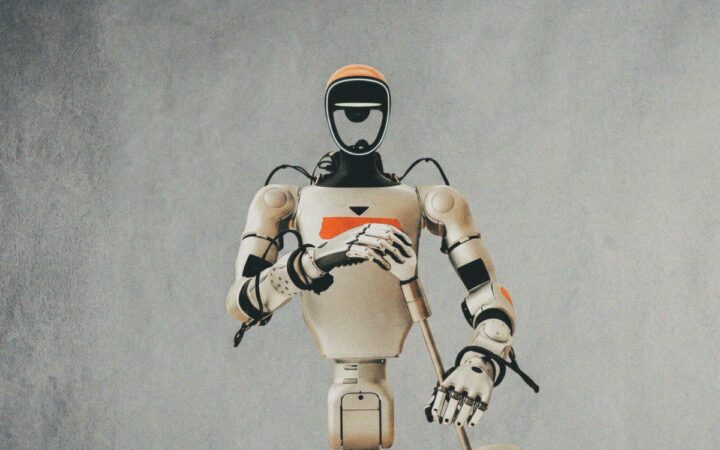
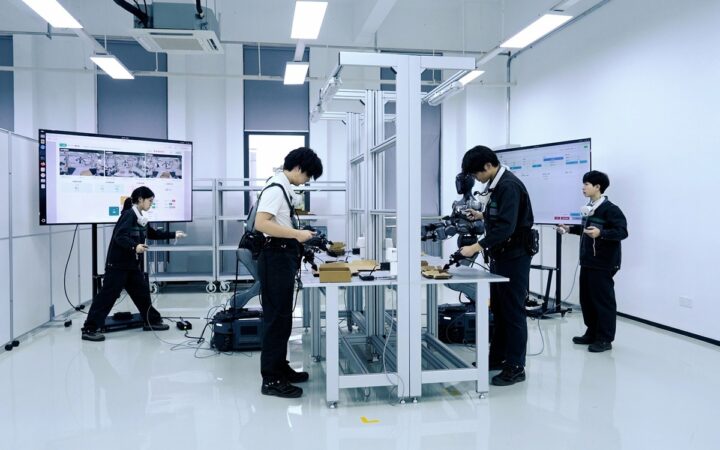
Eka Robotics has raised $150 million in Series A funding at a $1.45 billion post-money valuation, with a16z and F-Prime leading the round, TechCrunch reported on October 20. The startup is developing AI that gives robot grippers the sensitivity to handle fragile objects and the speed required for industrial work.
The central idea is to combine what a robot sees with what it feels when it makes contact. A camera can locate an object, but a successful grasp also depends on pressure, friction and the ability to respond when the object moves.
A Robot Model That Learns From Contact
Eka calls its approach a Vision-Force-Action model. It connects visual perception, contact forces and movement, pairing the AI with the gripper rather than treating software and hardware as unrelated components.
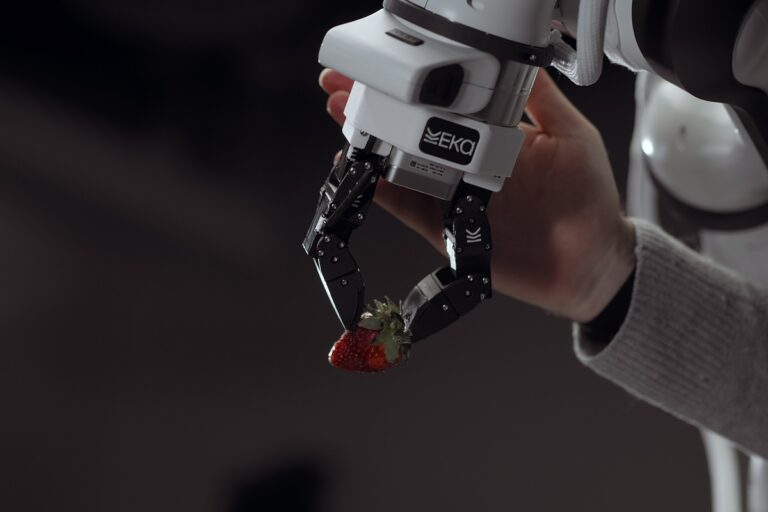
The company’s demonstrations include delicate fruit handling. The broader engineering problem applies just as much to a slippery part: squeezing harder may prevent a drop, but excessive pressure can damage the object. A useful controller has to make that adjustment while the grasp is happening.
In its investment announcement, a16z describes a system designed to use contact as information, correcting slipping grasps and adjusting movement when an insertion meets resistance. The investor says Eka develops sensing, control, hardware and the model together.
That puts Eka alongside a growing group of developers working on the practical limits of robot manipulation. Our coverage of Linkerbot’s hands examines another approach to giving machines more capable end effectors.
Simulation Supplies the Practice
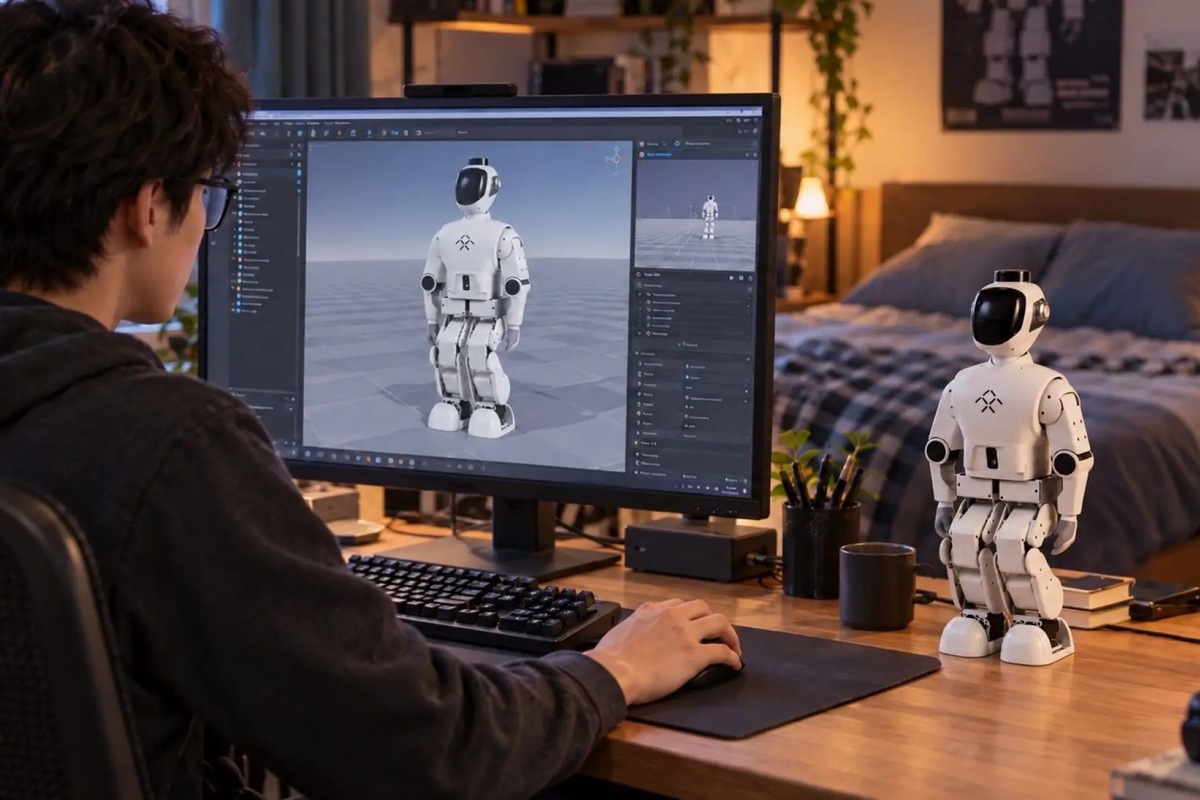
Eka trains through reinforcement learning in physics simulation, where virtual robots attempt tasks, receive feedback and improve their control policies. Variations in contact, friction and object position let the system practice situations that would take substantial time to reproduce on physical equipment.
The method creates a way to learn recovery as well as success. A training environment can repeatedly expose the controller to an awkward grasp or a moving object, allowing it to explore adjustments before deploying the learned behavior on a real arm.
Simulation has become an important route to robot training, as our reporting on Dexforce’s virtual data shows. The technical test is whether a learned response remains useful when real materials, sensors and actuators behave differently from their simulated counterparts.
Fast Picking Meets the Factory Test
Eka reports handling about 1,500 objects per hour, with objects weighing up to one kilogram and a success rate above 95%. These are company-reported results; a16z identifies the throughput figure as coming from laboratory induction and bin-picking tasks.
The distinction matters when evaluating productivity. A fast picking demonstration measures one capability, while a production installation also has to manage replenishment, failed picks, maintenance and the other equipment around the robot.
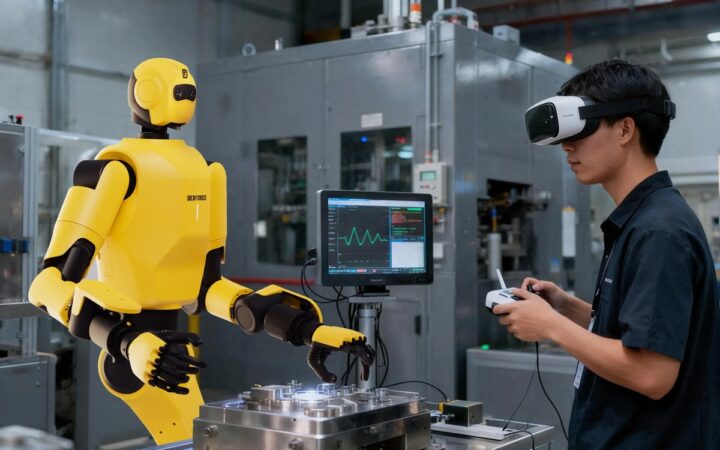
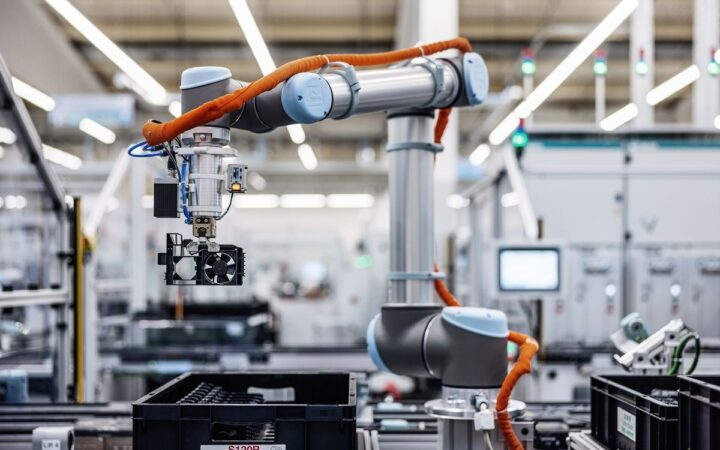
Eka is conducting industrial pilots involving pick-and-place operations and wire manipulation. Those applications test different parts of dexterity: moving a loose item requires a secure grasp, while working with a wire also requires controlling a flexible object and responding to contact during positioning.
The company’s emphasis complements the broader robot-model development covered in our article on the Pi API beta. For manufacturers, the value is ultimately a system that can handle changing parts without turning every variation into a new integration project.
The funding gives Eka resources to develop that proposition further. Its next commercial milestone is sustained performance in customer operations, where speed, handling accuracy and equipment availability have to hold together across a working shift.
Disclaimer: RobotsBeat is an independent media brand owned and operated by NuvexMedia LLC, publishing news, research, and insights on artificial intelligence, emerging technologies, automation, and related industries. NuvexMedia LLC invests in and collaborates with companies across the AI, Robotics, technology, software, and digital innovation sectors. These relationships do not influence RobotsBeat's editorial coverage, and the publication maintains full editorial independence to provide accurate, timely, and objective information. © 2026 NuvexMedia LLC. All rights reserved. This content is for informational purposes only and should not be considered legal, tax, investment, financial, or other professional advice.