Key Notes
- The Lynx M20S accompanied biodiversity researchers in the Ailao Mountains, combining equipment transport with route scouting and wildlife filming on difficult forest terrain.
- The expedition account specifies a 35 kg continuous carrying capacity, while the separate 100 kg maximum-load rating does not establish the load carried during the mission.
- Manufacturer specifications list two-and-a-half to three-and-a-half hours of loaded operation and hot-swappable batteries, making energy logistics an important part of remote fieldwork.
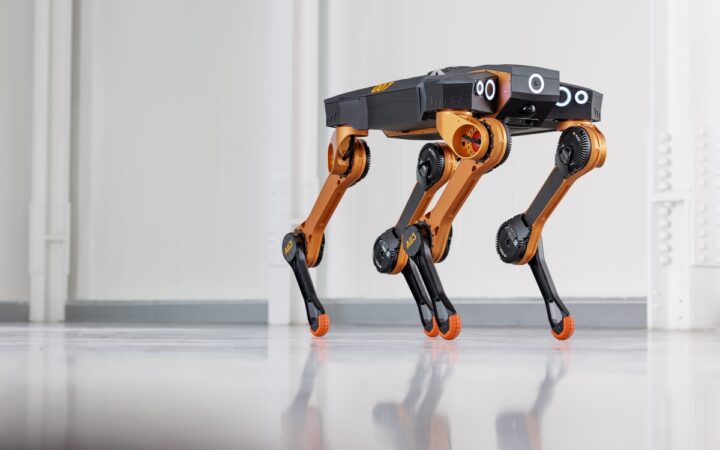
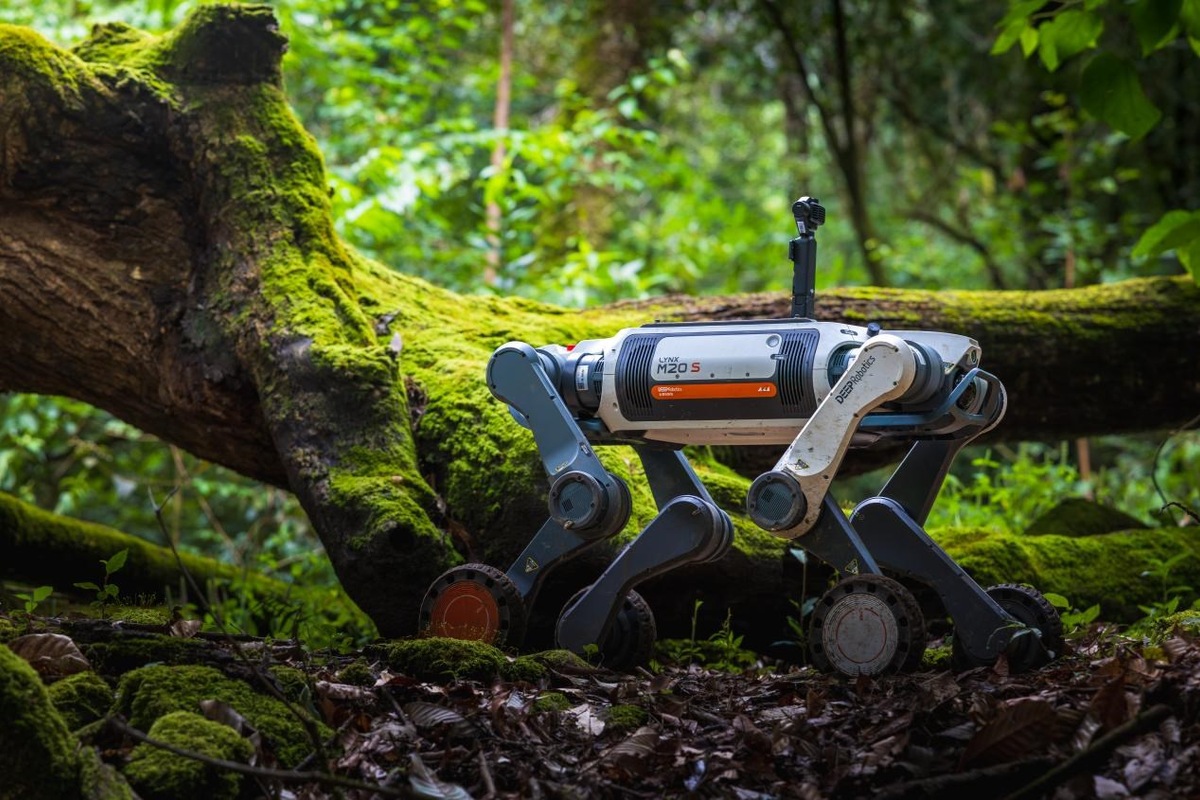
A wheeled robot dog accompanied biodiversity researchers into China’s Ailao Mountains, carrying equipment, scouting routes and filming wildlife beneath the forest canopy. DEEP Robotics’ Lynx M20S joined the team in a practical test of how mobile machines can support fieldwork on steep, wet and densely vegetated terrain.
The expedition was organized by ifeng.com’s scientific-exploration documentary program and the China Association for Scientific Expedition, Global Times reported. The company’s account describes the robot helping researchers assess unfamiliar routes and collect observations in places difficult to reach on foot.
Wheels for Paths, Legs for Obstacles
DEEP Robotics’ October 17 expedition release describes a forest environment with fallen trees, slippery moss, tangled vegetation and rapidly changing weather. The platform combines wheels for travel on passable ground with articulated legs for uneven sections and obstacles.
Its camera also supplied live views of terrain ahead, giving the researchers more information before moving into an unfamiliar section. That is a useful distinction from simply following a person with equipment: the same platform can act as both carrier and remote observation point.
The manufacturer’s expedition film shows the machine moving through the forest and supporting the research team. The footage documents one deployment; it is not a controlled comparison of safety, speed or cost against conventional fieldwork.
The Payload Was Not a Confirmed 100 kg Load
The expedition release specifies a continuous carrying capacity of 35 kg, consistent with Global Times’ account. That should not be confused with the 100 kg maximum-load figure on the manufacturer’s product page.
For the M20S, that page separately lists a 36 kg effective payload on standard terrain. The distinction between continuous or effective payload and maximum load matters on an expedition: a maximum rating does not establish how much equipment was carried throughout a particular forest route.
The published material therefore supports describing the robot as carrying research and imaging equipment, but not stating that the team transported approximately 100 kg on it during this mission.
Filming Gibbons and Plants Near the Forest Floor
According to the expedition account, the robot’s imaging equipment helped record western black-crested gibbons from below the canopy and capture Monotropa uniflora, commonly called ghost pipe, close to the forest floor.
DEEP Robotics says the compact platform and low operating noise helped the team approach observation points with limited disturbance. That remains a company account of the deployment rather than an independently established finding that robots disturb wildlife less than people.
RobotsBeat has covered Greenland’s robot expedition, another example of researchers using mobile systems to gather observations in difficult environments. The machines differ, but both applications depend on obtaining useful data while managing access and operational limits.
Battery Planning Remains Part of the Job
The M20S specifications list 2.5–3.5 hours of loaded operation and a hot-swappable dual-battery system. DEEP Robotics also lists IP67 protection and an operating temperature range of minus 30°C to 55°C.
Those are manufacturer specifications, not a measured runtime guarantee for the Ailao route. Terrain, carried equipment and time spent observing all affect expedition planning, while replacement batteries add weight that the team must transport.
Our report on Digit 5 charging addresses the same broader constraint in another setting: mobility and useful work have to be balanced against energy supply. In a remote forest, the value of a robot depends on the complete mission it can support, including the logistics of keeping it running.
Disclaimer: RobotsBeat is an independent media brand owned and operated by NuvexMedia LLC, publishing news, research, and insights on artificial intelligence, emerging technologies, automation, and related industries. NuvexMedia LLC invests in and collaborates with companies across the AI, Robotics, technology, software, and digital innovation sectors. These relationships do not influence RobotsBeat's editorial coverage, and the publication maintains full editorial independence to provide accurate, timely, and objective information. © 2026 NuvexMedia LLC. All rights reserved. This content is for informational purposes only and should not be considered legal, tax, investment, financial, or other professional advice.