Key Notes
- RoboParty’s October 16 announcement introduces RP1 as an open-source research platform with a 24-degree-of-freedom Standard configuration and a 30-degree-of-freedom Pro version, excluding dexterous hands.
- Public resources connect hardware designs, firmware, deployment software and learning projects, giving researchers more visibility into how changes affect physical behavior.
- Different licenses apply across the stack, and successful demonstrations still need independent reproduction and task-specific validation.
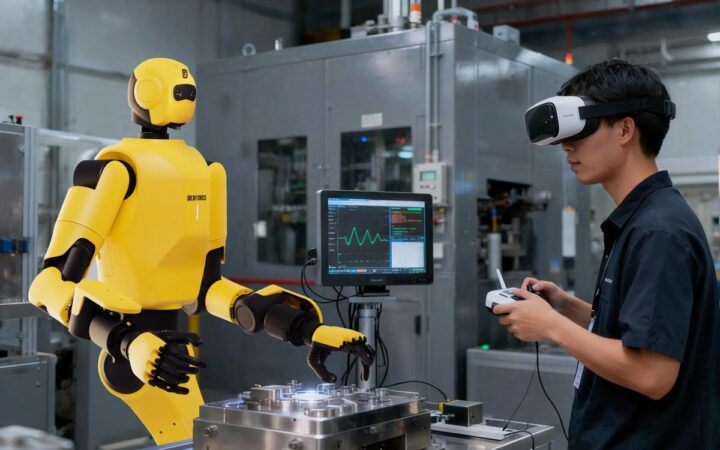
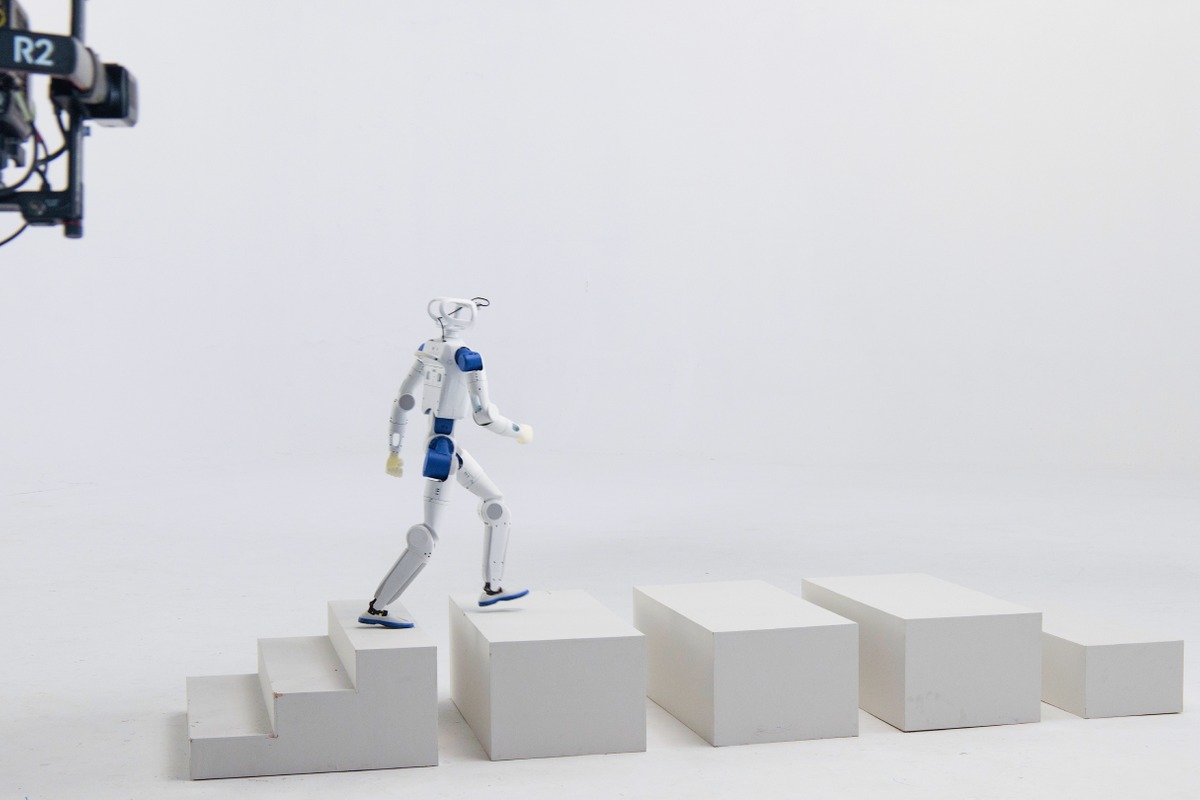
RoboParty has announced RP1, an open-source humanoid platform that gives robotics researchers access to its hardware designs and software stack. The Shanghai company’s October 16 release focuses on making the machine inspectable and adaptable, rather than presenting it as a finished household worker.
The company’s announcement describes two principal configurations. Standard is approximately 1.3 meters tall with 24 active degrees of freedom; Pro has 30, including a two-axis neck and seven axes per arm. Both totals exclude movement within dexterous hands.
Opening the Robot Below the Application Layer
RP1’s public repository connects mechanical and electrical designs with joint modules, firmware, robot descriptions, deployment software and learning projects. Published resources include CAD files, circuit layouts, bills of materials and assembly documentation.
That breadth matters because a robot’s behavior depends on more than its AI model. An experiment can change when a motor, sensor, joint configuration or control parameter changes; accessible engineering files make those differences easier for another team to examine.
RoboParty also describes interchangeable heads, wrist-mounted tools and expandable computing. These options let researchers adapt the body to an experiment, although each configuration still needs matching control settings and validation.
Open Source Comes With Different Licenses
The platform’s documentation assigns different licenses to different layers. RoboParty’s hardware designs use CERN-OHL-W-2.0, while hardware documentation and explanatory images use CC BY-SA 4.0; firmware and deployment packages use GPL-3.0, and specified training code uses BSD-3-Clause.
Developers therefore need to check the applicable repository rather than assume the entire project has one license. Third-party components retain their own terms, an important consideration for teams modifying or distributing a build.
From a Demonstration to Reproducible Research
RP1 previously appeared at IROS, where RoboParty demonstrated balance recovery after visitors pushed or kicked the robot. The new release gives researchers materials for studying the system behind such demonstrations; the footage alone does not establish performance on unrelated tasks.
RobotsBeat has examined the role of shared robot models and simulation tools in physical AI development. RP1 addresses a complementary requirement: access to the body and interfaces on which those methods are tested.
The meaningful next test is whether outside teams can reproduce useful results, document modifications and compare methods on consistent hardware. Open files make that work possible, but they do not replace assembly, calibration or physical evaluation.
Disclaimer: RobotsBeat is an independent media brand owned and operated by NuvexMedia LLC, publishing news, research, and insights on artificial intelligence, emerging technologies, automation, and related industries. NuvexMedia LLC invests in and collaborates with companies across the AI, Robotics, technology, software, and digital innovation sectors. These relationships do not influence RobotsBeat's editorial coverage, and the publication maintains full editorial independence to provide accurate, timely, and objective information. © 2026 NuvexMedia LLC. All rights reserved. This content is for informational purposes only and should not be considered legal, tax, investment, financial, or other professional advice.