Key Notes
- Bloomberg highlights China’s early humanoid hardware advantage, while robotic-hand suppliers work to turn grasping and manipulation into dependable industrial capabilities.
- Smart Analytics Global estimates Chinese vendors supplied more than 97% of the 19,100 humanoid robots shipped in the first half of 2026, a shipment measure rather than a count of productive autonomous workers.
- Morgan Stanley’s approximately $5 trillion humanoid market projection concerns 2050, with the commercial opportunity depending on better technology, adoption and sustained task reliability.
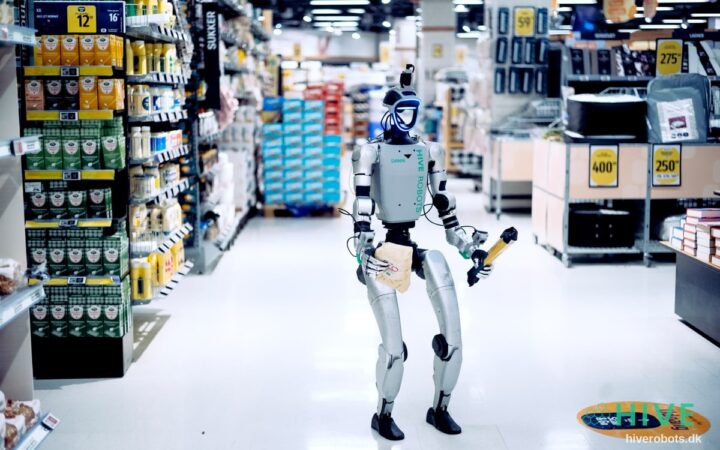
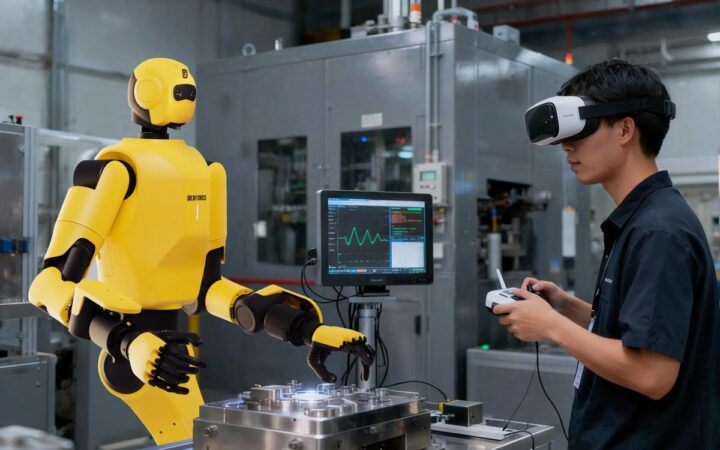
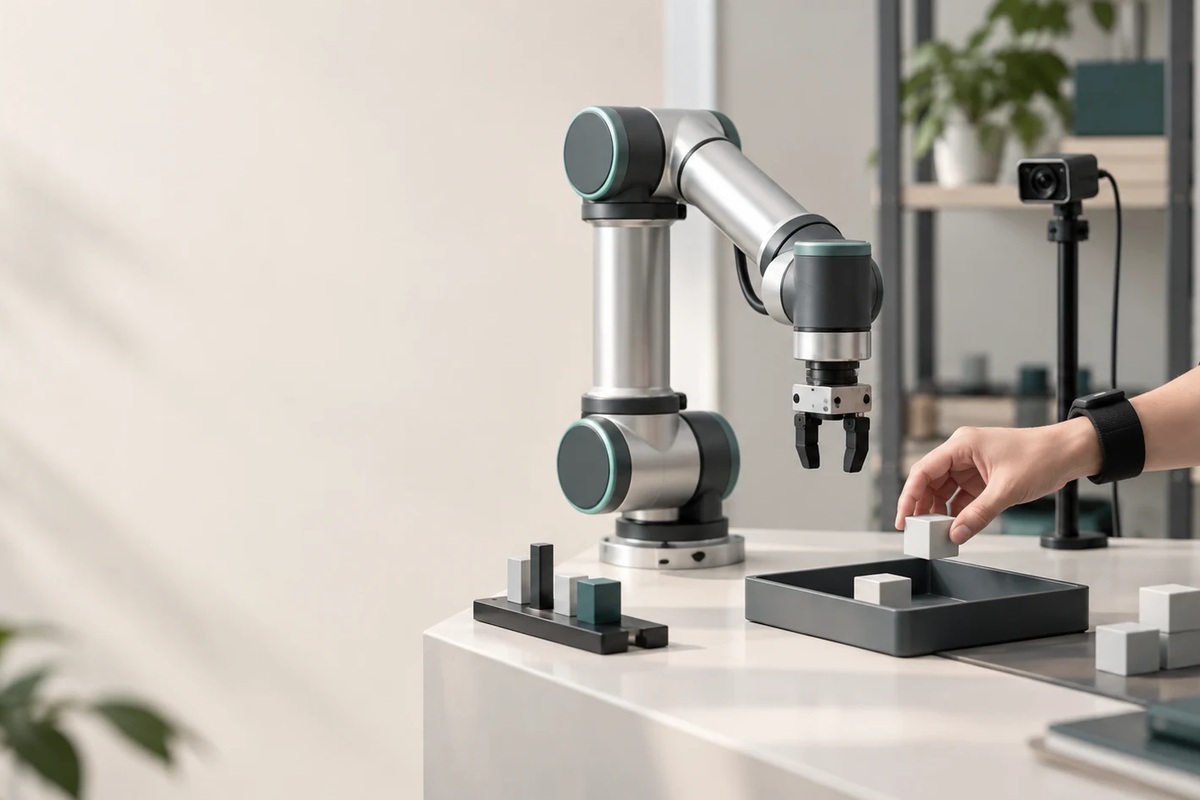
Chinese robotic-hand suppliers are becoming a key part of the humanoid race as manufacturers work to turn walking machines into useful workers. The challenge is increasingly concentrated at the point of contact: grasping an object is only the beginning when a robot must adjust it, operate a tool or complete an assembly step.
Bloomberg’s October 13 report highlights China’s early advantage in humanoid hardware and the difficulty of reproducing human manipulation. Its interview with Linkerbot founder Alex Zhou emphasizes the gap between impressive demonstrations and robots carrying out productive work.
The $5 Trillion Figure Describes a 2050 Forecast
The market opportunity is substantial, but its timing matters. Morgan Stanley’s market forecast, published in May 2025, projects a humanoid market of about $5 trillion by 2050. It also discusses the associated opportunities in components, maintenance and support.
That is a long-term scenario rather than a measurement of current sales. The bank expects adoption to remain relatively slow until the mid-2030s, with faster growth later as technology improves and regulatory and societal support develops.
Morgan Stanley also identifies China’s manufacturing supply chain as an advantage, noting the dependence of robot developers on components from China and other parts of Asia. For suppliers, the opportunity can extend across competing robot brands rather than depend on one manufacturer’s platform becoming dominant.
China Leads Shipments, but Shipments Measure Hardware
Smart Analytics Global’s shipment research estimates that around 19,100 humanoid robots shipped worldwide in the first half of 2026, up 272% year over year. Chinese vendors supplied more than 97% of those units.
The firm puts industrial and commercial applications at more than 70% of shipments. Those categories describe the intended market for the hardware; they do not establish how many robots perform work autonomously throughout a shift.
The distinction is important for component demand. Shipping robot bodies creates orders for hands, actuators and sensors. Sustained customer use creates a different test: whether the hardware survives repeated contact and whether the complete system can perform its assigned task with acceptable intervention and maintenance requirements.
Hand Makers Offer Different Routes to Dexterity
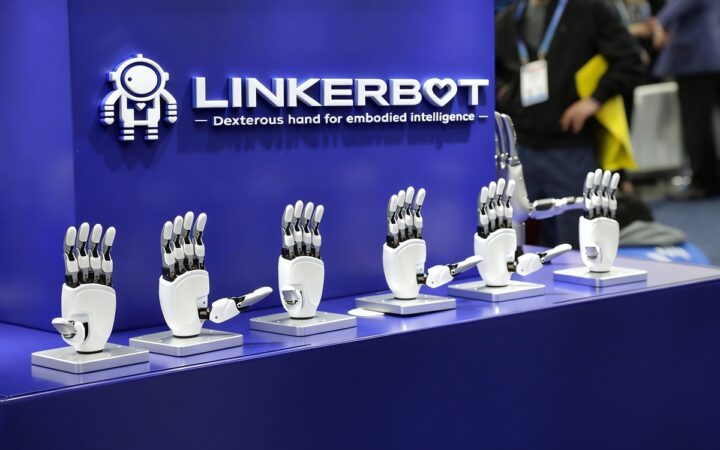
Linkerbot is one supplier pursuing that opportunity. Our founder profile examined Zhou’s decision to focus on hands and the software used to teach them skills, rather than make a complete humanoid the starting point of the business.
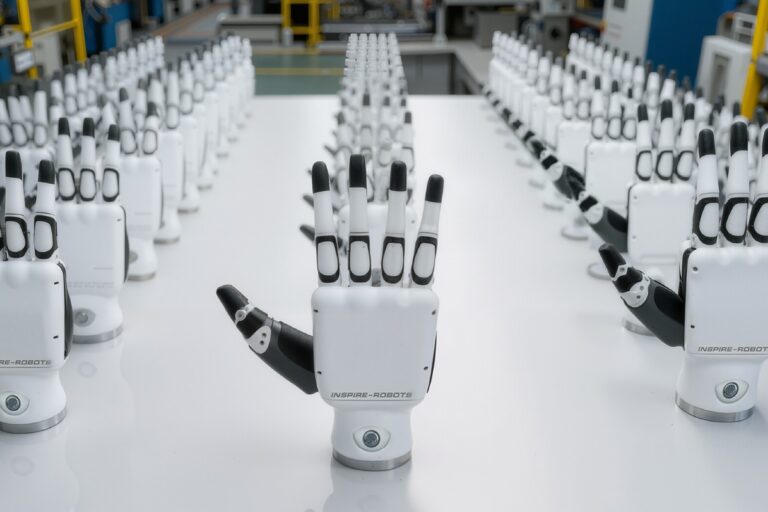
Inspire Robots provides another example of the Chinese component ecosystem. Its RH56F1 specifications list six degrees of freedom, twelve joints and force-related sensing, with a tactile-sensor configuration available. The company’s website says it delivered 10,000 dexterous hands in 2025.
These figures illustrate different dimensions of a product: joint structure, sensing and manufacturing volume. They should not be treated as interchangeable measures of manipulation capability. A hand’s practical performance also depends on the controller, arm, perception system and task it is integrated with.
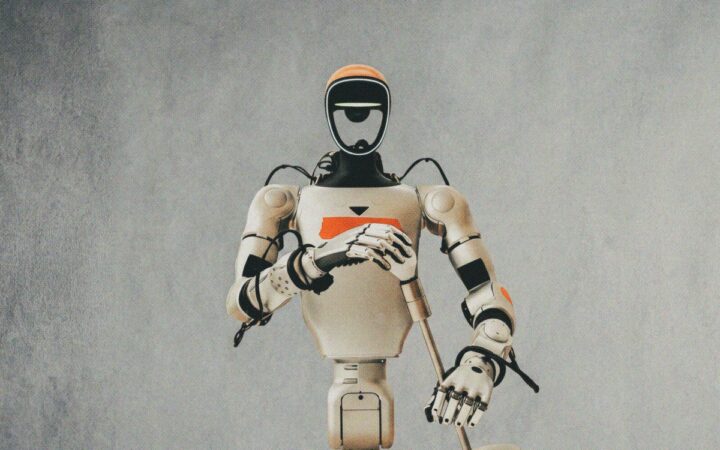
The alternatives extend beyond Chinese suppliers. RobotsBeat’s coverage of Atlas’ four-finger hand described Boston Dynamics’ choice to balance tool use, strength and durability without reproducing all five human fingers.
Reliability Determines Whether the Hardware Lead Pays Off
Manipulation exposes a robot to conditions that are difficult to standardize. An object can slip, deform or arrive in a different orientation. Contact changes what the machine can observe, while the required grip can vary between moving a rigid component and handling something fragile.
For buyers, the useful comparison is therefore a completed workflow rather than a single striking movement. Task success, recovery from errors, integration effort and the cost of keeping the system operating determine whether a dexterous hand earns its place.
China’s supply chain gives its robotic-hand companies an early position in an expanding hardware market. The next commercial step is converting that position into repeatable work, with progress measured against real applications rather than a distant market forecast alone.
Disclaimer: RobotsBeat is an independent media brand owned and operated by NuvexMedia LLC, publishing news, research, and insights on artificial intelligence, emerging technologies, automation, and related industries. NuvexMedia LLC invests in and collaborates with companies across the AI, Robotics, technology, software, and digital innovation sectors. These relationships do not influence RobotsBeat's editorial coverage, and the publication maintains full editorial independence to provide accurate, timely, and objective information. © 2026 NuvexMedia LLC. All rights reserved. This content is for informational purposes only and should not be considered legal, tax, investment, financial, or other professional advice.