Key Notes
- NEURA’s Neuron AI combines 3D vision, touch, audio, robot state and language with memory, helping robots retain context when objects leave their field of view.
- The model trains on real robot data, simulation and human demonstrations, with local execution and customer-specific skills distributed through Neuraverse.
- NEURA plans an autonomous eleven-minute 4NE1 laundry demonstration at NVIDIA GTC Berlin on October 20–22, covering sorting, washing-machine handling and transfer to a dryer.
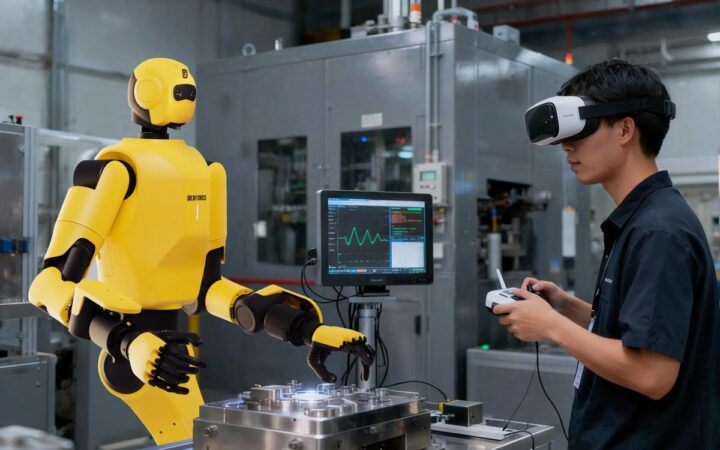
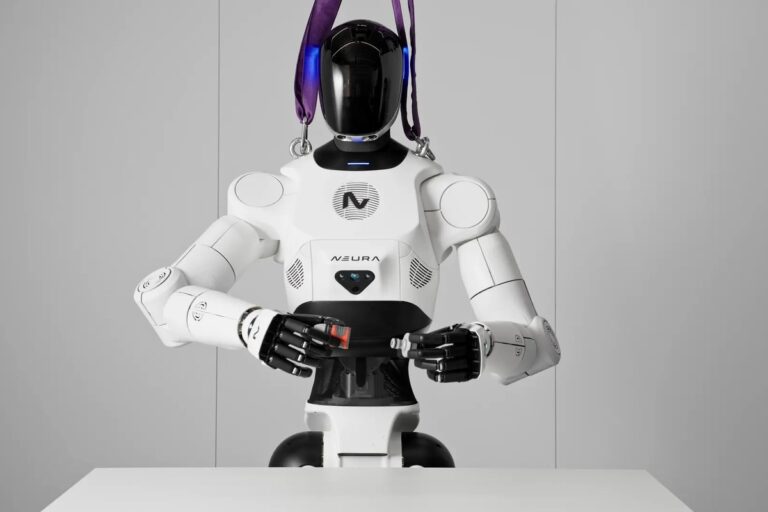
NEURA Robotics has introduced Neuron AI, a foundation model that combines a robot’s vision, touch, hearing, body state and language instructions with memory. The German company says the system is designed to help machines keep working when objects move out of view and use physical feedback that cameras cannot provide.
The October 14 announcement positions Neuron AI as a shared intelligence layer across five NEURA robot embodiments. Rather than developing an isolated model for each machine, the company is building a common foundation that can be adapted to different bodies, hands and grippers.
Touch, Sound and Memory Join Vision
NEURA calls its approach Perception-Language-Action, or PLA. Sensor information is aligned over time so the model can connect its observations with previous actions. Its memory is intended to preserve relevant context, including the location of an object that is temporarily hidden.
The company’s technical overview describes inputs ranging from 3D depth information to contact forces, joint positions and spoken instructions. Together, they provide different evidence about whether a physical action has succeeded.
For a working robot, reaching the right position and completing a task are separate problems. A camera may show that a gripper has moved toward a component, while contact feedback can indicate whether it has actually secured it. Retaining that information matters when the next step depends on a state that is no longer visible.
Training Across Robots and Human Demonstrations
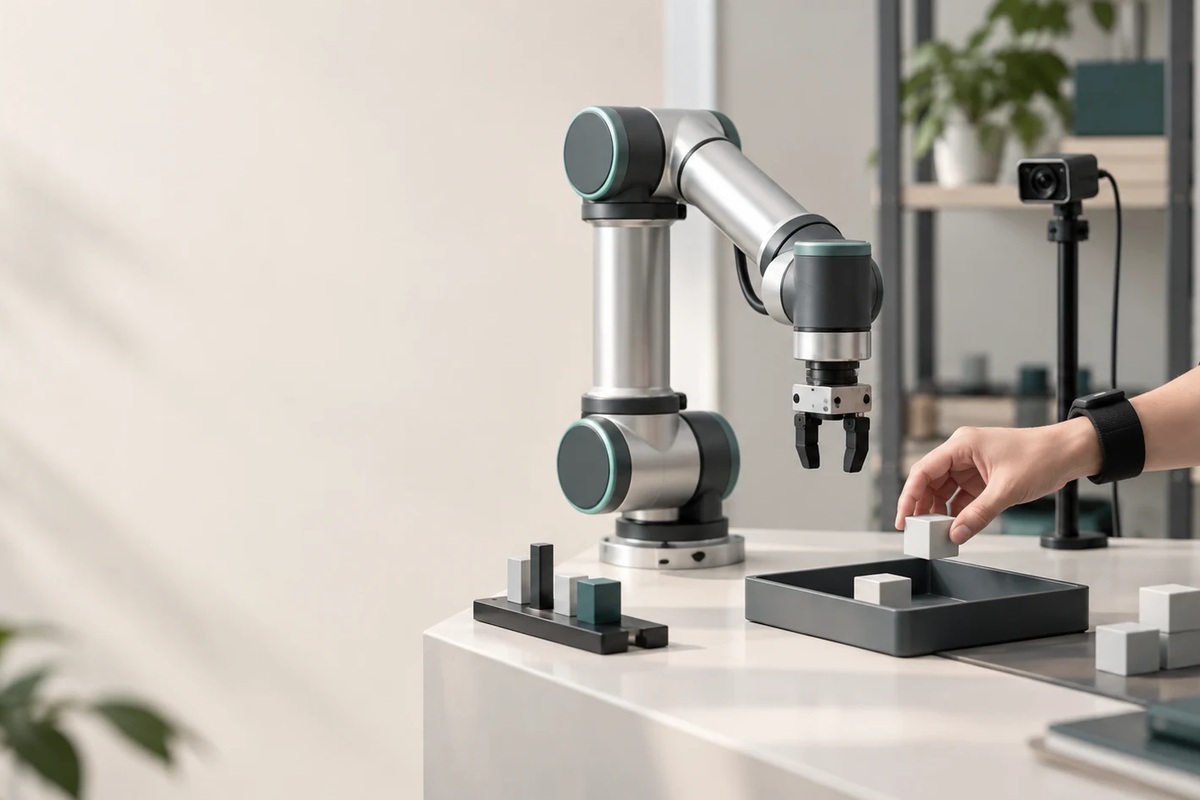
Neuron AI combines real robot experience, simulated variations and demonstrations recorded from people wearing sensor-equipped suits. NEURA’s Gyms collect and evaluate physical skills, while its simulation tools expand the range of training conditions. The company also names Bosch and Schaeffler as industrial data partners.
This brings several kinds of experience into the same development process, but training breadth and operational reliability remain different questions. A robot taught a task in one setting still needs to handle the objects, layout and exceptions it encounters at a customer’s site.
RobotsBeat previously examined NEURA’s AWS partnership, which focuses on the infrastructure for training and distributing physical AI. Neuron AI adds the model layer to that wider effort to connect data collection, learning and deployment.
Local Decisions, Fleet-Wide Skill Updates
NEURA says Neuron AI runs on the robot itself, allowing decisions without a cloud connection. Customers can adapt skills to their processes and distribute them through Neuraverse, while retaining the option to keep those skills private.
Local execution and shared training address different parts of the system. A robot needs to respond to contact and movement at the point of use; a fleet platform provides a route for distributing improvements after training and validation. Sharing an update does not remove the need to check it against each application’s operating conditions.
The company identifies Time-to-Skill—the time needed to learn a task and perform it reliably—as a central measure. For customers, that makes the transition from a successful example to repeatable operation a practical part of the product proposition.
4NE1 Laundry Demonstration Planned for Berlin
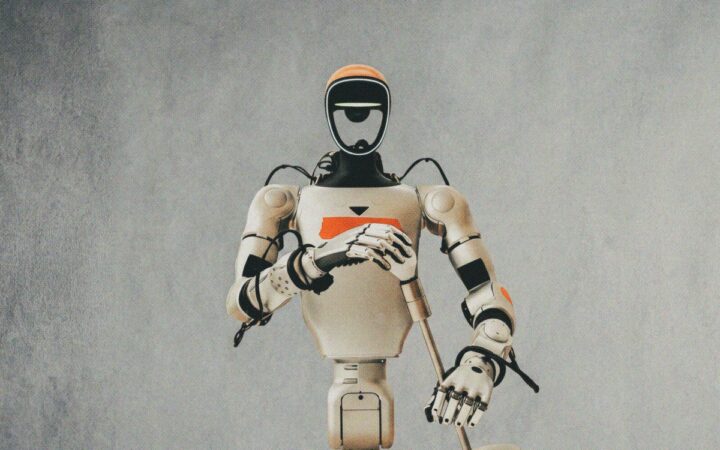
NEURA plans to demonstrate its 4NE1 humanoid at NVIDIA GTC Berlin on October 20–22. The announced eleven-minute sequence covers sorting laundry, loading and unloading a washing machine, and transferring items to a dryer without human intervention.
The sequence is a useful test of continuity: the robot must complete one stage, retain the relevant state and begin the next. The planned demonstration should be distinguished from evidence of unattended operation across different homes or customer facilities.
NEURA’s broader commercial push already includes hospital logistics, where its initial application focuses on moving empty beds. Neuron AI extends the underlying intelligence strategy; the operational question remains how consistently that intelligence translates into completed physical work.
Disclaimer: RobotsBeat is an independent media brand owned and operated by NuvexMedia LLC, publishing news, research, and insights on artificial intelligence, emerging technologies, automation, and related industries. NuvexMedia LLC invests in and collaborates with companies across the AI, Robotics, technology, software, and digital innovation sectors. These relationships do not influence RobotsBeat's editorial coverage, and the publication maintains full editorial independence to provide accurate, timely, and objective information. © 2026 NuvexMedia LLC. All rights reserved. This content is for informational purposes only and should not be considered legal, tax, investment, financial, or other professional advice.